For Gen-Z, Delulu is The Only Solulu

1 Jan 2026 9:18 PM IST1 Jan 2026 9:18 PM IST
SYBAU, 67, and Silence: Are today’s youngsters using online lingo to escape offline real conversations?
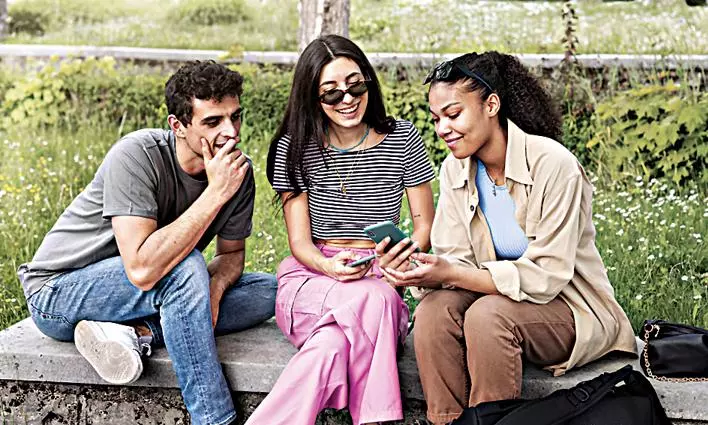
What looks like playful internet humour can also function as an emotional shortcut or an emotional exit.
Gen-Z communicates in new codes. SYBAU, 67, NPC, Delulu, Solulu. These phrases move fluidly from comment sections to group chats to spoken conversation, compressing emotions into shorthand. Words that are instantly recognisable to some and completely alien to others. What looks like playful internet humour can also function as an emotional shortcut or an emotional exit. As slang increasingly replaces explanation, the question is no longer whether Gen-Z is linguistically creative, but whether hyper-coded internet language is becoming a way to avoid discomfort, vulnerability, and confrontation.
Speed Shaped Language
Internet slang did not emerge from a desire to avoid emotion. It began as a tool for efficiency. Long before Instagram reels and TikTok captions, abbreviations were born out of technical limitations. Typing on T9 phones required brevity. SMS language rewarded speed. Over time, these shortcuts evolved into a cultural language of their own.
Saahil Thakkar (21), a comedy script writer, explains how seamlessly online language slips into offline life, “Certain phrases and analogies have made their place into my vocabulary. I end up using them in regular conversation without realising it. But there are certain words that I would only use over the internet and cringe at saying or hearing in real life.”
For him, slang works as a shared reference point rather than an emotional substitute. This idea of shared context is key. Internet slang functions less like formal language and more like cultural signalling. It tells people who you are, what spaces you inhabit, and which subcultures you belong to.
“Every generation thinks they’ve invented slang,” Saahil notes, “People of similar age have always had a distinct way of communicating with one another that can feel very alienating to someone who isn’t part of it.”
Long Story Short
What distinguishes Gen Z slang from earlier generational language is not creativity, but saturation. The digital environment is relentless. Notifications, algorithms, and constant visibility leave little room for long-form emotional processing.
Rucha Shrikhande, a psychologist, links this directly to Gen Z’s emotional landscape. She says, “I keep seeing greater difficulty among Gen Z in articulating their feelings directly, especially during moments of conflict or vulnerability. Alongside widespread destigmatisation of mental health, Gen Z has also become highly self-aware and open about vulnerability.” But this self-awareness comes with pressure. They tend to over analyse their future, which means that even small challenges are perceived as major clouds of turbulence and problems.
In this context, slang becomes a coping mechanism. “Humour and slang, it definitely releases a lot of stress if they are in any of the problems or difficulties,” she says, warning, “But in the long run, I doubt if it contributes to a deeper emotional connection.”
The COVID pandemic intensified this reliance. Constant digital stimulation has definitely influenced attention spans, patience, and resilience. “After COVID, I particularly see increased difficulty with concentration amongst school children,” says Rucha. Everything became immediate, including communication. Slang fits that pace perfectly.
Psychological Side Effects
While slang can feel emotionally lighter, its psychological impact is complex. Rucha explains that hyper-coded language often acts as a defence mechanism, “This is not to express emotions, but rather to make a joke of yourself before you are mocked.” She notes that irony and self-deprecation protect young people from judgment, but also from clarity. It leads to a loss of clarity, causing doubt and confusion, and ultimately contributes to the foundation of many mental disorders, including anxiety and depression.
Psychologist Aaliyah Verma places this within the physiology of trauma, “Until the point the individual is living in trauma, the brain will not allow the individual to process the trauma most of the time because processing would mean not being able to survive.”
They explained how emotional avoidance can manifest through language. Aaliyah adds, “Thanks to social media, and the sensationalisation of mental disorders, it has turned into a form of emotional avoidance.” They warn that casual slang can blur the line between humour and harm: “People very casually say things like, 'Oh my god, I'm going to kill myself', it should not be something that is so easily normalised.”
Slang, Belonging, and Exclusion
For many, slang creates community. Medha, a law student, says, “It does make me feel like I belong… there’s like an instant connection because that's familiarity.” But she also describes how shallow conversations have become. “Communication like this is so hollow. You don’t actually have a conversation. You just have these preconceived thoughts or prompts.”
Ankita Majumdar highlights the exclusionary edge of slang, “The moment you need cultural context to decode it, slang stops being fun and starts being a gatekeeping badge.” She adds that it often functions as emotional avoidance, “Calling someone ‘delulu’ avoids saying ‘I’m uncomfortable with your hope’ or ‘I don’t want to engage’.”
‘Mental Health’ Trend
One of the most serious consequences of hyper-coded language is its impact on mental health discourse. Aaliyah points out how neurodivergence is being aestheticised online. “These people are borrowing and taking the ‘fun’ and quirky parts of autism, while they get to keep aside the disabling parts of the condition.”
They stress, “Autism is a disability, and when it is portrayed this way, it reduces the respect, dignity, and seriousness with which autistic people should be treated. Autistic people are more than their disability, but they are also not the archetype the internet prefers to present for algorithmic reach.” Medha reflects on how casual language can unintentionally trivialise suffering and identity. Phrases like “I need an autistic gay boyfriend” reduce people to traits rather than identities. “It dehumanises people, inclusion doesn’t mean they’re included in the jokes.”
Survival Tool or Silent Barrier
Slang saves energy. It speeds up communication. It makes people feel seen, briefly. Short slang lets people respond without thinking too much or feeling too much. But emotions and feelings do not work on shortcuts. In an overstimulated world, slang may help Gen Z survive the noise. The risk is that in doing so, it teaches an entire generation how to speak around their feelings instead of through them.
( Source : Deccan Chronicle )

Next Story