
As instances of fake medicines increase, doctors and pharmacists share tips to spot the red flags from spelling mistakes, poor print quality to blurry manufacturing dates and rates
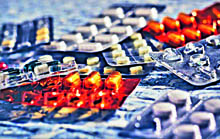
People check expiry dates on milk, compare labels on cosmetics and scrutinise online reviews before buying something as ordinary as a pair of shoes. But when it comes to medicines, many people simply go to a pharmacy shop and buy medicines without even bothering to check the spellings, typos, manufacturing date etc.
The fake medicine market thrives on similar sounding names, blurry texts and typos from ‘Asspirin’ to ‘Painisillyn’, ‘Dateall’ and even ‘Vaguera.’ Sometimes, a strip of tablets can look perfectly legitimate, carry familiar branding and arrive in neat, professional packaging. Yet, for most consumers, the questions that matter most often remain unanswered: Where did this medicine come from? Was it stored correctly? And, is the packaging genuine? What many don’t seem to be asking is: Is the medicine actually what it claims to be? Period.
No Chill Pill
“The danger of a fake or improperly manufactured medicine isn't only that it may contain the wrong ingredient or too little of the right one, it may also carry a biological contaminant.” says Dr Ekadashi Rajni Sabharwal, Professor, Department of Microbiology.
As Dr Ekadashi explains, when medicines are manufactured in unsanitary, uncertified environments without cleanroom air filtration, purified water or sterile protocols, they can harbour opportunistic pathogens. Bacteria such as Pseudomonas aeruginosa, Burkholderia cepacia and Staphylococcus aureus, along with fungal spores such as Aspergillus and yeasts such as Candida, can contaminate non-sterile production lines.
For immunocompromised patients, elderly individuals or sick children, exposure to microbially contaminated medicines can potentially lead to serious infections, including sepsis, severe gastrointestinal infections or localized abscesses.
The reason why the conversation needs to shift from asking if a medicine has expired to asking whether we can trust the medicine in the first place.
The Risk Factor
The risks associated with falsified or substandard medicines go beyond a product simply failing to work. Depending on what has gone wrong, a medicine may contain the wrong ingredient, too little or too much of the active ingredient, harmful substances, or may have been compromised by poor storage.
What’s worse is that the consequences can range from treatment failure and prolonged illness to adverse reactions, toxicity, drug resistance and, in severe cases, life-threatening complications. For patients already battling an illness, receiving a medicine that is ineffective, contaminated or incorrectly dosed can delay proper treatment at a critical time. The basic habit of awareness is the key here.
Prevention Before Cure
Dr Ekadashi advises consumers not to continue using a medicine they genuinely suspect may be unsafe. If there is visible tampering, unusual appearance, damaged packaging, suspected contamination or a serious, unexpected reaction, she recommends pausing the medicine and seeking advice from a doctor or pharmacist.
She also cautions against throwing the medicine away immediately. Consumers should retain the strip or bottle, outer carton, batch number, expiry date and purchase bill. If possible, the remaining medicine and its packaging should be kept intact, as these details can be crucial in tracing a suspected defective or spurious batch.
One should diligently do the following verifications: Check the name. Check the expiry date. Look at the batch details and packaging. Buy medicines from legitimate, reliable sources. Follow the prescription. And if something about the product—its packaging, appearance, price, or source, seems unusual, ask questions before taking it.
Get Well-versed Soon
A medicine is meant to heal, not add to the problem. Yet a counterfeit, contaminated or poorly stored product can turn treatment into a serious health risk. Experts stress that people should buy medicines only from trusted sources. Check the packaging before leaving the pharmacy, follow the recommended storage instructions and, if a medicine looks suspicious, verify it before taking it.
Because with medicines, trust is not enough, verification matters. What looks like a cure could become a serious health threat. When in doubt, stop, check and verify before you take it!
Tell-tale signs of fake medicines
Patients should look closely at the packaging for poor-quality printing, spelling mistakes, faded colours, unusual fonts, misaligned labels, damaged seals or signs that the pack has been tampered with. “The first step is to carefully examine the medicine pack. Patients should check the name, and strength of the medicine, dosage form, manufacturer’s name and address, batch number, manufacturing date, expiry date and MRP.” says Ravikumar Vattikuti, Pharmacy HOD at Renova Century Hospitals, from Hyderabad.
Missing, unclear or altered batch numbers, manufacturing dates or expiry dates should also raise concern. However, he points out that appearance alone cannot confirm whether a medicine is counterfeit. Such warning signs should prompt patients to verify the medicine before taking it.
Batch numbers, manufacturing dates and expiry dates are crucial for tracing a medicine. They help identify the specific batch and allow manufacturers and regulators to investigate if a quality problem arises.
Ravikumar says, “Patients should therefore check that these details are clearly printed, consistent and free from signs of alteration. Any suspicious or tampered information should be treated as a warning sign and verified before the medicine is used.”
Red Flags
Packaging
• Spelling or grammatical errors.
• Poor-quality printing, unusual fonts or colours.
• Damaged, opened or tampered packaging.
• Missing or altered batch number/expiry date.
• Mismatch between the outer carton and the blister/bottle.
• Broken or missing tamper-evident seals.
Appearance
A tablet, capsule, syrup
or cream that is
discoloured, cracked,
swollen, has visible
particles, precipitate,
leakage or an unusual smell should raise suspicion.
Fake Medicine Cases
• Fake Mounjaro pens (April 2026): Authorities in Haryana seized 260+ suspected counterfeit Mounjaro (tirzepatide) pens near Delhi. The alleged manufacturers had no pharmaceutical licence and were reportedly selling them online at about 27% below the genuine drug's price.
• Fake life-saving drug Alburel (2025–26): Police in Nagpur uncovered an alleged racket involving counterfeit Alburel, a life-saving medicine used in critically ill patients.
• Fake medicines allegedly in ICU (Aug 2026): Karnataka authorities said the Bidadi racket may be part of a wider network in which spurious medicines sourced from other states were relabelled with the names of multinational brands and supplied to hospitals and pharmacies. Drugs worth Rs 5 crores were seized.
The danger of a fake or improperly manufactured medicine isn't only that it may contain the wrong ingredient or too little of the right one, it may also carry a biological contaminant.”
— Dr Ekadashi Rajni Sabharwal, Professor (Dept of Microbiology)
Patients should check the name, strength of the medicine, dosage form, manufacturer’s name and address, batch number, manufacturing date, expiry date and MRP.”
— Ravikumar Vattikuti, Pharmacy HOD, Renova Century Hospitals, Hyderabad