Doctor’s Desk Your Body, on Your Dashboard

Dr G V Rao and Dr Raghu Cherukupalli on how AI and wearables are shifting healthcare from treatment to prediction and prevention
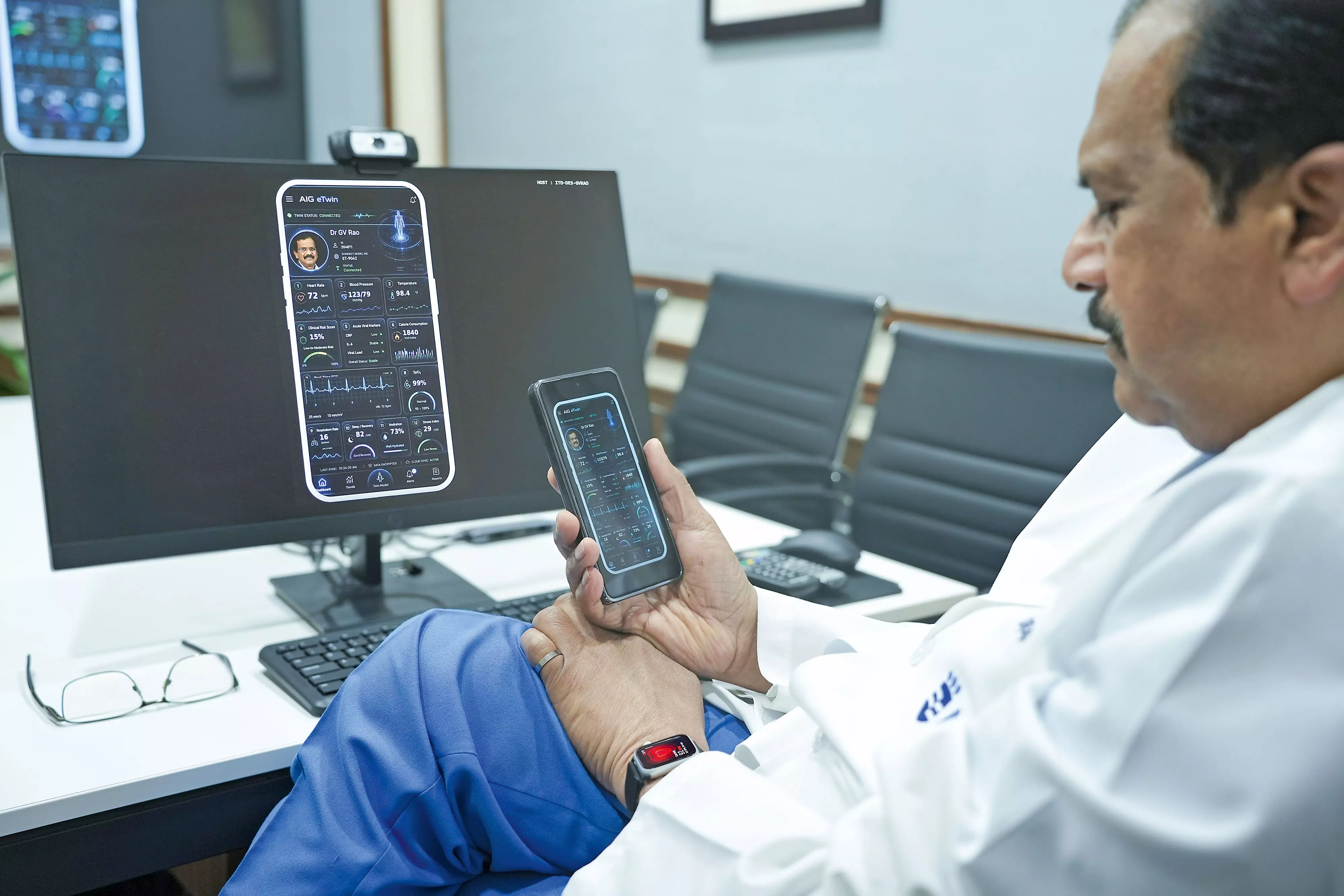
Of late, I have started enjoying seeing myself, not in the mirror, but on the digital screen of my system. My digital twin. It is becoming more productive and rewarding than scrolling through other people’s reels. I am scrolling my own data.”
For Dr G V Rao, director, AIG Hospitals, a traditional mirror reflects appearance; a digital twin reflects patterns, bringing together biological, physical, mental and social dimensions. “It is not merely about monitoring or predicting my health; it is about understanding myself better.”
He sees digital self-care as an extension of personal dignity, involving cleaning up, updating, organising and protecting one’s digital identity.
“When I scroll through my data, I reclaim my attention. Instead of allowing algorithm to decide what deserves my gaze, I decide what deserves to be remembered, measured, improved or deleted.”
But self-monitoring has its pitfalls. “A digital twin should serve me, not control me,” he cautions. For Dr Rao, the idea is ultimately about taking ownership of one’s digital life. “I am no longer scrolling other people’s lives. I am tending to my own.” But can this personal dashboard help doctors anticipate illness?
When wearables meet medical records
Dr Raghu Cherukupalli, Clinical Director and Senior Interventional Cardiologist, believes connecting wearable data with electronic medical records could transform cardiac care. “Healthcare today is reactive. Most cardiac care starts with a symptom. Breathlessness or chest pain brings a patient to hospital, and we treat the event. Between visits, we are largely blind.”
Wearables track what happens between visits. “The EMR holds the history. It does not hold what happens in the 364 days between appointments. That is what wearables now measure.”
When integrated with medical records and analysed using AI, this data could help doctors spot warning signs earlier and personalise treatment. Wearables can help detect intermittent atrial fibrillation, track blood pressure and flag deterioration in heart failure patients. Digital twins could take this further by connecting a patient’s medical history with everyday health data. “The digital twin is the engine that joins the EMR’s history to the wearable’s daily stream and asks whether a patient is drifting from their own normal.”
