There is timeless elegance woven into the Indian dhoti, which is back in vogue now with modern prints and different drapes
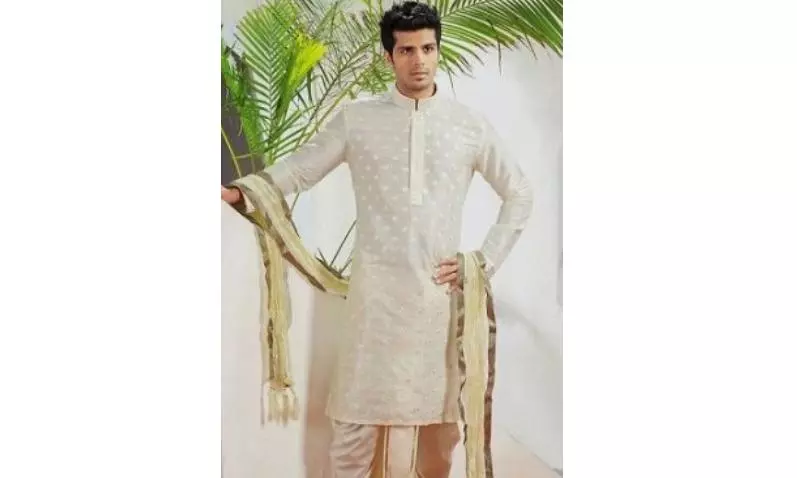
The classic dhoti is back in fashion. The traditional dhoti is gaining popularity as in its new form it blends tradition with modern flair. Thanks to amazing options, the versatile bottoms are trending as elegant fashion wear.
Various leading designers like Sabyasachi, Manish Malhotra, Tarun Tahilani, Jayanti Reddy, Anamika Khanna and others have designed dhotis that are simply sophisticated for both men and women. Dhoti is an evergreen garment that remains a popular ethnic wear. The ready-made versions of the dhoti are also easily available in vibrant colours and designs.
This traditional menswear is an unstitched piece of cloth wrapped around the waist, whose style and draped length depend on regional traditions.
Dhoti is also known as Vesti, pancha, dhotar, panchey Mardani or chaadra. In the south of India, dhoti draping has no pleats, whereas a Punjabi or UP chaddar has pleats in the front, tucked at the back. Pancha, the dhoti style from Andhra Pradesh, has an elaborate draping with pleats at the front, and it is firmly held with a waistband.
Bengali men wrap it around the waist and pleat it in the front. The lungi of Tamil Nadu, tucked in between the legs, offers a practical alternative.
Star Appeal
Celebrities often flaunt the dhoti on ramps, red carpets, and at weddings. Dhanush wore it proudly at The Gray Man premiere, while Saif Ali Khan and Nagarjuna favour it for festive occasions. Priyanka Chopra has turned it into a fusion statement, Siddharth wore it to wed Aditi Rao Hydari, and Ranveer Singh donned a traditional white-and-gold dhoti for his wedding with Deepika Padukone.
Dhoti Goes Chic
Once traditional, the dhoti now appears in pre-draped styles and dhoti pants. “It’s easier to wear yet rooted in heritage — comfortable, elegant, and perfect for modern celebrations,” says Ravi Gupta, Creative Designer and Director of Gargee Designers, Delhi.
A Versatile Yarn
The dhoti is a versatile garment that can be styled in numerous ways to create well-defined looks. It can be worn over a kurta or achkan. Paired with formal jackets, waistcoats, or even sleek shirts, the dhoti gets a contemporary, experimental style.
“This versatility enables men to express their uniqueness, whether they want royal wedding attire, a classy appearance for pujas, or a chic statement at social events. Its capacity to move so freely between conventional and contemporary styles renders the dhoti eternally fashionable. Dhotis are an integral part of our menswear collection, made of materials such as silk, cotton-silk blends, and linen to provide comfort and sophistication. Available in a wide colour palette from earthy browns, ivory, and beige to festive reds, maroons, yellows of gold, and blues. Each piece is finished with detailed margins, Zari embroidery, or minimalist texture, providing poise,” adds Gupta.
Cultural significance
Designer Kavitha Nandakumar, owner of Butterflies Boutique, Bengaluru, designs dhotis for men, women and even kids, besides other fashion wear. “Dhoti is not just clothing; it is culture, comfort, and a canvas of emotions. Though Pan-India men wear it, women in Kerala traditionally wear the Mundum-Neriyathum, a two-piece garment consisting of a lower dhoti-like cloth (mundu) and an upper cloth (neriyathu) draped over the shoulder. Today, we see both men and women draping it in style, and they also wish to dress up their kids in the dhoti during religious functions”
Today, the dhoti is no longer plain with a gold border; the designs are simply mind-boggling. Kavitha creates exclusive dhoti creations of cotton and silk in tie and dye and also expresses her creativity through Kerala mural paintings, Thanjavur painting, Kathakali, Theyyam, and many cultural themes.
Modern Touch
Thanks to its evolution, pre-draped, elastic dhotis are widely available, and so the traditional outfit is wearable and practical. The dhoti, once considered a quintessential men’s garment across Indian states, has now evolved into an androgynous attire. “Designers and modern wearers have reimagined it in styles that blur gender lines, making it equally fashionable for women. Interestingly, even traditional draping styles like the Maharashtrian nauvari saree echo a dhoti-like silhouette, showing that women have long embraced similar aesthetics. Today, the dhoti’s fluid and versatile design continues that legacy, while offering comfort and a bold style statement,” says Jayshree Koijam of Brand-11 Tareng, which she has co-founded with Reena Ahanthem to preserve the rich textile heritage of Manipur through contemporary fashion.
Women today are experimenting with dhoti pants in exciting ways, pairing them with a variety of styles. “We’ve added more flair to dhoti pants, which can be teamed up with jackets, crop tops, blouses, or even styled with sarees and dupattas. The versatility makes them a favourite for festive occasions and pre-wedding functions, allowing women to play with tradition while embracing contemporary fashion,” adds Jayshree.
Dhoti pants have entered formal and semi-formal wardrobes, too. Their structured drape, when styled with crisp shirts, peplum tops, or blazers, makes them an elegant office or evening look. Women prefer them for comfort, breathability, and the ability to stand out while still looking sophisticated.