Desi Designers Are Shaping Global Fashion Narratives

From Paris to Milan and New York, the latest ensembles reflect an interplay of worldwide runway cues and India’s century-old artistry
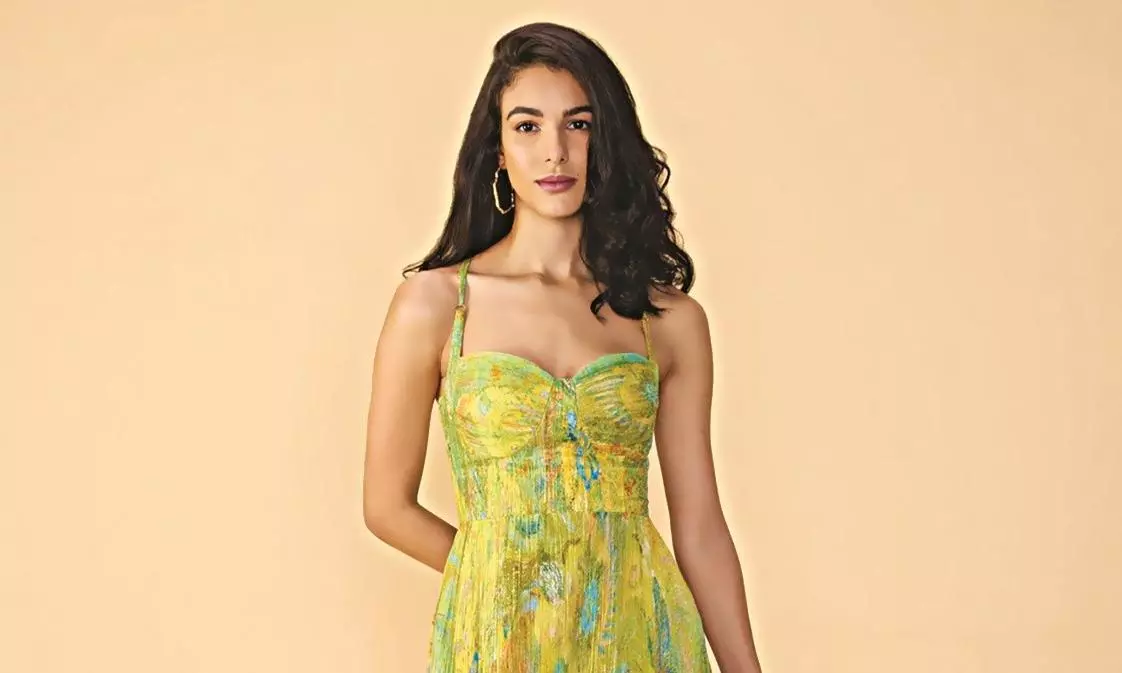
When cobalt blue commands Milan’s catwalks and romantic florals cascade through Paris, the conversation isn’t a one-way street anymore. Indian designers are no longer simply responding to international trends—they’re actively rewriting them. This season, from New Delhi to Paris, collections reflect a dynamic interplay between global runway cues and India’s centuries-old craft legacies, resulting in fashion that is both rooted and radically contemporary.
A New Season, A New Dialogue
Autumn/Winter 2025 has brought a bold, unapologetic palette: Electric blues, saturated Persian tones, and romantic florals with assertive embroidery. The revival of 80s power dressing is visible through sharp tailoring and structured silhouettes, while Y2K layering’s playful print mixes are back in rotation. Yet the most compelling interpretations are emerging from Indian ateliers, where designers are fusing these trends with intricate craftsmanship to create something distinctly hybrid—and globally resonant.
Fashion designer Aisha Rao captures this approach aptly: “We’ve always looked at global trends as a springboard rather than a rulebook. Florals have been a constant in our design language, but we love reimagining them each season with new embroideries and detailing. Power dressing and structure have also become part of our world, from blazer sets to sculpted corset gowns, and we make them our own with signature prints and handwork.”
This philosophy isn’t isolated—it mirrors a broader movement across India’s fashion ecosystem. Designers are engaging with global aesthetics while asserting indigenous craft as central, not peripheral. As fashion designer Saaksha Bhat, co-owner of Saaksha & Kinni explains, “To represent romantic florals, designers have turned to traditional block printing techniques and soft fabrics like chanderi and mul muls. For 80s power dressing, we’re seeing bold brocade power suits and recycled polymers used to create architectural shapes. And with Y2K layering, many designers are combining ikats and florals to add a textural element. It’s a fusion of international aesthetics with centuries-old craftsmanship.”
History in the Seams
India’s relationship with fashion is deep-rooted. Textiles and embellishments were once central to global trade, coveted in royal courts from Persia to Europe. Techniques like Zardozi embroidery, Chikankari, and Banarasi weaving evolved over centuries, supported by royal patronage during the Mughal era. By the 19th century, Indian chintz had already shaped European sartorial tastes, influencing silhouettes and prints across the continent.
The contemporary Indian fashion industry began to coalesce post-liberalisation in the 1990s, with pioneers like Ritu Kumar, Rohit Khosla, and Sabyasachi Mukherjee establishing a modern Indian aesthetic that merged traditional craft with couture.
Indian fashion weeks became platforms where tradition collided with experimentation. By the 2000s, Indian designers were making bold statements abroad: Manish Arora’s vibrant maximalism stunned Paris in 2007, while Rahul Mishra’s 2014 International Woolmark Prize win and subsequent Paris Haute Couture showcases positioned Indian handwork as couture-grade artistry. Gaurav Gupta’s sculptural couture at Paris Haute Couture Week in 2023 and Vaishali S.’s innovative khadi weaves only reinforced this trajectory.
Craft as Contemporary Couture
Today, techniques once labelled “ethnic” have moved centre stage. Bold embroideries, saturated hues, and culturally anchored accessories are defining, not just decorating, international fashion narratives. “In the West, ‘craft’ is having a moment. But in India, it has always been the foundation,” notes Saaksha. “Vibrant colour stories—from Rani pinks and turmeric to electric blues—have moved from Indian ateliers to global runways, influencing how the world now embraces maximalism. Accessories once considered regional—mirror-work bags, embroidered shoes, silver jewellery—are now symbols of cultural confidence, styled with denim, suits, and streetwear alike.”
This cultural feedback loop has become increasingly visible in how major European houses are referencing—sometimes quite directly—Indian design elements. Recently, Prada released a pair of sandals that bore a striking resemblance to traditional Kolhapuris, the handcrafted leather footwear from Maharashtra that has been worn for centuries. Their minimal straps, toe loops, and raw-textured finish mirrored the exact silhouette of classic Kolhapuris, though presented under the banner of “elevated minimalism.” Similarly, Chanel unveiled a collection of evening bags that looked uncannily like desi potlis —drawstring pouches heavily embroidered with zari and beads, traditionally used for festive occasions. Styled with gowns and tweed suits, these potli-like bags were celebrated as “the new evening essential,” despite their long history on South Asian streets and weddings.
These moments underscore something critical: India is not merely inspiring from the sidelines. Its aesthetics are increasingly central to global fashion’s visual language—whether through direct reinterpretation by Indian designers or indirect adoption by international luxury houses.
The Gaze Has Shifted
For decades, Indian textiles and embellishments were extracted as exotic motifs on Western mood boards. Today, that dynamic is evolving. “Every region in India holds a distinct narrative, yet together they form an intricate tapestry of shared heritage,” says fashion designer Aprajita Toor. “Indian designers today aren’t simply following global trends; they’re reinterpreting them through the lens of our own heritage.
Bold embroideries, saturated hues, and statement accessories don’t imitate—they translate India’s visual language into a contemporary idiom the world now looks to for inspiration.”
Vinnie Ghatiwala, fashion designer, owner of Mèroh takes this further, emphasizing that Indian fashion isn’t just reactive—it’s part of broader global shifts. “Our creations are not a simple re-interpretation of global trends by Indian designers, but rather reflective of the large global shifts of which India is a part. Thanks to our technology, expert artisanship, and design aesthetic, our creations feel contemporary and at home anywhere in the world.”
India: From Influence to Authorship
The global fashion narrative has become polyphonic. Paris may dictate the calendar, but cities like New Delhi and Mumbai are increasingly dictating the mood. From romantic florals reworked with kantha stitches to Y2K layering enhanced with ikats, from Kolhapuri-inspired sandals on luxury runways to potli-shaped handbags carried by models in Paris, India’s design vocabulary isn’t a reference point—it’s a driving force.
The shift is clear: tradition is no longer a backdrop. It’s centre stage. And Indian designers, armed with craft, innovation, and cultural confidence, are shaping fashion’s future—not from the margins, but from the heart of the conversation.
Desi Classics, Global Appeal
• Prada released a pair of sandals that bore a striking resemblance to traditional Kolhapuris
• Chanel unveiled a collection of evening bags that looked uncannily like desi embroidered potlis
