Exploring the significant rise in the appeal of sunbeds as a favoured wellness choice for numerous individuals. Experts warn about the dangers of skin cancer
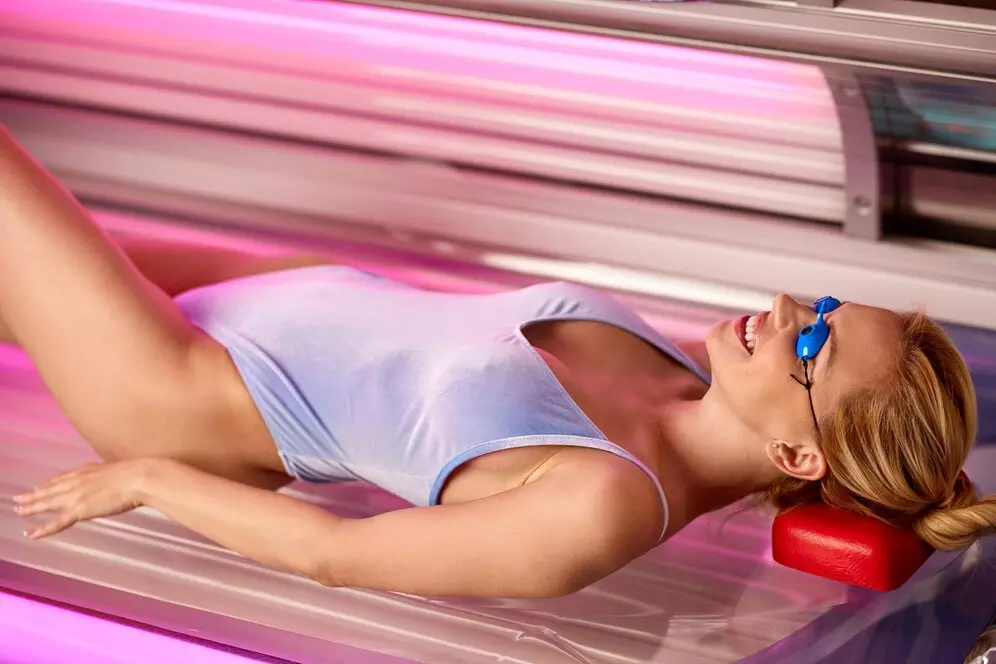
With bronzed skin so often billed as a marker of positive health, it’s no wonder the global self-tanning products market is expected to grow to $1.58 billion by 2029. Even though tanning beds are recognised as Group 1 carcinogens by the World Health Organisation and the International Agency for Research on Cancer, they continue to attract many users, especially youth, often motivated by the belief that they enhance appearance and boost self-confidence.
Kim Kardashian, a skincare mogul focused on ageing and wellness, recently showcased her commitment to bronzed skin by disclosing that she not only uses a tanning bed but has one installed in her office for frequent touch-ups.
It’s all about sunbeds
Celebrity cosmetic dermatologist Dr Jaishree Sharad (skincare specialist to Ranbir Kapoor and Jacqueline Fernandez) says, “Youngsters are all about sunbeds these days, and it’s not just because they want a golden glow. They see tanning beds as a quick fix for getting a tan, especially in places with not-so-great sun.”
Be aware: an artificial sunbath, like a natural one, isn't without risks, she warns.
“Tanning beds are dangerous. Just one session can increase your chances of getting skin cancer by a whopping 67% for squamous cell carcinoma and 29% for basal cell carcinoma. And the more you use them, the higher the risk,” warns Jaishree.
“Many people think tanning beds are safer than the sun, but that’s not true. The controlled environment doesn't make them any safer. It just means you’re getting a lot of radiation in a short amount of time,” she adds.
A recipe for skin cancer
Tanning beds work by giving off UVA and UVB rays, which are like the sun’s rays but way stronger. UVB rays cause burns on the surface of your skin, but they also mess with your DNA, which can lead to skin cancer over time.We ask Dr Ramu Damuluri, a surgical oncologist at Apollo Hospitals, to shed some light on the matter.
Are they safe?
Many people want glowing, tanned skin. But using sunbeds, sunlamps, or tanning booths is not safe. These machines give off ultraviolet (UV) rays, just like the sun. Too much UV exposure damages the DNA inside your skin cells. Over time, this damage can lead to skin cancer.
How does cancer happen?
UV radiation damages your skin cells. This damaged DNA can cause the cells to grow abnormally and form a tumour. Such damage is how skin cancer, including melanoma (the most dangerous type), develops.
“The number of skin cancer cases is rising every year, especially among young adults. The primary cause of skin cancer is exposure to ultraviolet radiation from the sun or sunbeds. Melanoma is one of the fastest-growing cancers among people under 40. Most cases can be prevented by avoiding sunbeds and protecting your skin.”
Are sunbeds safer than sunlight?
No. Sunbeds use stronger UV radiation than natural sunlight. Even a few sessions can increase your risk. A tan indicates that your skin has already suffered damage. There is no such thing as a safe UV tan.
Studies indicate that the likelihood of developing cancer from tanning bed usage is significantly elevated. “Cancer research organisations have indicated that the risk associated with tanning beds is nearly equivalent to that of tobacco use. Tanning beds pose risks to individuals regardless of their skin tone or complexion. Individuals with darker skin, such as the majority of Indians, possess a higher number of melanin-producing cells; however, this does not diminish the risk of skin cancer associated with tanning beds,”
— Dr Janaki K. Yalamanchili, Consultant Dermatologist, Cosmetologist, and Trichologist at KIMS Hospitals.