Choosing inner coherence in an age of burnout

Leadership coach and trauma-informed therapist Hariprasad Varma Raja on ancient wisdom and why slowing down is a radical act in today’s high-speed work culture
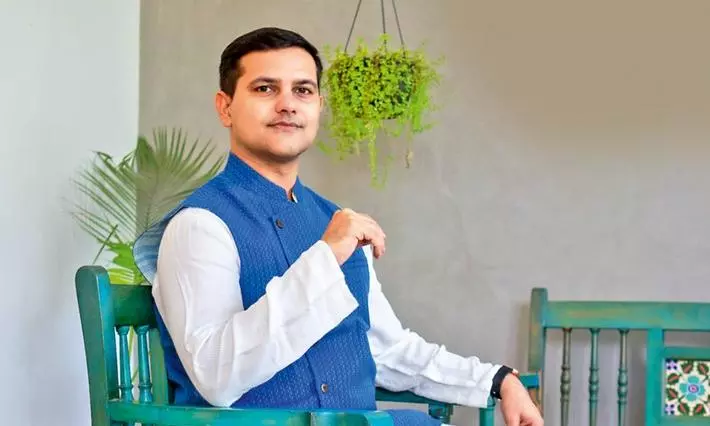
In a world driven by speed, scale and measurable outcomes, Hariprasad Varma Raja chooses to work in quieter, more reflective terrain. An internationally accredited life and leadership coach, trauma-informed somatic therapist and dialogue facilitator, he helps leaders and organisations reconnect with something often sidelined in modern work cultures: inner coherence.
Founder of Zensei, a boutique coaching and leadership development firm, and Yogasala, which focuses on trauma healing and therapeutic retreats, Hariprasad blends ancient Indic wisdom with contemporary organisational development practices. His work spans corporate and social sector clients across more than 25 countries.
The meaning of fulfilment
For Hariprasad, fulfilment has little to do with constant upward mobility. “There is a Sanskrit word, Samtusti,” he explains. “It means complete contentment. Fulfilment is the experience of acting from a place of wholeness rather than chasing what we believe is missing.”
He believes modern culture actively erodes this sense of fulfilment.“We are constantly reminded that we are not enough,” he says. “Choosing to feel content and grateful, and then acting from that place, is actually a radical act today.”
Beyond trends
Hariprasad is cautious about wellness becoming just another consumer trend.“Well-being is often reduced to fitness routines or the flavour of the month,” he observes. Instead, he draws from Ayurveda’s concept of svasthyam—a holistic state in which body, mind, senses and inner life are aligned. “A truly healthy person is one whose internal systems are in harmony and whose mind and senses are at ease,” he says. “That definition is far more nuanced than most modern interpretations of health.”
Where ancient wisdom meets modern leadership
Raised in Kochi and educated at Chinmaya Vidyalaya, Hariprasad was introduced early to Yoga, Vedanta and the “Bhagavad Gita”. His professional journey took shape after nearly a decade in the corporate world with organisations such as Google, Accenture and Amazon.
“When I stepped away from full-time corporate work, I wanted to connect the dots between leadership and well-being,” he recalls. Today, his coaching integrates Yogic Depth Psychology, the Na?ya Sastra and the Mahabharata with modern leadership tools that go beyond surface-level interventions.
Despite growing interest, he acknowledges that holistic approaches still face resistance in analytical environments. “All systems have a bias towards self-preservation,” he says. “Leaders often fear that human-centric practices won’t seem logical or immediately productive.”
Yet, he argues, the cost of ignoring well-being is far greater.“When well-being is sidelined, the consequences eventually show up—burnout, disengagement, breakdowns. Investing in people makes systems more responsive and resilient.”
The power of small rituals
In an age of constant distraction, Hariprasad sees daily rituals as essential.“Rituals help regulate the nervous system. They create a pause between what was and what is to come,” he explains.
Simple practices—breath awareness, mindful movement or consciously orienting oneself to a space—can restore balance.“Rituals don’t have to be elaborate,” he adds. “They gain power through repetition and intention.” Across cultures, he notes, the need is universal.
“The nervous system is the same everywhere,” he says. “Every culture has ways of slowing down. Remembering them may be key to living—and leading—well.”
