RGV’s provocation has exposed Telugu cinema’s most uncomfortable question: who is really running the industry, the producer, the star, or the money?
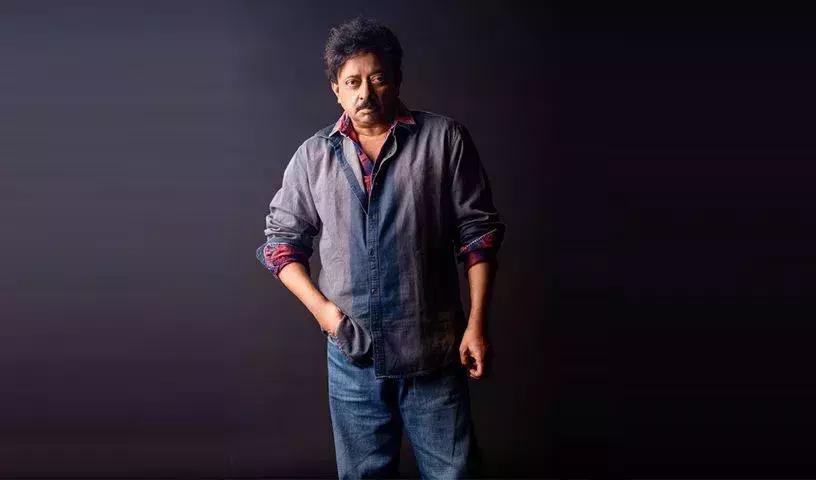
Ram Gopal Varma has reignited one of Telugu cinema’s oldest debates with a blunt question: are today’s producers really producers? “Why are we even calling them producers? Basically, they aren’t producers, they’re just investors,” Varma said. He argued that many contemporary Telugu producers no longer function as creative producers, leaving scripts, schedules, budgets, and key filmmaking decisions to directors and stars.
His remark struck a nerve as Telugu cinema grapples with soaring budgets, delayed productions, and costly box-office failures, reducing many producers to financiers.
The rise of the cheque signer
Producer Vishnu Induri, best known for NTR: Kathanayakudu, NTR: Mahanayakudu, Thalaivii, and ’83, believes the problem is not that producers have changed, but that investors have begun calling themselves producers. “The role of a producer has always been the same,” he says. “But people who simply put money on the table and stay away from the creative and financial discipline of filmmaking have escalated costs, paid premiums for dates, and made cinema look like a gamble.”
“Anyone who pays extra to jump the queue and secure dates is spoiling the industry,” he says. “If the cost of making a film is not aligned with market reality, the business is not sustainable.”
There is no single producer model
Veteran producer D. Suresh Babu, best known for Kalisundam Raa, Malliswari, Drushyam, Gopala Gopala, Oh! Baby, Narappa, and Drushyam 2, believes there is no single definition of a producer. “Some are deeply involved in every stage of filmmaking; others back a director, star, and team, and let them do their jobs.” He argues that success cannot be reduced to one model. The same approach can produce both a blockbuster and a flop. Suresh Babu cites Mythri Movie Makers’ Pushpa and Reliance Entertainment’s Dhurandhar as examples of producers giving directors significant creative freedom. “There are multiple ways of making a film,” he says. “What matters is the business model and what suits the producer.”
The accountability gap
Producer Abhishek Nama, known for Goodachari, Keshava, Ravanasura, and Devil, argues that the real issue is accountability. “A producer’s job is much bigger than financing a film,” he says. “The director explains what is needed creatively, but the producer decides what is financially feasible and gives the final approval.”
He compares Telugu cinema with global studio systems where directors enjoy creative freedom, but budgets, schedules, and major changes remain subject to producer or studio approval.
“Creative freedom is essential. Financial discipline is equally essential,” Nama says. “A producer is not just an investor. A producer is the guardian of the film’s vision, budget, and accountability.”
The cycle of power
People Media Factory’s T.G. Vishwa Prasad, the producer behind films such as Goodachari, Oh! Baby, Venky Mama, Karthikeya 2, Dhamaka, BRO, Eagle, Viswam, Mirai, and The Raja Saab, believes Telugu cinema moves in cycles. “There is no education programme for a producer,” he says. “Every film teaches you something.” He argues that the industry has moved from the producer era to the star era, then the director era, and now a spectacle-driven phase. But films such as Kantara, HanuMan, Sita Ramam, and Baby show that strong content can still outperform star power.“We are cycling back to where it started, the producer and the content,” he says.
A correction already underway
Producer Jhanvi Narang, best known for Premante, believes the problem exists but warns against sweeping conclusions. “There are producers making small, mid-sized, and big films with a strong focus on stories and quality content,” she says. “At the same time, producers need to reclaim some of their power by spending more time on scripts, pre-production, and budgeting.” Her view reflects a broader sentiment within the industry: that the correction may already be underway.
What RGV really exposed
The biggest names in Telugu cinema, including Allu Aravind, D. Suresh Babu, and Dil Raju, are rarely seen as passive financiers. RGV was not attacking all producers, but those who fund films while leaving scripts, budgets, schedules, casting, and key decisions to directors and stars.
As Abhishek Nama says, “A producer should not interfere creatively, but must ask the right questions: cost, necessity, efficiency, and value.” Suresh Babu counters that there is no single production model. The real question is not who signs the cheque, but who still shapes the film.
Pullout Quotes
“If the cost of making a film is not aligned with market reality, the business is not sustainable.” — Vishnu Induri
“If that model gives you a film like Pushpa, everyone says it is the right way. The same approach on another film can become a disaster. .There are multiple ways of making a film. Dhurandhar is one model; Pushpa is another. Both are valid if that is the producer’s choice.” — D. Suresh Babu
“A producer is not just an investor. A producer is the guardian of the film’s vision, budget, and accountability.” — Abhishek Nama
“We are cycling back to where it started — the producer and the content.” — Viswa Prasad
“Producers need to reclaim some of their power by spending more time on scripts, pre-production, and budgeting.” — Jhanvi Narang
Hands-on producers
Traditionally, producers do not direct a film creatively, but they retain control over budgets, schedules, casting approvals, production planning, and distribution.
D. Suresh Babu: Script, budgeting, production, and distribution.
Allu Aravind: Story development, talent, marketing, and release strategy.
Dil Raju: Script development, casting, budgeting, and planning.
Shobu Yarlagadda: Deeply involved in every stage of Baahubali.
M.S. Raju: Scripts, music, and overall production.
Mythri Movie Makers: Strong production oversight across major blockbusters.
The new reality
With superstar directors and stars, producers often have limited control over budgets and schedules.
Directors: S.S. Rajamouli, Sukumar, Trivikram Srinivas, Atlee.
Stars: Ram Charan, Allu Arjun, Jr NTR, Prabhas.