Byte-Sized Sanyam Gyaan For Students

As exam stress takes a toll on young minds, can a blend of ancient Indian wisdom and AI offer a modern-day antidote?
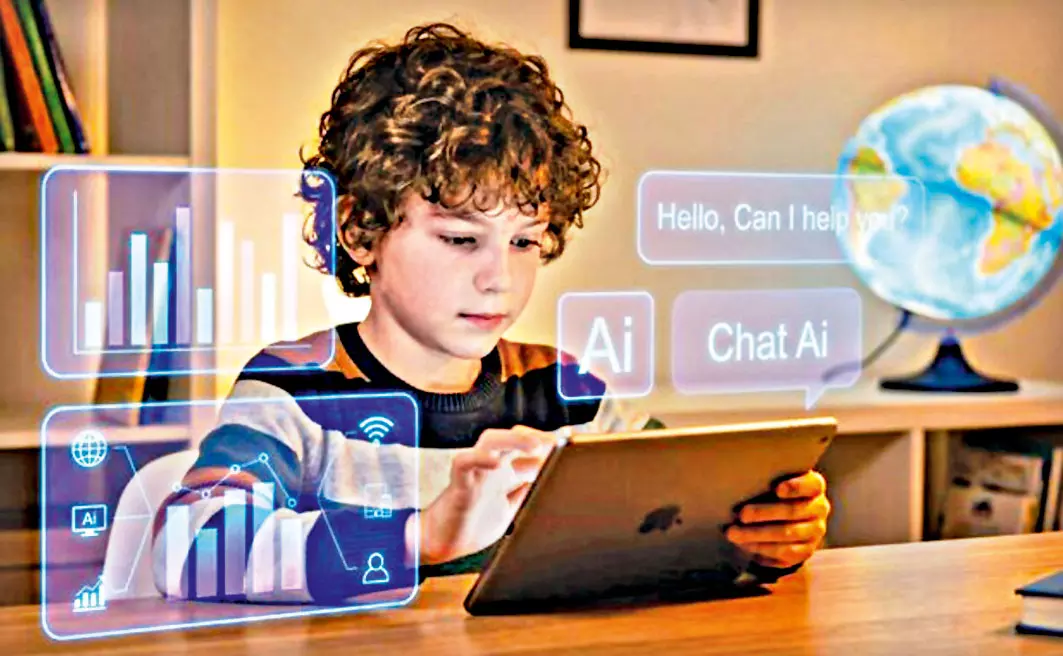
When marks become a measure of merit and failure a measure of self-worth, the emotional cost of academic ambition can be immense. However, a new crop of AI-driven platforms is blending artificial intelligence with India’s traditional wisdom. They are bringing concepts such as Sanyam, self-reflection and emotional resilience into the conversation around student wellbeing.
Education Rooted in Wisdom
“India has a rich tradition of looking at education as the development of the whole human being, not merely the acquisition of knowledge or academic achievement,” says Syed Sultan Ahmed, Education Leader, Film Pedagogy Pioneer, Founder, School Cinema Chairperson, TAISI, India.
He says that concepts such as self-awareness, balance, discipline and acceptance have always been integral to Indian philosophical traditions. Syed Sultan believes AI presents an opportunity to make these ideas more accessible to young people through a language and format they can relate to. It can encourage introspection, introduce simple emotional regulation practices and help students recognise patterns in their stress.
Examination anxiety has become a widespread concern. If the education system continues to measure success through marks, rankings and competition, technology can only help students manage the symptoms of a much larger systemic problem.
Learn To Pause
Exam stress can show up in different ways. Some children become irritable, they have bouts of crying, have difficulty concentrating, a lot of disturbed sleep, headaches, stomach aches, even acidity.
Riddhi Doshi Patel, a Child Psychologist, Parenting Counsellor & Corporate Trainer observes that children tend to respond to examination pressure in two extremes: while some seek reassurance, regain their footing and carry on, others retreat completely, struggling to cope with the fear of failure.
“When society attaches disproportionate importance to examinations, children inevitably begin to fear the possibility of failing. The pressure surrounding the examination itself can become overwhelming,” Riddhi says, urging parents to recognise changes in their children’s behaviour rather than dismissing them as routine academic stress.
Riddhi asks parents to watch closely their children’s sleep patterns, eating habits and a reluctance to attend school. Any significant change in these could signal that a child is struggling emotionally and needs attention and, where necessary, professional support. She believes concepts such as Sanyam, mindfulness and self-reflection can offer young minds valuable tools to navigate such pressures. It is simply learning to pause, recognise what they are feeling, process those emotions and respond rather than react.
Finding Self
Devendra K Rane, founder of Atman Care, says “Atman as a platform uses an AI-driven chatbot to introduce children to philosophical questions such as 'Who am I?' through playful, age-appropriate conversations.”
He believes helping children recognise that their identity extends beyond examination marks, physical appearance and social acceptance can foster a healthier sense of self. Technology is merely the medium. The larger objective is to nurture self-awareness, Sanyam and resilience through Indian philosophical traditions and modern psychology.
He quips, “Ultimately education should do more than prepare children for examinations. It should help them discover who they are, and develop the resilience to face uncertainty.”
The Risk of Dependency
While AI-driven platforms may offer students an accessible outlet to articulate their anxieties, can they genuinely help young minds distress, or risk making them dependent on technology for emotional reassurance?
Salwa Mohammed Ehsan Jumai, Middle School Teacher, Social Studies, GEMS Our Own English High School, Dubai believes integrating AI with Indian traditions is an innovative approach, but cautions against treating such platforms as substitutes for family support systems and established values.
“As a teacher, I 100% feel that such apps have the potential to create a sense of dependency among students,” she says.
Pointing to students increasingly turning to the internet, ChatGPT and Grok whenever they encounter doubts, she believes the younger generation is already heavily reliant on technology.
Introducing AI into their emotional lives could further deepen this dependence. “Then what is the point of educators trying to nurture children into building a social life through interactions in school and society?” she asks. Emotional resilience must also be built through real-world relationships and human connections.
There is a larger concern about introducing AI platforms into schools at an impressionable age. Earlier, a child would instinctively seek out parents, siblings, grandparents or teachers for reassurance and guidance. Salwa says, “Today, there is a possibility of them returning home and asking an AI chatbot how to process their feelings or what they should do next.”
Beyond Exam Stress
Education must prepare children for life, not just examinations. Syed Sultan says, “One of my concerns about education today is that we have become very good at preparing children for examinations, but not necessarily for the disappointments, uncertainties and challenges of life.”
He stresses that resilience is not built by avoiding difficulties, but by learning to navigate them. Children must be allowed the space to fail, recover, make decisions, take responsibility and discover their own ability to overcome life's challenges.
The Human Equation
While Indian philosophical traditions offer valuable lessons in self-awareness, restraint and balance, these must complement, not replace, human relationships and support systems. After all, technology may help children pause and reflect, but resilience is built through lived experiences, human connections and the ability to navigate life's uncertainties independently!
As a teacher, I feel that such apps have the potential to create a sense of dependency among students.”
— Salwa Mohammed Ehsan Jumai, Middle School Teacher
Atman as a platform uses an AI-driven chatbot to introduce children to philosophical questions such as 'Who am I?' through playful, age-appropriate conversations.”
— Devendra K Rane, founder, Atman Care