Young Indian STEM prodigies are pushing the boundaries of science, tackling global challenges and imagining a more innovative world for the generations to come
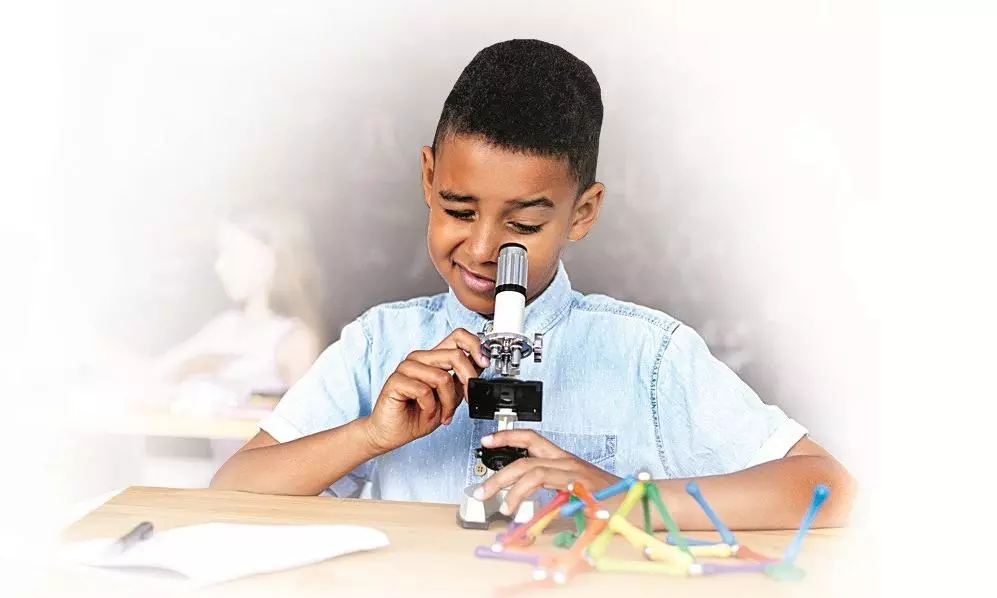
As India marks its 80th Independence Day, a new generation is looking ahead. For these young STEM minds, independence is not just about remembering the freedom we inherited, but imagining the freedom we can create to question, experiment, innovate and shape a better India. It is also about creating the conditions that allow future generations to dream bigger than those before them.<
At first glance, young innovators Sirish Subash, Madhvi Chittoor and Gitanjali Rao appear to be solving very different problems. One wants to transform science education. Another is fighting for environmental justice and children’s participation in policymaking. The third is determined to make education and mentorship accessible to every child. Yet, beneath their individual journeys lies a shared blueprint for India’s future. They all believe curiosity should be encouraged rather than discouraged.
Tiny Atoms, Big Impact
These world-renowned STEM minds believe classrooms should inspire questions instead of rewarding memorisation alone. They believe failure should be recognised as a step towards discovery rather than something to fear. They believe children deserve to be heard not someday, but today. And above all, they believe that talent should never be determined by geography, privilege or circumstance. The India they imagine is cleaner, kinder and more inclusive. It is an India where science is driven by empathy, technology serves society and innovation reaches beyond laboratories into classrooms, villages and communities.
The Power of ‘Why’
Sirish believes India already has enormous talent, ambition and technical ability among its young people. What is needed is access to the resources that allow that ability to become innovation.
He does not believe children need to wait until they are older to contribute. “They can start building and testing ideas now,” he says. For him, one of the biggest changes India needs is to move beyond teaching scientific and technical content towards developing the habits that make someone think like a scientist: questioning assumptions, reasoning from evidence, designing experiments and understanding unexpected results.
“Scientific intuition develops through actually doing science,” he says. That does not necessarily mean putting an expensive laboratory in every school. The idea is simple: science should be something children do, not just something they study
And if Sirish could turn that approach towards one of India’s biggest challenges, he would choose infrastructure. Clean water, reliable electricity, transportation and sanitation, he points out, have consequences far beyond infrastructure itself. They influence health, education and access to economic opportunity. He wants to see technologies that make essential infrastructure cheaper and more reliable to deploy.
Sirish sees failure not as a setback, but as an opportunity to learn. Every failed experiment, he believes, offers valuable clues, challenges assumptions and helps refine the path towards a better solution.
Claim To Fame
• Innovator of PestiSCAND that detects harmful residue of pesticides on washed fruits and vegetables
• Author of Carbon Block Puzzle and Biochemistry the Fun Way
Making A Clean Sweep For the Future
For Madhvi, young people cannot be treated merely as future citizens. They are citizens today, living with the consequences of decisions made by adults. That is particularly true of climate and environmental policy. Her dream is an India where a child’s development is never compromised. But her vision of environmental progress is also connected to equality and accountability. “To me, being an independent young Indian means having the agency, the courage and the systemic backing to defend our planet’s life-support systems,” she says. For Madhvi, economic and technological growth alone cannot define India’s progress. The country must also become wiser, safer, cleaner and more equitable. Her philosophy brings together two forces that are sometimes treated as opposites: science and compassion.
Inspired by the teachings of Swami Vivekananda, she believes India can embrace cutting-edge scientific thought while retaining a sense of responsibility towards living beings and the environment.
A Powerhouse of Talent
Gitanjali feels a student needs teachers, mentors and opportunities to experiment. They need someone willing to take an early idea seriously. She believes India must also rethink how it teaches science. Instead of teaching theories first and asking students to apply them later, she wants classrooms to begin with real problems that children want to solve. “I think more students would see themselves as scientists and innovators if they had the chance to use what they were learning to solve problems they see around them,” she says.
Having grown up with smartphones, and AI, her generation understands the challenges of technology. Rather than trying to keep young people away from technology, she believes they should help design healthier ways of living with it. Her biggest hope for India over the next 15 years is that progress will no longer depend on geography. “A student growing up in Bengaluru or Mumbai can have a completely different idea of what is possible,” she says. She wants that gap to disappear so that a curious child anywhere in India can find a great teacher, reach a mentor and take a good idea forward.
Claim To Fame
• Developed device to detect contamination in water
• Developed an AI-based anti-cyberbullying service