Every time violence makes headlines, the answer is the same: teach girls self-defence. But is that enough? Experts say the bigger challenge is raising a generation that values respect, consent and empathy
Long before another crime against a girl reignited the debate on women’s safety, Akshay Kumar had been making the same argument. A black belt in Taekwondo and one of Bollywood’s most accomplished martial artists, the actor has repeatedly called for martial arts and self-defence to be made compulsory for girls in schools for at least three years. Pointing to countries such as China and Singapore, where such training is woven into the education system, he has argued that India, too, must stop treating self-defence as an extracurricular activity and recognise it as an essential life skill.
Every time a crime against a girl dominates headlines, the response is painfully familiar. Schools issue advisories. Parents tighten curfews. Politicians promise stricter laws. Social media erupts with outrage.
Then the headlines fade, until the next tragedy. Experts agree that girls must be equipped to protect themselves. However, the real challenge is bigger: empower girls with the confidence and skills to respond in danger while
ensuring boys grow up understanding consent, empathy, respect and responsibility.
A LIFE SKILL, NOT AN EXTRA ACTIVITY
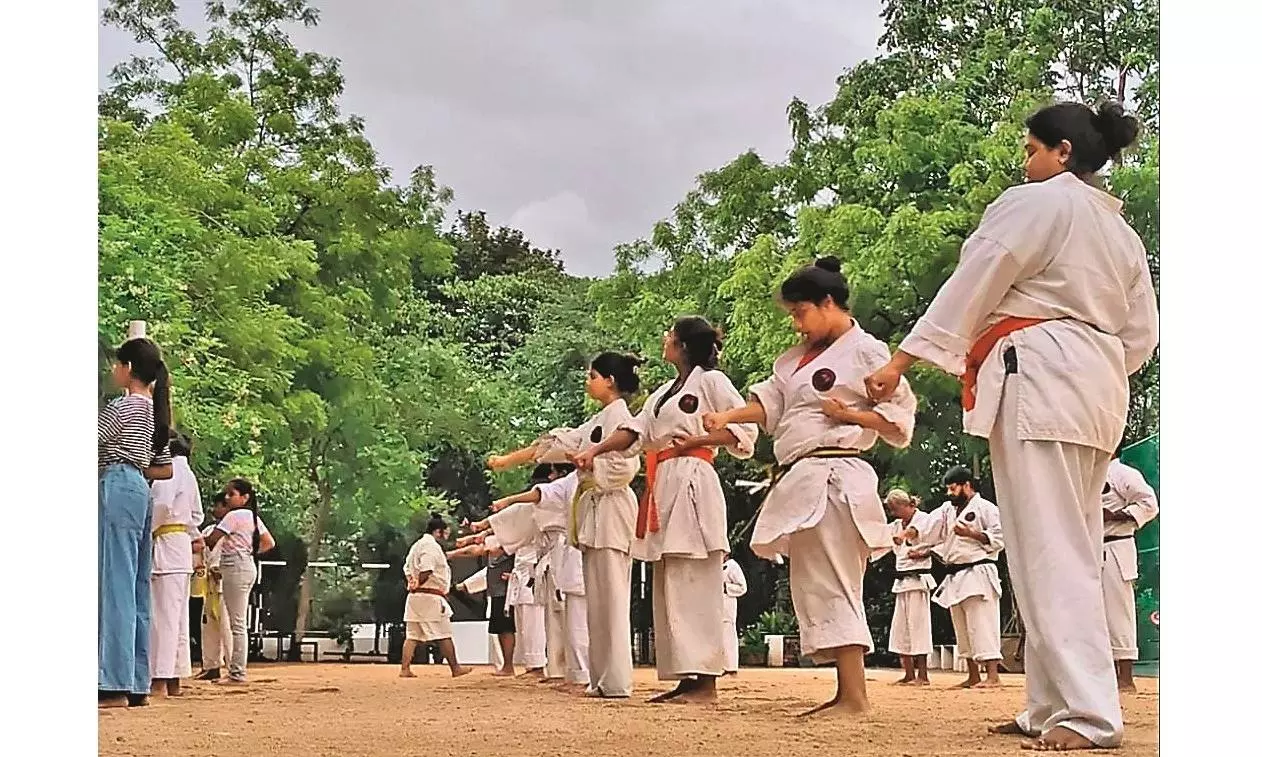
Self-defence is often treated as an extracurricular activity. Educators believe it should be recognised as a life skill.
“Self-defence is an invaluable life skill that builds confidence, situational awareness, resilience and the ability to respond in moments of danger. We teach children to swim not because we expect them to fall into deep water, but because preparation builds confidence and can save lives. Self-defence deserves the same place in the curriculum — not as an annual demonstration or token workshop, but as a structured programme delivered by qualified instructors,” says Amritha Chandra Raju, Vice Principal, The Hyderabad Public School, Begumpet. She believes children should learn age-appropriate skills — from body autonomy and safe touch to situational awareness, digital safety and practical self-defence — as they grow.
WHY ONE-DAY WORKSHOPS DON’T WORK
Most schools organise self-defence workshops only after a disturbing incident. Experts say awareness without repetition creates a false sense of preparedness.
“A few-hour workshop is of no use except as an introduction. Ideally, a minimum of two years of regular training is needed because techniques have to become muscle memory,” says Farzaan Merchant, Founder and Chief Instructor, Jukaado.
Clinical psychologist Dr Prerna Kohli agrees. “‘Enough’ isn’t a number of hours. What changes a girl’s response in a real moment isn’t mastery — it’s rehearsal. Forty-five minutes every week for a year does far more than a six-hour camp once a year. Repetition helps overcome the body’s natural freeze response,” she says.
Merchant adds that self-defence extends beyond physical techniques. It includes recognising danger, verbal de-escalation, understanding basic law, identifying pre-attack cues and, above all, escaping safely.
TEACH GIRLS. TEACH BOYS
Making self-defence compulsory is important. Making it the only solution is not. “If we teach only girls how to defend themselves, we risk sending an unintended message that their safety is their burden to carry. The responsibility for violence always rests with the perpetrator—not the victim,” says Amritha Chandra Raju.
Dr. Kohli believes society often places the entire burden of safety on girls while ignoring the attitudes that enable violence.
“Teaching a girl to break a wrist-grip is necessary in the world we have. Raising a boy who would never grab her is how we build a better one. Schools should teach boys consent, respect, emotional regulation and what strength actually means —that another person's ‘no’ is final.”
Empowering girls and educating boys, experts agree, are complementary — not competing — priorities.
MAKE IT MANDATORY?
The biggest obstacle isn’t money. It’s priority. “Education is not only about preparing children for examinations; it is about preparing them for life. Self-defence equips students with confidence, awareness, discipline and the ability to protect themselves,” says B. Jivitesh Reddy, Director, Niraj Public School.
According to him, most schools already have the space to conduct classes.
“The biggest hurdle isn’t funding or infrastructure — it’s prioritisation. What schools need are certified instructors, structured timetables and a commitment to treat self-defence as a life skill rather than an extracurricular activity.”
He also believes the National Education Policy should integrate self-defence into school education and that schools should be assessed not only on academic performance but also on safety preparedness, including personal safety, cyber safety and child protection.
CAN’T STOP AT THE SCHOOL GATE
Schools can start the change. They cannot finish it. Parents must raise sons who understand consent and respect — not simply tell daughters to “be careful.” Governments must support schools with trained instructors and policy backing. Colleges and workplaces should continue safety and gender-sensitisation programmes, while the justice system must ensure swift accountability.
Self-defence may help someone survive an attack. Society must work to prevent that attack from happening in the first place.
WHAT EVERY SCHOOL PROGRAMME SHOULD INCLUDE
· Safe and unsafe touch
· Personal boundaries
· Situational awareness
· Cyber safety
· Verbal de-escalation
· Emergency response
· Basic legal awareness
· Practical self-defence
· Confidence building
MARTIAL ARTS VS SELF-DEFENCE
· Martial arts build fitness, discipline and confidence.
· Self-defence prepares people for real-world threats by focusing on:
· Situational awareness
· Recognising pre-attack cues
· Verbal de-escalation
· Safe escape
· Legal awareness
· Decision-making under pressure