AI Has a Voice. Artists Are Losing Theirs

Vishnu Manchu is questioning who owns a voice in the age of AI. For dubbing artists, the threat of being cloned and replaced is already real
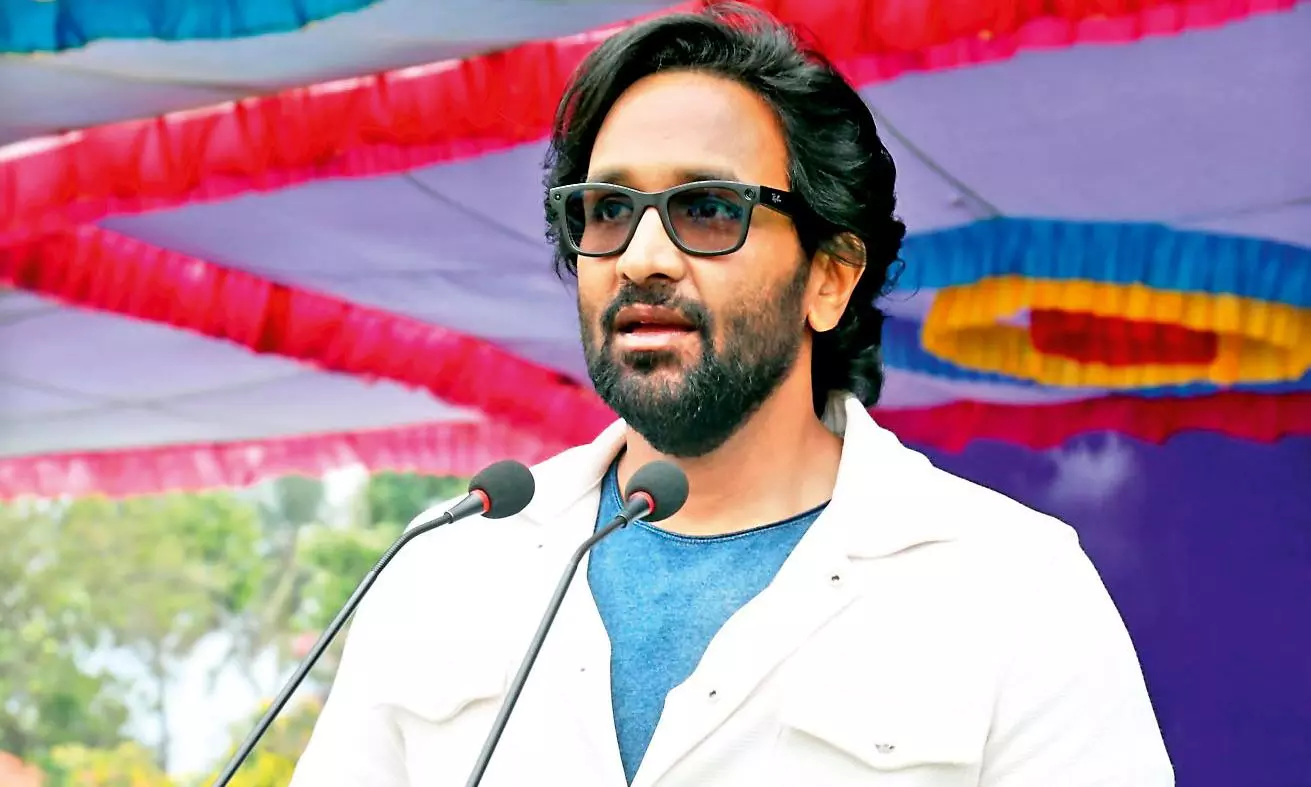
Vishnu Manchu is asking the question Indian cinema has been avoiding: If AI can recreate an actor’s voice, face and entire performance, who gives consent?
The actor? The producer? The studio? Or nobody, in the absence of a clear law?
Manchu says the industry is sleepwalking into a crisis. Hollywood is already writing AI protections into contracts. India has nothing. And voice artists are the first to feel the hit.
Work is disappearing
“Earlier, almost every voice requirement needed a human artist. Now, many projects are shifting to AI voices, not because they sound better, but because they are cheaper and faster,” says the Hindi voice behind Deadpool, Ben 10 and the Hindi dubs for Allu Arjun, Jr NTR, Mahesh Babu and Suriya. “Voice acting is not just reading lines. It is emotion, timing, interpretation, cultural nuance — all of that gets lost when AI takes over.”
Corporate voiceovers, IVR, narration and scratch tracks have heavily moved to AI. An artist who once did 10 projects a month is now lucky to get one or two in two months. “Budgets are shrinking. There is a fear that a voice given for one project could be used to train AI models,” Mhatre says. “A voice is an artist’s intellectual property. There should be either a fixed fee or royalty. Contracts must be very clear.”
Smallest voice needs protection
Vedala Hemachandra, the Telugu voice behind Vijay and Ajay Devgn and playback singer is blunt, “Big stars have the money to fight legal battles. A young dubbing artist does not. A strong law should protect the smallest voice first.” For him, an AI clause in a contract doesn’t undermine trust; it protects it. “Telugu humour, slang and swagger cannot be just lip-synced. You have to live those emotions.”
No system to track
Peter Abraham, a Netflix India-certified dubbing artist and more, says VO work has fallen sharply over the last two years because of AI. “There is no way to know even if someone clones your voice. And even if you find it, getting it removed is very difficult.” He recalls a client who wanted a deep US accent. He declined. Weeks later, the film used a Morgan Freeman-sounding AI voice instead. “Indian clients offer perpetuity buy-outs, but the money is almost laughable. Once you have given away your voice, it is gone.”
Fear in every recording
“Artists are getting called less for full films and more for patchwork now,” says Bharadan Sankaran, another film and ad voice professional. “Every time I record, am I giving away the very thing that keeps me employed?”
TVCs largely run on trust and handshakes. “I’ve voiced TVCs for ChatGPT and YouTube. Even AI’s own ads speak in my voice. There is nothing that protects our voices right now.” Every day, he opens his feed to find another AI ad. For now, the artificial quality is still detectable — the voice sounds a bit nakli. But brands are using AI to translate scripts into other languages. Artists, meanwhile, are left with mediocre lines.
Sample that steals your voice
Lakshya Bhatnagar, voice of Coca-Cola, Nestlé, KFC, etc. had a wake-up call when a client fed his sample into an AI tool, added bass and sent it back asking, “Can you read it like this?”
His contracts now clearly ban uploading samples or final work into any AI software. Pratibha, voice artist, adds, “Contracts now say we will clone your voice. Artists are reading the fine print and turning down projects.”
What law says
According to the Association of Voice Artists, a member who once did 15-20 projects a month is now down to 6-7. JioHotstar’s ‘Voice Print’ already clones actors’ voices and lip-syncs them into other languages. India’s IT Rules address labelling and takedowns, but the question of consent and compensation remains unresolved. Hollywood has moved ahead, with SAG-AFTRA negotiating AI protections and the US No Fakes Act clearing the Senate Judiciary Committee. India has no equivalent dedicated federal voice-protection law. As MAA President, Manchu gave YouTube channels 48 hours to remove morphed content targeting actors. Five channels were shut down.
IP lawyer Nishant Kewalramani explains the gap, “India does not yet have a dedicated voice-protection law like Tennessee’s ELVIS Act. The 2026 IT Rules deal with AI voice clones only through platform duties — labelling, tracing, takedown — rather than giving an actor a clear right over their own voice.”
On ownership, Kewalramani adds, “Under India’s Copyright Act, the producer is the first owner of the film. Actors have performers’ rights, but once they consent to their performance being included, the producer can generally exploit it unless the contract says otherwise. Owning the film does not mean owning the actor.”
Highlight: Courts, however, have begun stepping in. Arijit Singh, Asha Bhosle, Anil Kapoor, Allu Arjun and Ravi Kishan have all secured interim protection against misuse of their identity and cloned voices
A court order protecting one actor cannot protect an entire industry. Junior artists, dubbing artists and technicians need the same protection, written into their contracts. I am not against AI. AI can help take Indian films to more languages — but not by using artists’ work without permission, credit or pay.”
Stars have the money to fight legal battles. A young dubbing artist does not. A strong law should protect them.”
— Vedala Hemachandra, playback singer
“Many projects are shifting to AI voices, not because they sound better, but because they are cheaper and faster.”
— Sanket Mhatre, Hindi voice behind Allu Arjun, Jr NTR, Suriya
“There is no way to know even if someone clones your voice, unless you happen to come across it by chance. And even if you find it, getting it removed is very difficult.”
— Peter Abraham, Netflix India-certified dubbing artist