A transplant seemed within reach until an accident, sepsis and cardiac arrest changed everything. Yet he kept going. Dr K Kranthi Kumar recounts his journey to a successful transplant
Some patients stay with a doctor long after treatment ends, not just because of the complexity of their case, but because of the journey they undertake to recover.
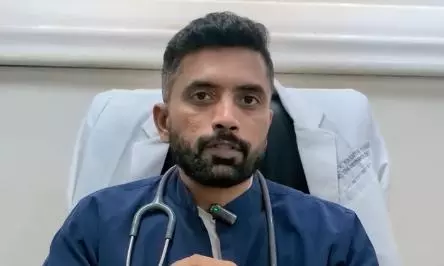
Dr K Kranthi Kumar, Senior Consultant Nephrologist & Transplant Physician, Asian Institute of Nephrology, recalls a 44-year-old man from North India who came to Hyderabad with one goal: a kidney transplant and a chance to get his life back.
He was already on dialysis and had a formidable medical history — treated tuberculosis, diabetes, hypertension, previous angioplasty, recurrent cellulitis, urinary stone disease and chronic pancreatitis requiring multiple interventions, including pancreatic lithotripsy and ERCP with stent exchanges. Imaging also revealed extensive atherosclerotic disease and vascular calcification. Despite the risks, extensive evaluation and optimisation eventually brought him to a point where transplantation could be considered. His wife was ready to donate a kidney.
Then came the accident
Then, just as the transplant was within reach, everything changed. While travelling to the hospital, the patient met with a major road accident and suffered polytrauma, including multiple fractures. The transplant had to be postponed. The months that followed were dominated by surgeries, procedures and recovery from the trauma. Then came another setback.
Fight for survival
Nearly four months into the ordeal, he developed a severe infection that progressed to sepsis and septic shock. His condition deteriorated rapidly and he suffered a cardiac arrest. He was resuscitated with CPR. “At that stage, the priority was no longer transplantation. It was to stabilise him and get him through the complications,” says Dr Kranthi Kumar.
The team treated the infection, reassessed his condition and waited. “Sometimes the answer is not an immediate ‘yes’ or ‘no’. It is about treating one problem at a time, reassessing the risks and seeing whether the patient can reach a safe point for definitive treatment.”
Waiting for right moment
Eventually, after months of treatment and recovery, he became stable enough for the transplant to be reconsidered. His wife remained committed to donating. The transplant was successfully performed. Almost two years later, the patient is doing well with a functioning kidney.
For Dr Kranthi Kumar, the case offers a lesson that goes beyond transplantation. “When we look back at his journey, we don’t remember only the infections. What stands out is how he kept moving forward despite everything that happened.”
Patients, he says, cannot be reduced to medical records. “Psychological strength and attitude can become an important part of a long treatment journey.” A complicated medical history, he adds, does not automatically mean that a patient has no options.
Power of teamwork
Nephrologists, transplant surgeons, anaesthetists, cardiologists, infectious-disease specialists, gastroenterologists and other teams were involved at different stages. Good outcomes are rarely the work of one person.”
Patients, he says, cannot be reduced to medical records. “Psychological strength and attitude can become an important part of a long treatment journey.”