After Having Their Fill, Many On A Filler Reverse Drive

3 Aug 2025 8:17 PM IST3 Aug 2025 8:17 PM IST
As celebrities jump on to reversing dermal fillers, experts talk of the various facets behind filler reversals in the beauty world
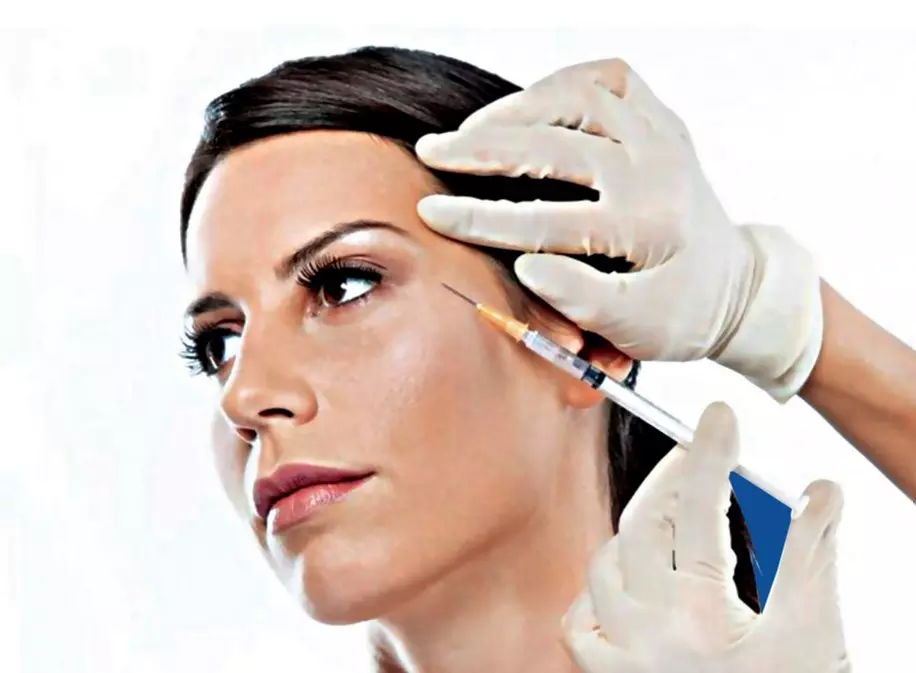
Filler (Image:DC)
In a world obsessed with instant beauty fixes, dermal fillers once ruled as the undisputed Queen Bee of the beauty world. They promised it all — sculpted cheekbones, fuller, pillowy lips and sharply defined contoured jaws. But today, there’s a quiet rebellion brewing in the beauty universe — filler reversing!
Yes, you read that right. Welcome to the era of filler reversals — where people are choosing to hit the ‘undo’ button on years of cosmetic tweaks. The reason is simple: A growing desire to embrace a more natural, authentic version of themselves. Celebrities like Ariana Grande, Blac Chyna, and Courteney Cox recently, the insta-favorite Urfi Javed have all taken that bold step of dissolving their fillers and stepping into their real faces.
Two-Way Street
Dr K Kranthi Varma, Consultant Dermatologist & Cosmetologist at Renova Hospitals, Hyderabad, emphasises the need for restraint and precision when it comes to fillers.
He says, “excessive or repeated filler use can lead to several aesthetic and medical concerns.” Among the most common complications, Dr Kranthi lists distorted facial proportions that appear unnatural and filler migration, where the injected material shifts from its original placement. But the risks go beyond just this.
“Vascular complications, although rare, can be serious,” he explains, referencing vascular occlusion — a condition where filler blocks a blood vessel, potentially causing tissue damage.
He also points to the long-term consequences of overfilling. Dr Kranthi says, “Prolonged use in certain areas can stretch the skin. Once the filler is dissolved, this may actually accelerate sagging, defeating the very purpose it was meant to serve.”
Beyond Looks
Fillers aren’t just limited to one’s face. They go beyond affecting the way one thinks. Quite often, they could be deeply entwined with the way a person feels. Gunjan Taneja, Health & Wellness Host of Gunjan Talks says, “Many people seek fillers in pursuit of confidence.”
Gunjan opines that people may also want to be in control of how they appear in a hyper-visual world. The result: They perceive themselves to be lagging somewhere and hence, choose the corrective path.
Some may jump onto correcting perceived flaws (those that don’t even exist) while others may simply try to shut themselves away from the world. Gunjan says, “By the many interactions I have had, I’ve understood that fillers, when done ethically and intentionally, can be a helpful tool.”
On the other hand, when these are done driven by insecurity and social comparison, they often don’t offer any lasting satisfaction. Gunjan even talks of the dopamine loop. She says, “It's simple — it means the more you change externally, the more disconnected you begin to feel from your inner identity.”
Original Face Value
What’s most intriguing is that people may finally be recognizing a deeper truth. It’s a harmless true desire to feel like themselves again. A return to their original, unfiltered identity. Gunjan notes that when celebrities opt for such procedures, it sends a powerful message to the world at large. She says, “People often go for reversals because they want to reconnect with their natural identity after years of feeling pressured to look a certain way.”
All in all, this shift, though strong, reflects a deep cultural change. People now are more into defining realness, not flaunting flawlessness. Dr Kranthi shares that for most individuals, the idea of reversals sets in when realization hits.
He says, “It could stem from a place of regret, where they believe they went too far with procedures leading to loss of facial harmony.” He shares a word of advice about filler reversals, too. Dr Kranthi opines that filler reversals shouldn’t be done as a repeated procedure. Where you feel dissatisfied with the way your face turns out, and go in for another procedure.
Such reversals should happen when there are complications like migration or lumpiness arising, or when certain unnatural outputs need to be corrected. He cautions, “The frequency depends entirely on the situation, but ideally fillers should be approached with moderation right from the start, as it reduces the need for reversals later.”
Rewriting the Narrative
While the current shift in the beauty world isn’t an ‘anti-filler’ one, it’s more about choice. Having the autonomy and free will to change your face, the way you think, even your fillers without shame.
Perhaps, this wave of filler-reversals nudges one to think of beauty, no longer as a fixed standard that they must change themselves to. It is about reclaiming control over one’s appearance, choices, and sense of self. All in all, dissolving fillers is not about regret; it is about refining who you are.
Full Filler Gyaan
Some remedial measures for filler reversals
• Hyaluronidase injections — an enzyme that dissolves HA-based fillers within hours up to a few days.
Other supportive measures include:
• Cold compress to help manage swelling.
• Use of anti-inflammatories (if needed and prescribed)
• Medicines to manage any allergies for hyaluronidase injections.
Two-Way Street
Dr K Kranthi Varma, Consultant Dermatologist & Cosmetologist at Renova Hospitals, Hyderabad, emphasises the need for restraint and precision when it comes to fillers.
He says, “excessive or repeated filler use can lead to several aesthetic and medical concerns.” Among the most common complications, Dr Kranthi lists distorted facial proportions that appear unnatural and filler migration, where the injected material shifts from its original placement. But the risks go beyond just this.
“Vascular complications, although rare, can be serious,” he explains, referencing vascular occlusion — a condition where filler blocks a blood vessel, potentially causing tissue damage.
He also points to the long-term consequences of overfilling. Dr Kranthi says, “Prolonged use in certain areas can stretch the skin. Once the filler is dissolved, this may actually accelerate sagging, defeating the very purpose it was meant to serve.”
Beyond Looks
Fillers aren’t just limited to one’s face. They go beyond affecting the way one thinks. Quite often, they could be deeply entwined with the way a person feels. Gunjan Taneja, Health & Wellness Host of Gunjan Talks says, “Many people seek fillers in pursuit of confidence.”
Gunjan opines that people may also want to be in control of how they appear in a hyper-visual world. The result: They perceive themselves to be lagging somewhere and hence, choose the corrective path.
Some may jump onto correcting perceived flaws (those that don’t even exist) while others may simply try to shut themselves away from the world. Gunjan says, “By the many interactions I have had, I’ve understood that fillers, when done ethically and intentionally, can be a helpful tool.”
On the other hand, when these are done driven by insecurity and social comparison, they often don’t offer any lasting satisfaction. Gunjan even talks of the dopamine loop. She says, “It's simple — it means the more you change externally, the more disconnected you begin to feel from your inner identity.”
Original Face Value
What’s most intriguing is that people may finally be recognizing a deeper truth. It’s a harmless true desire to feel like themselves again. A return to their original, unfiltered identity. Gunjan notes that when celebrities opt for such procedures, it sends a powerful message to the world at large. She says, “People often go for reversals because they want to reconnect with their natural identity after years of feeling pressured to look a certain way.”
All in all, this shift, though strong, reflects a deep cultural change. People now are more into defining realness, not flaunting flawlessness. Dr Kranthi shares that for most individuals, the idea of reversals sets in when realization hits.
He says, “It could stem from a place of regret, where they believe they went too far with procedures leading to loss of facial harmony.” He shares a word of advice about filler reversals, too. Dr Kranthi opines that filler reversals shouldn’t be done as a repeated procedure. Where you feel dissatisfied with the way your face turns out, and go in for another procedure.
Such reversals should happen when there are complications like migration or lumpiness arising, or when certain unnatural outputs need to be corrected. He cautions, “The frequency depends entirely on the situation, but ideally fillers should be approached with moderation right from the start, as it reduces the need for reversals later.”
Rewriting the Narrative
While the current shift in the beauty world isn’t an ‘anti-filler’ one, it’s more about choice. Having the autonomy and free will to change your face, the way you think, even your fillers without shame.
Perhaps, this wave of filler-reversals nudges one to think of beauty, no longer as a fixed standard that they must change themselves to. It is about reclaiming control over one’s appearance, choices, and sense of self. All in all, dissolving fillers is not about regret; it is about refining who you are.
Full Filler Gyaan
Some remedial measures for filler reversals
• Hyaluronidase injections — an enzyme that dissolves HA-based fillers within hours up to a few days.
Other supportive measures include:
• Cold compress to help manage swelling.
• Use of anti-inflammatories (if needed and prescribed)
• Medicines to manage any allergies for hyaluronidase injections.
( Source : Deccan Chronicle )


Next Story