A Year That Brought Back Meaningful Consumption

2025 revived the lost art of meaningful consumption, not through material pleasures, but through human connections, ideas, and humble experiences
2025 has quietly — but unmistakably — become the year people began asking themselves a question they once avoided: Why am I buying this? There has been a positive, reflective exploration of how people are pushing back against the culture of endless buying by consuming in a new way — not through things, but through ideas, human connections, and experiences.
For decades, consumption was automatic. A tap, a scroll, a one-click payment. The digital wallet replaced the physical one, and with it disappeared the little pause that once forced us to think twice. This year, ‘PAUSE’ is making a comeback.
Across major cities and small towns, people are practising what they call a “wallet detox” — a conscious effort to observe their spending triggers, remove mindless payment apps, and re-root themselves in intentional decision-making. Not to save money alone, but to recover agency. Behavioural psychologist Niharika Saini feels that people have normalized consumption as a coping mechanism. She says, “When everything feels fast and uncertain, buying becomes a shortcut to emotional regulation. But shortcuts rarely make us feel full.”
Tap & Pay Talk
The shift of 2025 isn’t anti-buying — it’s pro-meaning. And that changes everything. Technology made spending effortless, but it also made it invisible. We don’t count cash anymore; we count notifications. That’s why spending so often precedes thinking rather than following it. People have realised that we are consuming more than we need — and far more than the planet can afford.
Fast fashion, once praised for democratizing style, has become one of the biggest contributors to textile waste, microplastics, and carbon emissions. Air and noise pollution from hyper-delivery culture add to the environmental strain. Trends move so quickly that garments last about
as long as the algorithms that recommend them. Designer Kirti Seth, founder of Ka-seeda says, “Meaningful consumption begins with intention. When a garment carries thoughtful detailing, sincere craftsmanship, and a design language that transcends trend cycles, people form an emotional relationship with it.” Our habits are not just draining wallets — they’re eating the planet. But the story of 2025 isn’t about despair. It’s about awakening. There have been small ‘green’ achievements for Mother Earth!
Consumption = Performance
Not every trend of the last decade has been environmentally destructive — but many have been spiritually exhausting. Take matcha: once a deeply cultural Japanese tradition, it recently saw a dip because global virality turned it into a checklist item. The same has happened with travel spots, books, workouts, and wellness rituals. Experiences have become collectibles — not for memory, but for proof. Drashti Ajmera, founder of LOFT PR, has watched brands and audiences chase the same loop for years. But she says 2025 feels different. “Consumers aren’t stopping their consumption; they are redefining it. They are choosing to ‘consume’ through ideas, human connections, and transformative experiences.” People want involvement, not influence; belonging, not branding.
Slow Rejection Of Fast Life
Rising pollution, rapid trend cycles, and the constant push to buy more have created a generational fatigue. Visual, digital, and emotional noise have become pollutants of their own. In a world where everything feels opportunistic, genuine calm is rare. But that rarity is exactly why people are making room for it. These aren’t grand movements. They are antidotes to a world addicted to speed.
Micro Changes
Across communities, small micro-habits are quietly reshaping how we live:
• farmers markets
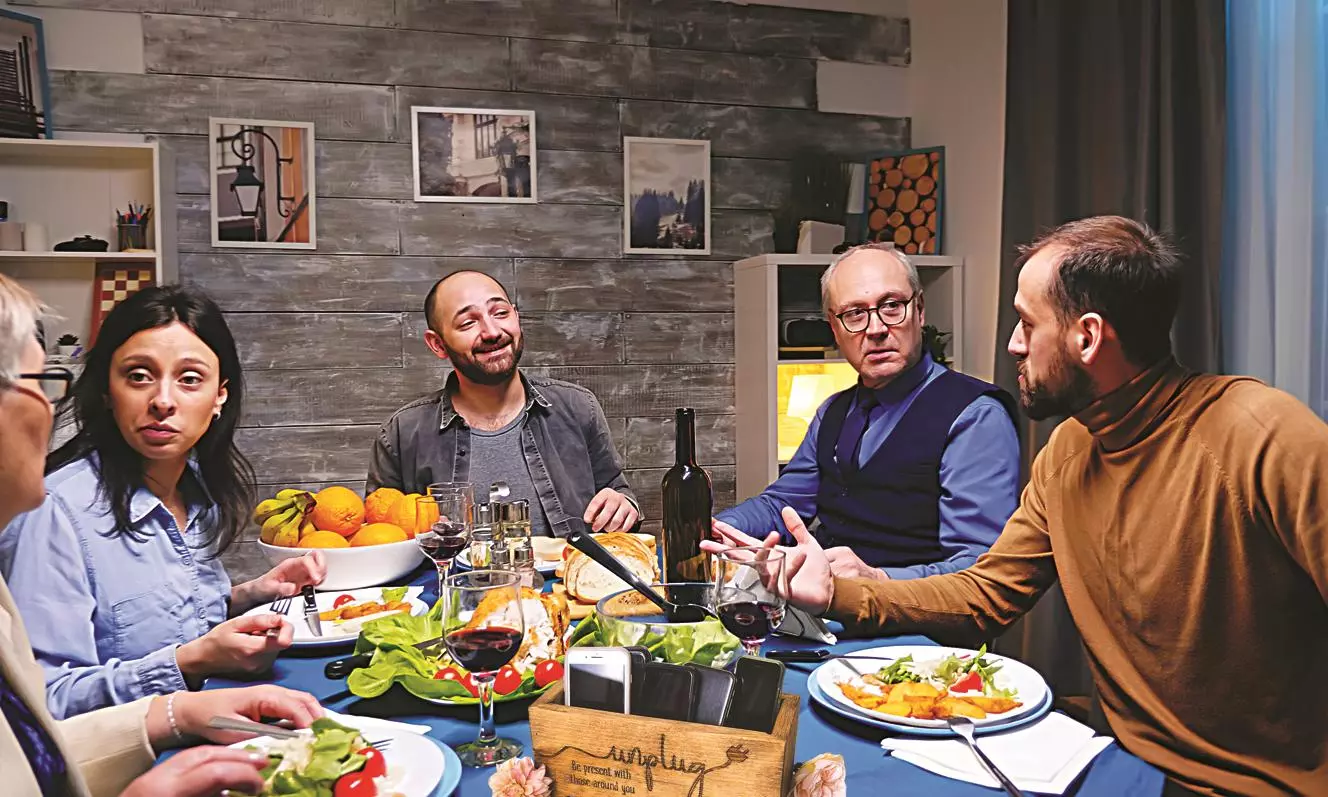
• tech-free dinners
• shared cooking rituals
• neighbourhood plant swaps
• local cleanup drives
• weekend craft markets
• mindful repair workshops
• quiet book circles and no-scroll mornings
Fashion Reset
Kirti believes fashion is uniquely positioned to support this shift. “Fashion has always been more than clothes; it is memory, identity, storytelling. Today, as people rethink what they consume, fashion can return to its original purpose — an experience, not an acquisition.”
Clothes that last longer come with stories that stay longer. Meaning that they live longer. To understand how fashion can encourage this cultural reset, fashion designer Babita Malkani, owner and founder of House of Taash explains, “People fall in love with clothes the same way they fall in love with people — slowly, unexpectedly, because something felt right. You can’t force that with trends or hype cycles.”
For her, meaningful consumption begins at the design table: “I’m not thinking, ‘What will sell fast?’ I’m thinking, ‘Will someone reach for this again six months later? A year later? Will it still spark something?’”
Fusion wear, she notes, naturally supports longevity because it’s born from culture, memory, and emotion. If something fits well, makes you feel confident, and carries a story: “You don’t throw it away — you live with it.” In a world pushing back against endless buying, fashion can shift from something we own to something we experience. Fashion, Babita believes, is a connector — between maker and wearer, culture and modernity, memory and identity.
Timely Steps
The push toward meaningful consumption is reshaping brand behaviour. Drashti notes the “death of the superficial sales pitch.” People can now detect inauthenticity before a brand finishes its sentence. “Brands are building communities that exist outside the transaction. The product becomes a tool — the value is the connection.” But the story of 2025 isn’t about brands. It’s about people remembering they are more than consumers.
The Environmental Echo
Noise pollution — honking, engines, construction — has become a constant backdrop. Air pollution seeps into cities and suburbs, settling into lungs and landscapes. Overconsumption is no longer an abstract concept. But awareness is rising. A global report this year showed a measurable increase in eco-literacy among young adults.
More people are repairing instead of replacing, buying less impulsively, and supporting local artisans. Consumption hasn’t stopped. Consciousness has begun.
Human Connections
One of the most profound shifts of 2025 is internal — a turning inward that’s enabling deeper outward connection. Families are spending more intentional time together. Friends prefer intimate gatherings over performative outings. Individuals are picking hobbies that don’t require an audience. Niharika says, “When society speeds up, our nervous system slows down. We chase stimulation to feel alive, but what we really crave is connection. Meaningful consumption isn’t a trend — it’s a psychological correction.” Drashti feels that the future of consumption is not about less, but about better. 2025 hasn’t solved everything. But it has rekindled something essential: The Art Of Living Well. Not through endless buying. Not through proving our worth. Not through chasing every trend. But through meaningful consumption!
2025’s Quiet Optimism
Despite pollution, digital fatigue, and decades of overconsumption, 2025 carried a new optimism — quiet, steady, human.
• We are reclaiming our attention.
• We are consuming less and noticing more.
• We are choosing ideas over items.
• We are building relationships instead of collections.
• We are remembering what nourishment feels like.
