The surgeon who removed the billing counter in his hospital and transformed the lives of thousands of people living with physical disabilities
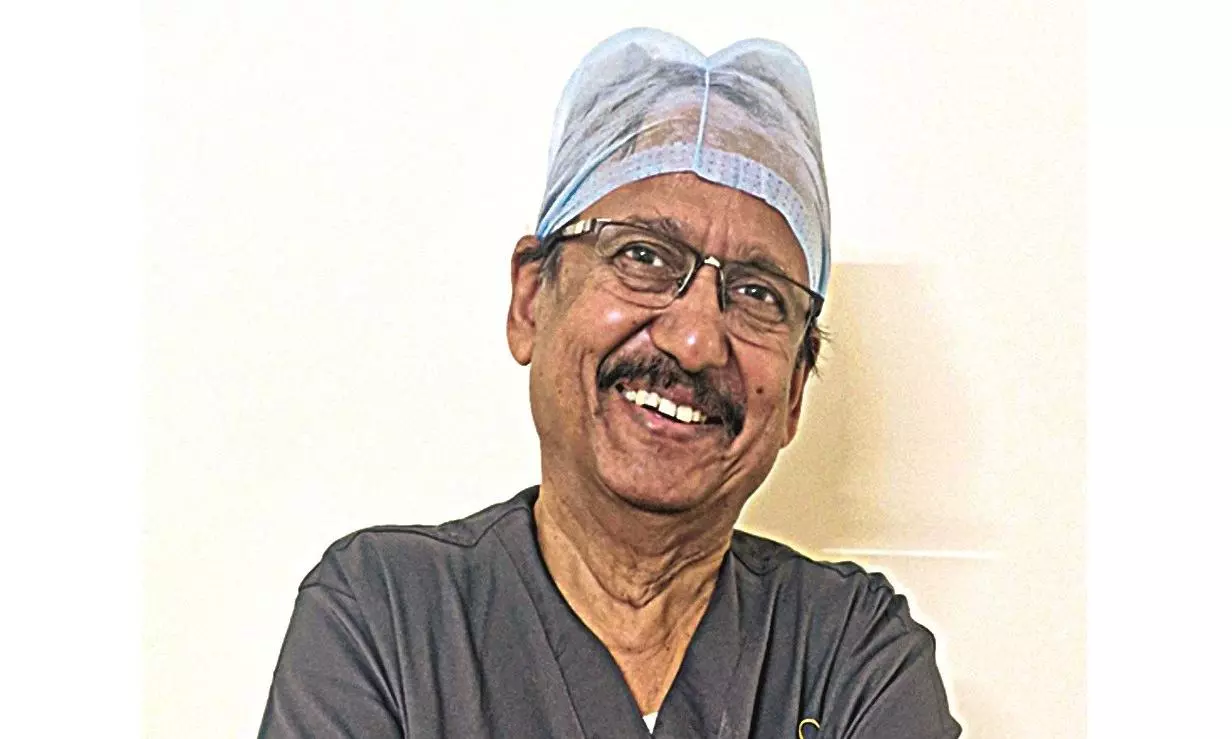
If you are millennial or older, you would have surely had or at least heard of a family doctor who was kind, patient and always treated you with a laugh. Dr Bharatendu Swain is one of them. Years into a successful corporate hospital practice, he found himself increasingly haunted by the people who walked in needing plastic surgery (a cleft lip, a burn contracture, a hand crushed by machinery) and walked out because they could not afford it. That discomfort, layered over a childhood shaped by his family's history of social service, and his own years volunteering at medical camps, eventually became Aakar Asha Hospital.
But the actual moment of decision, he says, arrived somewhere unglamorous: an 18-hour train journey in June 2001. He was reading Chicken Soup for the Soul, a book of stories about ordinary people who turned their private dreams into public good. “The moment I stepped off the train,” recalls the 68-year-old doctor, “I knew we had to start a new dedicated institution.” What he was up against was not just a lack of infrastructure, but a lack of definition.
Reconstructive surgery, he explains, was a solution to a problem India hadn't properly named. Disability, for decades, meant polio, leprosy, paralysis, amputation: the visible tip of an iceberg. Beneath the surface lay an enormous, uncounted population living with birth defects, burns, trauma and tumour-related deformities, invisible to census data and policy alike. Some officials, he remembers, simply told him disability wasn't a real problem, or that his hospital had no business existing.
For A Better Life
Aakar Asha began in 2013 in Kukatpally on the widely respected 60:40 model used by institutions like Aravind Eye Hospital: treating six patients free for every four who paid reduced rates. Since its inception, the medical angel has transformed over 13,500 lives and is seen each day smiling and interacting with patients.
It worked financially, but not at the scale Dr Swain wanted. The pandemic settled the question. “We decided to serve the purpose of our institution's existence by treating every person free of charge, accepting anyone who walked through our door,” he says. “The billing section was removed.”
More than two decades in the operating theatre convinced him of exactly what was at stake. “It convinced me of its power of transforming people’s lives by enabling them to speak, move their fingers to hold things, walk, swallow food and do all those things that a happy life is made up of,” he says.
Ask him why this population (people living with physical disability) and his answer is immediate: because the transformation lasts a lifetime. A child born with a cleft palate, he says, gets what he calls “an 80-year speech warranty” after surgery, the ability to speak, to sit as an equal among peers, to carry dignity into every room for the rest of their life.
Door-to-door surveys across rural and tribal districts told him just how large the need really was: roughly 13 per cent of the population carried some correctable physical deformity, 8 per cent urgently enough to need early surgery. Rather than discourage him, the number became fuel. Two decades on, Dr Swain's ambition hasn't shrunk; it has simply grown to match the scale of the problem he first glimpsed off a train platform in 2001.

