Approx 1,000 Art Deco-style buildings remain in Hyderabad today
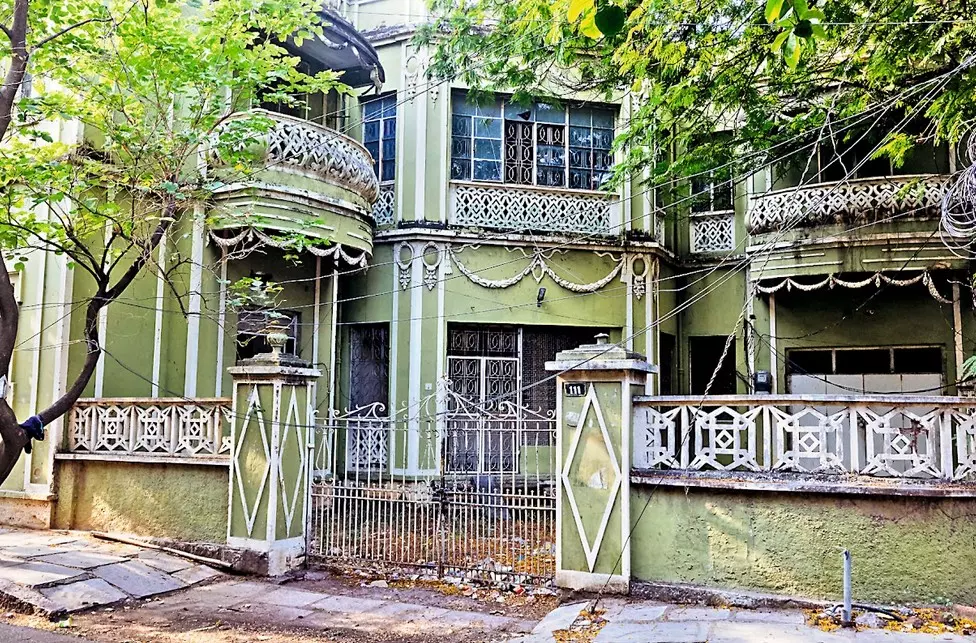
There are magnificent Art Deco buildings all over the country – from the bustling streets of Hyderabad to the Queen’s Necklace (Marine Drive) in Mumbai and leafy lanes of Kolkata. Most of these vintage buildings are faded but they still evoke a sense of beauty and charm of a bygone era.
The Art Deco style of architecture, presented to the world at the landmark 1925 Exposition Internationale des Arts Décoratifs et Industriels Modernes in Paris, where designers such as Émile-Jacques Ruhlmann, Jean Dunand, and Pierre Chareau displayed their groundbreaking work, has long remained one of the most beloved architectural styles.
Architectural Wonders
While it started off in architecture, the Art Deco style has been embraced by designers in everything from furniture and jewellery to fashion and automobiles. In Hyderabad, the first art deco buildings came to light in the early 1930s and were in vogue till the late 1950s. Architects including Karl Heinz (who originally hailed from Germany), Mohammed Fayazuddin, and Zain Yar Jung were some of the pioneers of the art deco movement in the city, whose many buildings still dot the city’s landscape.
Today approximately only over 1,000 buildings remain in the city, which is famous for its features, including zigzags, geometric patterns, stylized floral patterns, and especially vertical windows.
Iconic Art Deco Landmarks
The Arts College at Osmania University, the Zinda Tilismath building, the State Bank of Hyderabad in Gunfoundry, the Congress Bhavan, Arya Samaj Mandir in Secunderabad and the State Central Library at Afzalgunj are the last few sentinels of this famed architectural style. Many are dotted across older colonies in Afzal Gunj, Padma Rao Naga, Himayat Nagar and parts of Secunderabad.
A Perfect Blend
Architect G. Srinivas Murthy of the Architectural Design Foundation says, “The Art Deco style uses the elements of the past in a decorative manner. Indian Art Deco has adopted elements from different styles — the jharokas and floral patterns from the Hindu style, the pointed arches and jaalis from the Islamic architecture, the chaitya or the arch from the Buddhist styles, and the columns and the grand staircases from Europe.”
In fact, the Jeera Colony in Secunderabad is a treasure house of this style, with around 30 sprawling houses that still survive. The stunning staircases, the curved forms, the decorative balconies with motifs ranging from boats to rudrakshas, and the in-situ terrazzo finish flooring make them wonders to behold.
The future of these buildings, though, is in question as many are increasingly being demolished (including the recent Secunderabad railway station). As Hyderabad marches into the future, the legacy of Art Deco stands at a crossroads caught between reverence and redevelopment. Will they march into the future, only time will tell?
Photographer’s Muse
Some of these stunning art deco buildings beg to be photographed. Kishor Krishnamoorthi, a photographer, who grew up in the city says that he always loved the Art Deco buildings in Secunderabad. “Their nuanced shapes and elements serve as an inspiration for all of us who work with the visual medium,” says Kishor. Seeing many of them vanish over the years has undoubtedly been heartbreaking. But with this year being the Centenary of Art Deco, Kishor hopes that all the buildings in Hyderabad get their due recognition and preservation.
For Harshitha Venati, a Sr. Consultant, Textile Recycling, the love for vintage furniture led him to Art Deco years ago. Harshitha says, “Over the years, I learned how Indian influences shaped the ‘Indo-Art Deco’ style which are vividly featured across many vintage buildings in Secunderabad. Exploring this style is always pure joy!”

