Supreme Court Stays New UGC Equity Regulations

The new regulations mandating all higher education institutions to form "equity committees" to look into discrimination complaints and promote equity were notified on January 13
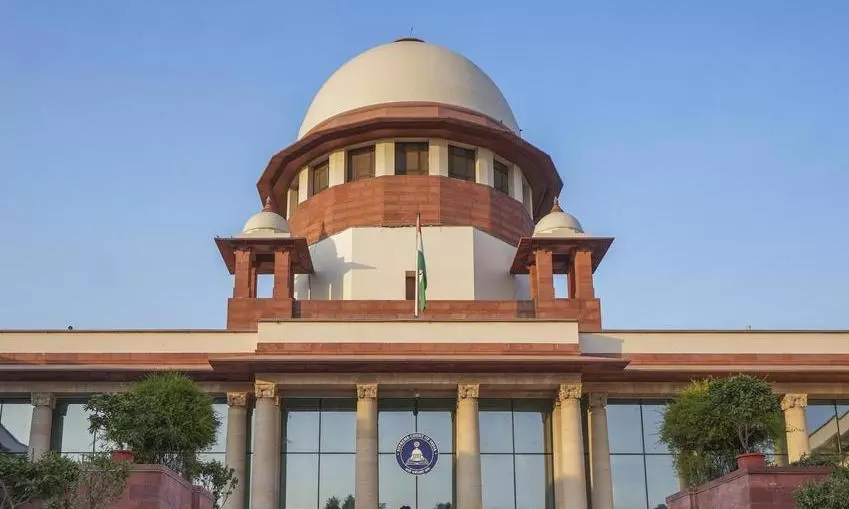
NEW DELHI: In a major setback to the Centre, the Supreme Court on Thursday stayed the University Grants Commission’s 2026 regulations on preventing caste-based discrimination on campuses, observing that the framework is prima facie vague, capable of misuse and may have “very sweeping consequences” with a “dangerous impact” on society.
Invoking its plenary powers under Article 142 of the Constitution, the apex court stayed the operation of the University Grants Commission (Promotion of Equity in Higher Education Institutions) Regulations, 2026, on petitions contending that the rules adopted a non-inclusionary definition of caste-based discrimination and excluded certain categories from institutional protection.
A two-judge Bench of Chief Justice of India Surya Kant and Justice Joymalya Bagchi issued notices to the Centre and the UGC, returnable by March 19. The court kept in abeyance Rule 3(1)(c) of the 2026 regulations, which defined caste-based discrimination strictly as discrimination against members of the Scheduled Castes, Scheduled Tribes and Other Backward Classes, thereby excluding the general category.
To avoid a regulatory vacuum, the Bench revived the earlier UGC (Promotion of Equity in Higher Educational Institutions) Regulations, 2012. “In exercise of our powers under Article 142, we direct that the 2012 Regulations shall continue in force till further orders,” the court said, noting that the repeal of the earlier framework would otherwise leave students without remedies.
The court flagged concerns over the need for a separate definition of caste-based discrimination when Regulation 3(1)(e) already provides a broad definition of discrimination. It also questioned why ragging, described as a common form of harassment in educational institutions, was not addressed under the new regulations. The language of the 2026 rules, the Bench said, appeared prima facie vague and capable of misuse.
The hearing followed nationwide protests by student groups seeking a rollback of the 2026 regulations. The Chief Justice suggested that the issue be revisited by a committee of eminent jurists and experts familiar with social realities to ensure the framework does not divide society.
Senior advocate Indira Jaising defended the 2026 regulations, which were framed following a 2019 public interest litigation. However, the court cautioned that the rules could end up dividing society with dangerous consequences.
Reactions to the order were mixed. Opposition parties including the BSP, Congress and TMC welcomed the stay, while CPI(ML) Liberation said it was “deeply appalled” by the court’s observations. Union minister Giriraj Singh welcomed the decision, claiming the stayed regulations were divisive.
Samajwadi Party president Akhilesh Yadav also welcomed the top court's stay on the regulations. Yadav stressed that both the language of a law and the intent behind it must be clear to prevent injustice and social division. "True justice does not involve injustice to anyone, and the honourable court ensures precisely this. The language of the law must also be clear, and so must the intent. It's not just about rules, but also about intention," the former Uttar Pradesh chief minister posted on X.
