Born in the quiet village of Sinaula in Uttarakhand, Rana’s rise has not been a straight line but a series of comebacks—both in her career and in her soul.
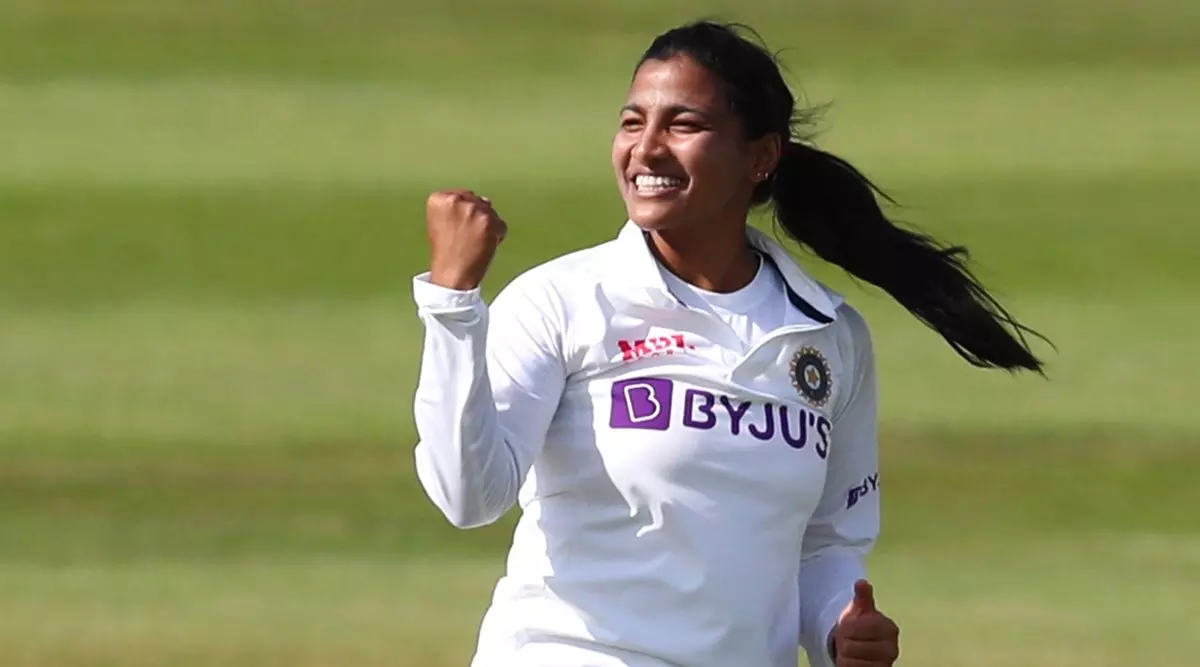
Sneh Rana (Photo: X)
Before she bowls a single delivery or swings the bat, Sneh Rana has already told you a story—etched in ink across her skin. Her tattoos aren’t accessories; they’re affirmations. “Vidrohi”—Rebel—sits boldly on her wrist, a declaration of defiance. “I refuse to sink” anchors her forearm, a vow made during the darkest days of injury. And in Sanskrit, "Tav dhairyam tav balam asti”—“Your courage is your strength”—wraps around her like a mantra. Each one is a chapter in a life that’s been anything but ordinary.
Born in the quiet village of Sinaula in Uttarakhand, Rana’s rise has not been a straight line but a series of comebacks—both in her career and in her soul. Her cricketing journey stalled dramatically after a knee injury in 2016. For five years, she remained on the fringes of the national squad. During that time, while the world forgot her, she rediscovered herself—in gym sessions that bordered on punishment, in domestic tournaments where motivation had to be self-fueled, and in quiet nights inked with pain, both literal and metaphorical.
Then came June 2021. Called back for a one-off Test against England, Rana didn’t just return—she erupted. A match-saving knock with the bat and a clutch performance with the ball. It wasn’t a fairytale ending. It was a warrior’s restart.
But off the field, life was dealing harsher blows. Just weeks before her selection, Rana’s father passed away. She didn’t have the luxury to grieve in public. As the limelight returned, she quietly turned to a sports psychologist—an act of courage rarely acknowledged in the cricketing sphere. For Rana, vulnerability wasn’t weakness. It was her bridge back to strength.
Now, Rana is lending her voice to conversations most athletes tiptoe around. One such issue: the struggles female cricketers silently endure during their menstrual cycles. She’s spoken openly about how the first two days can be especially brutal, often pushing players to compete under physical duress. Her hope? That honesty will chip away at outdated taboos and pave the way for a more empathetic environment in sport.
Sneh Rana’s story isn’t framed in glitter. It’s carved in grit. It’s for every girl who’s had to fight not just on the pitch but also in the shadows. Every tattoo, every comeback, every truth she tells—it all adds up to a woman who plays not just to win matches, but to rewrite narratives.
( Source : Deccan Chronicle )


Next Story