IPL’s Loudest Hits Are Coming From Regional Commentary Boxes

24 May 2026 6:41 PM IST24 May 2026 6:41 PM IST
Teenagers now quote commentary lines from regional languages on Instagram reels. Certain phrases become internet catchphrases within minutes
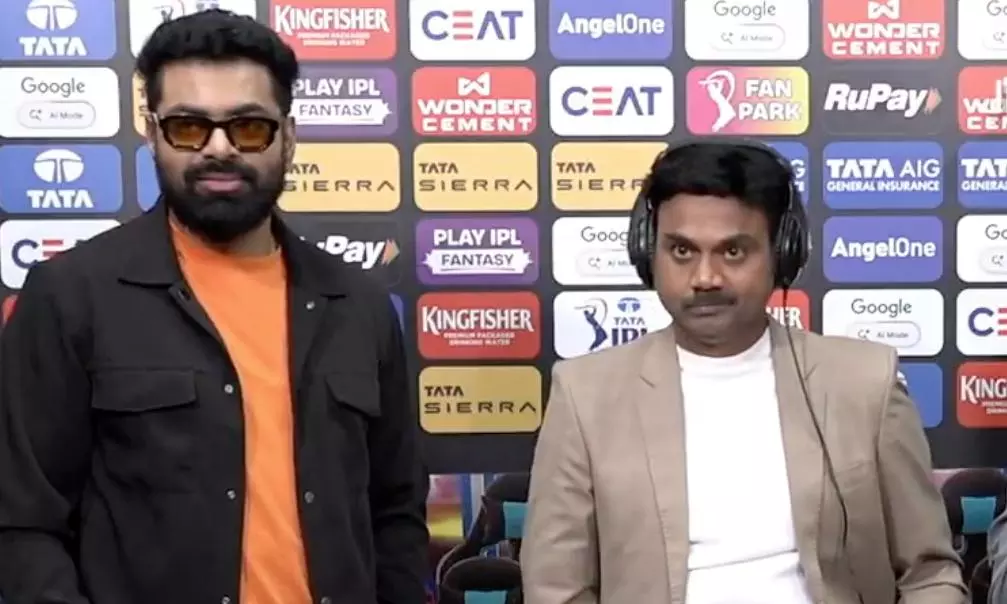
Regional commentary has quietly become one of the biggest cultural shifts in Indian sports broadcasting. (Photo: Start Sports)
There was a time when cricket commentary in India sounded almost ceremonial. The voices were polished, the language measured and every boundary came wrapped in textbook admiration. You watched the match, understood the game and moved on.
Now, somewhere between a batter launching a slower ball into the third tier and a commentator comparing the shot to a wedding baraat gone rogue, cricket has changed tone completely.
Regional commentary has quietly become one of the biggest cultural shifts in Indian sports broadcasting. Not because viewers suddenly stopped understanding English or Hindi, but because they wanted the game to sound like home.
A six feels different when it arrives in your mother tongue. A dropped catch stings harder when the frustration sounds like the people sitting next to you on a plastic chair outside a tea stall. And a last-over finish becomes far more dramatic when the commentator sounds less like a broadcaster and more like your loudest cousin during a family gathering.
That shift is what has transformed the IPL from a television product into a full-blown neighbourhood emotion.
Across India, viewers are no longer choosing commentary feeds based on language comfort alone. They are choosing personality. One feed sounds playful and chaotic. Another feels emotional and loud. One turns every over into theatre. Another treats cricket like folklore.
The result is that commentary itself has become entertainment independent of the match.
In many homes now, people jump between audio feeds the same way they switch camera angles. A father prefers the calm tactical breakdown in one language while his children are glued to another because the punchlines have already become memes before the innings break.
And what makes regional commentary work isn’t merely translation. It is localisation.
The language carries its own rhythm, references and humour. Commentators borrow from farming, food, cinema, weddings, local transport, street slang and everyday arguments. Suddenly a yorker is no longer just a yorker. It becomes the kind of ball that ruins your evening plans. A misfield becomes the sporting equivalent of dropping groceries in front of guests. A massive six travels beyond the stadium and into nearby towns, bus depots and family WhatsApp groups.
The commentary stops sounding scripted because it mirrors how people actually talk while watching cricket.
That relatability has dramatically widened the IPL’s emotional geography.
For years, elite sports broadcasting in India mostly catered to metro audiences. Regional feeds changed that equation. Cricket no longer feels like something being explained to viewers. It feels like something being celebrated with them.
This is especially visible in smaller towns where audiences may not care about advanced strike-rate theories but deeply connect with energy, humour and familiarity. The commentary feels participatory. The viewer is no longer sitting outside the spectacle. They are inside it.
What also changed the game completely was digital streaming.
Television once had limited room for multiple language feeds. Streaming platforms removed that restriction overnight. Suddenly, broadcasters could experiment fearlessly with dialects, regional humour and hyperlocal presentation styles without worrying about channel infrastructure.
That freedom created entirely new commentator personalities.
The modern regional commentator is not trying to imitate traditional English broadcasting anymore. They are building their own performance language. Some lean into comedy. Some thrive on raw emotion. Others operate like storytellers narrating folklore with a cricket bat thrown in the middle.
And unlike older commentary formats built around neutrality, regional feeds openly embrace fandom.
That honesty is exactly why audiences connect with them.
Fans no longer want detached observation during franchise cricket. They want emotional investment. They want commentators who celebrate wins like supporters and suffer collapses like everyone else watching from a sofa.
This emotional tone has especially reshaped how younger audiences consume cricket.
Teenagers now quote commentary lines on Instagram reels. Certain phrases become internet catchphrases within minutes. Commentators themselves are turning into celebrities, not because of technical analysis but because they understand entertainment culture.
Cricket commentary today operates somewhere between sports broadcasting, stand-up comedy and social media content creation.
But beneath all the humour lies something bigger.
Regional commentary has democratised cricket consumption in India.
It has made viewers from smaller linguistic communities feel visible in a sport that often leaned heavily toward metropolitan presentation styles. The IPL now sounds different depending on where you are listening from, and that diversity has become one of its biggest strengths.
In many ways, commentary has become a mirror of modern India itself, multilingual, emotional, chaotic, expressive and proudly local.
And perhaps that is why it works so well.
Because when the final over begins, fans don’t necessarily want perfect vocabulary or polished broadcasting etiquette.
Sometimes they simply want cricket to sound like their people.
( Source : Deccan Chronicle )

Next Story