Pant's Withdrawal to Cricket Laws: Jitesh Sharma's Run-Out Incident Explained

Jitesh Sharma's scintillating inning stared at premature end as LSG's Digvijay Rathi attempted run out in the final delivery of the 17th over
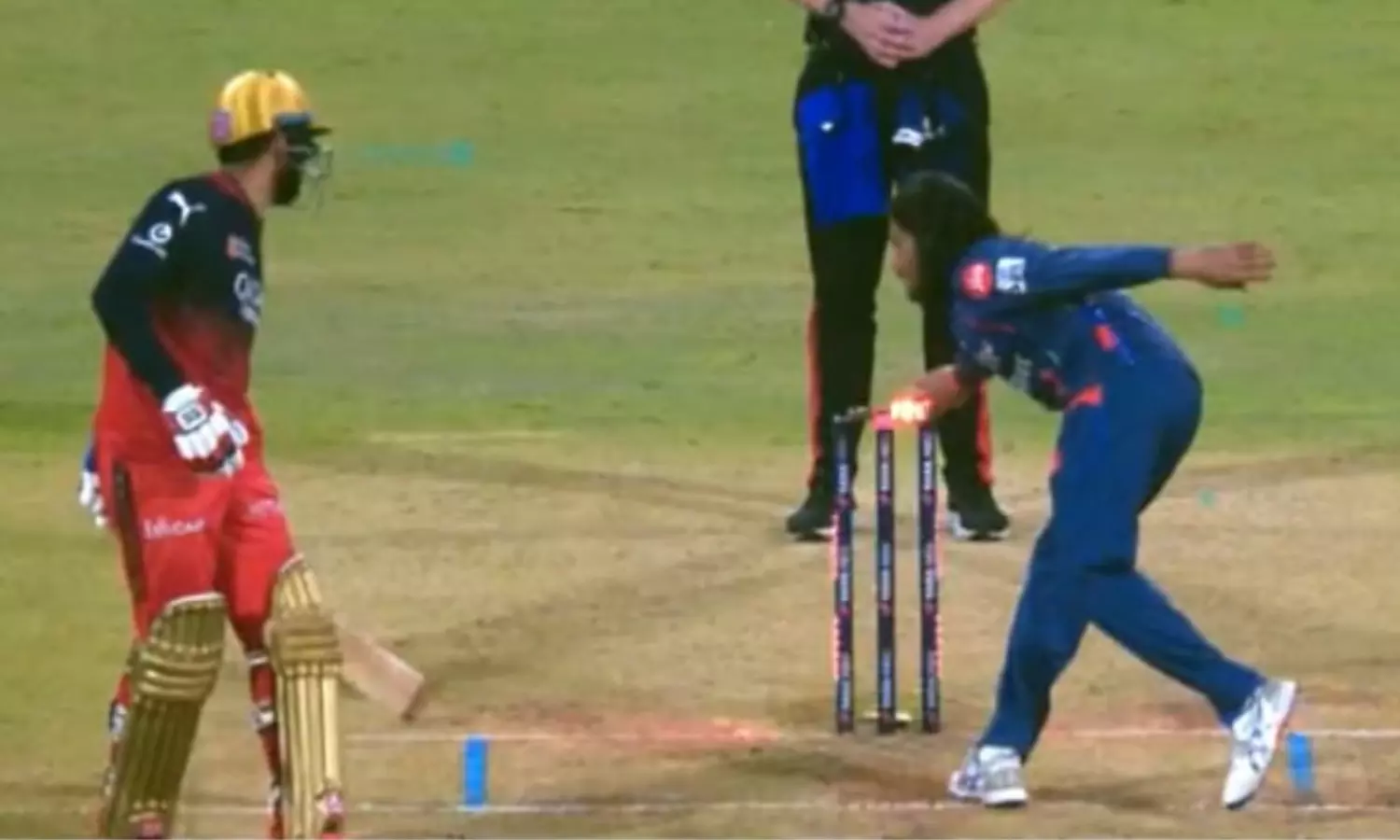
Royal Challengers Bengaluru stand-in captain Jitesh Sharma was in full-flow as he guided his side past a mammoth target on Tuesday in a must-win game to seal the IPL Qualifier 1 berth against Lucknow Super Giants.
However, his scintillating inning stared at premature end as LSG's Digvijay Rathi attempted run out in the final delivery of the 17th over.
Dramatic scenes erupted at Ekana Cricket Stadium after Rathi, who stopped run-up midway and took off bails then confirmed his appeal for the run out. Jitesh was seen in complete dismay as the decision was referred to the TV umpire.
As the footage showed Jitesh clearly out-of-the crease, RCB fans were shocked. But they were soon relieved as Rishabh Pant, the Super Giants skipper, quickly jumped-in to withdraw the appeal and Jitesh survived to score a match-winning 85 off 33 balls.
But.... even if Pant went on with the appeal, rules would have backed Jitesh, who was determined to take his side to the winning edge.
Here's How:
According to MCC Rules of Cricket, a bowler cannot attempt the run-out of the non-striker once he finishes his action and steps out of the crease. So, even if Pant went ahead, the umpires would have considered this rule and given him not out.
Here's the detailed rule
38.3 Non-striker leaving his/her ground early
38.3.1 At any time from the moment the ball comes into play until the instant when the bowler would normally have been expected to release the ball, the non-striker is liable to be Run out if he/she is out of his/her ground. In these circumstances the non-striker will be out Run out if he/she is out of his/her ground when his/her wicket is broken by the bowler throwing the ball at the stumps or by the bowler’s hand holding the ball, whether or not the ball is subsequently delivered.
38.3.1.1 The instant when the bowler would normally have been expected to release the ball is defined as the moment the bowler’s arm reaches the highest point of his/her normal bowling action in the delivery swing.
38.3.1.2 Even if the non-striker had left his/her ground before the instant at which the bowler would normally have been expected to release the ball, once the bowler has reached that point it is no longer possible for the bowler to run out the non-striker under this Law.
