Ladakh Glitters as Khelo India Winter Games 2026 Open in Icy Leh

NDS Stadium's opening ceremony showcased exciting ice hockey games and a lively parade, celebrating winter sports with 19 teams.
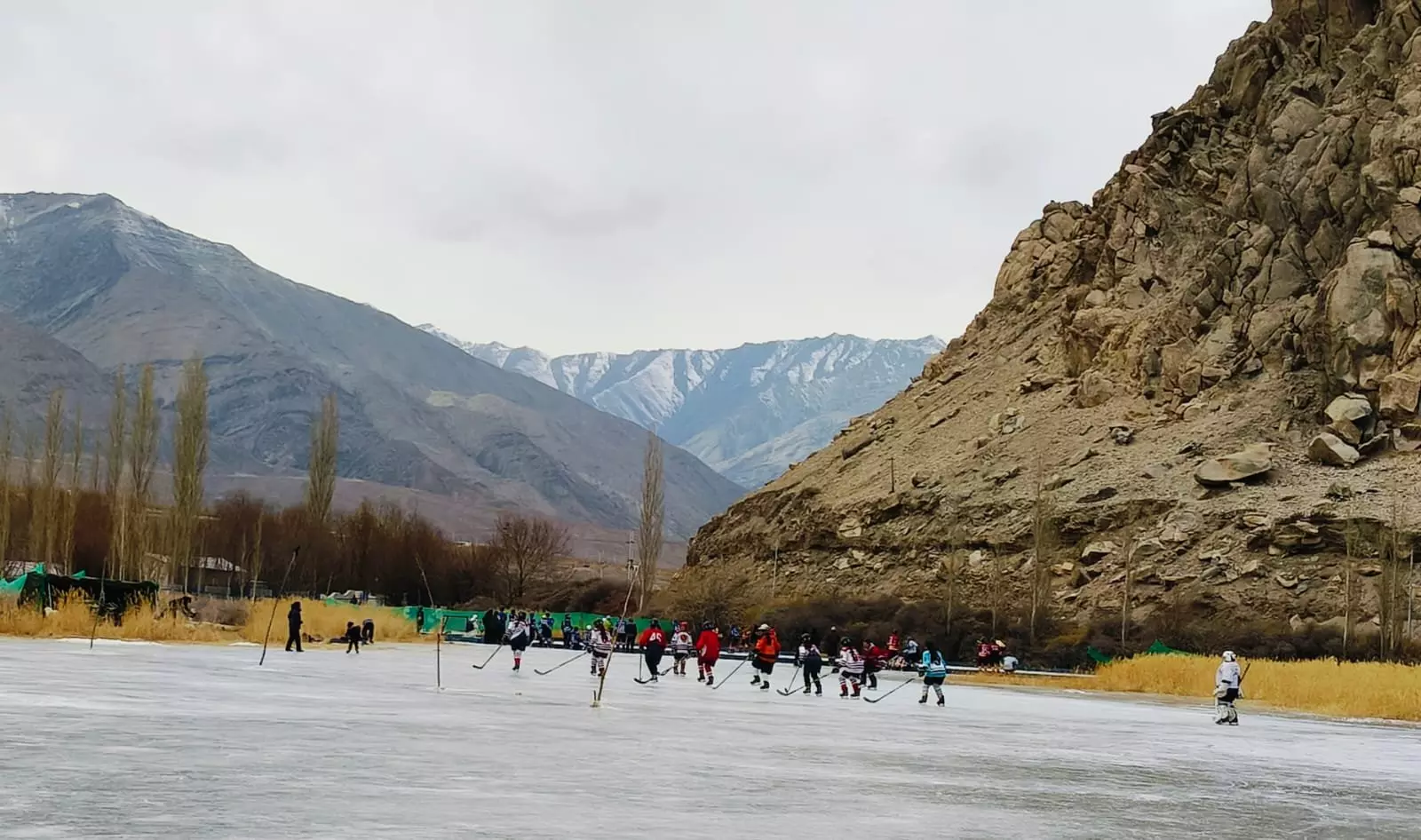
Srinagar: In a dazzling ceremony set against the icy splendour of Leh, the Khelo India Winter Games (KIWG) 2026 were inaugurated on Tuesday, reaffirming Ladakh’s growing stature as India’s premier winter sports destination.
Lieutenant Governor, Kavinder Gupta, declared that hosting the KIWG in Ladakh for the third consecutive year is a testament to the nation’s confidence in the region’s capability, commitment and readiness to organise major sporting events in some of the world’s most challenging high‑altitude conditions. He emphasised that these games have become a powerful catalyst for promoting winter sports, nurturing young athletes and strengthening the region’s sporting ecosystem.
The opening unfolded on a crisp, icy morning at the iconic NDS Stadium, where the atmosphere crackled with excitement as the first ice hockey matches commenced at both the NDS complex and the Ladakh Scouts Regimental Centre. Nineteen teams representing various states, Union Territories and institutional outfits such as the Army and ITBP are competing this year. With 1,060 participants—several hundred of them athletes—the Ladakh leg of the Games marks the third consecutive hosting by the Union Territory, now in the sixth edition of the national winter sports extravaganza. The Ladakh chapter will culminate on January 26, coinciding with Republic Day, while the second phase will be held in Gulmarg, J&K, in February.
A statement issued in Leh highlighted the electric atmosphere inside the 5,000‑capacity NDS Stadium, where the spirit of adventure sports thrived despite freezing temperatures. Declaring the Games open at the state‑of‑the‑art Ice Hockey Stadium, the Lt Governor celebrated yet another milestone in Ladakh’s journey as India’s winter sports hub. This sixth edition of the KIWG features competitions in Ice Hockey, Speed Skating and, for the first time, Figure Skating—an addition Gupta described as a significant step in India’s winter sports evolution. He revealed that plans are underway to introduce more disciplines, including Curling, in future editions.
Gupta also underscored the importance of world‑class infrastructure in elevating sports standards. He noted that key venues—NDS Ice Hockey Rink, Gupuk Pond and the Ladakh Scouts Regimental Centre Rink—have been fully readied for the Games. The 24x7 Ice Hockey Rink at NDS Stadium, built at a cost of ₹53.58 crore, was hailed as a landmark achievement. He added that construction of a similar modern rink in Kargil is progressing rapidly, paving the way for year‑round training opportunities that were once restricted to just a few winter months.
Highlighting Ladakh’s newly launched Sports Policy, Gupta described it as a transformative framework designed to position the UT as a winter sports powerhouse. The policy includes talent identification at school level, inclusive provisions for women and differently‑abled athletes, 4 percent job reservation for outstanding sportspersons, assured scholarships, cash awards up to ₹100 crore, advanced training facilities, coach incentives, sports‑education integration and sports tourism promotion. He said the policy will open structured pathways for youth to pursue sports professionally.
The Lt Governor also spoke about the deepening connection between sports and tourism in Ladakh, citing successful events such as the Climate Cup Football Tournament, Ladakh Marathon and previous editions of KIWG. These events, he said, generate employment, enhance Ladakh’s global visibility and inspire young people to embrace winter sports.
Reflecting on the broader national context, Gupta credited the transformative shift in India’s sports ecosystem to the leadership of Prime Minister Narendra Modi. He said the Khelo India initiative has placed youth empowerment, fitness and sporting excellence at the heart of national priorities. The inclusion of winter sports in the national framework and the hosting of international‑level events in remote, high‑altitude regions like Ladakh, he added, reflect the Prime Minister’s inclusive and forward‑looking vision.
Expressing gratitude to the Ministry of Youth Affairs and Sports and the Sports Authority of India, the Lt Governor acknowledged their trust in Ladakh and their continued support. He also commended the Ladakh Administration, armed forces, volunteers and all stakeholders for their dedication in organising the Games. Wishing the athletes success, he said the KIWG will continue to inspire youth, promote sportsmanship and strengthen Ladakh’s position as a leading winter sports destination.
Chairman/CEC Ladakh Autonomous Hill Development Council (Kargil), Dr Muhammad Jaffer Akhoon, thanked the Government of India and the UT Administration for providing Ladakhi youth with a national platform. He highlighted the potential of Suru Valley and Drass for ice skating and expressed hope that Kargil’s upcoming ice hockey stadium would soon become operational.
Chief Secretary Ashish Kundra praised Ladakh’s hospitality despite the harsh weather and congratulated the people for hosting the Games for the third consecutive year. He reaffirmed the readiness of the world‑class NDS Ice Hockey Stadium and anticipated the early completion of the Kargil facility. Calling Ladakhi youth exceptionally talented, he envisioned local players—already the backbone of India’s national ice hockey teams—qualifying for the Winter Olympics.
The opening ceremony was a vibrant spectacle, featuring a colourful parade of participating teams, a stirring performance by the Ladakh Scouts’ Pipe Band and energetic dance presentations by young artists. A special video on the KIWG was screened, followed by an exhibition ice hockey match between UT Ladakh and the Army. Local ice skaters also showcased their skills, adding to the festive spirit.
