Meet the Women in Blue: Women's World Cup Winners

For years, the Indian team was always so close but just not close enough to winning the international tournament – now, they stand tall and proudly carry the title of the ICC Women's World Cup 2025 Winners.
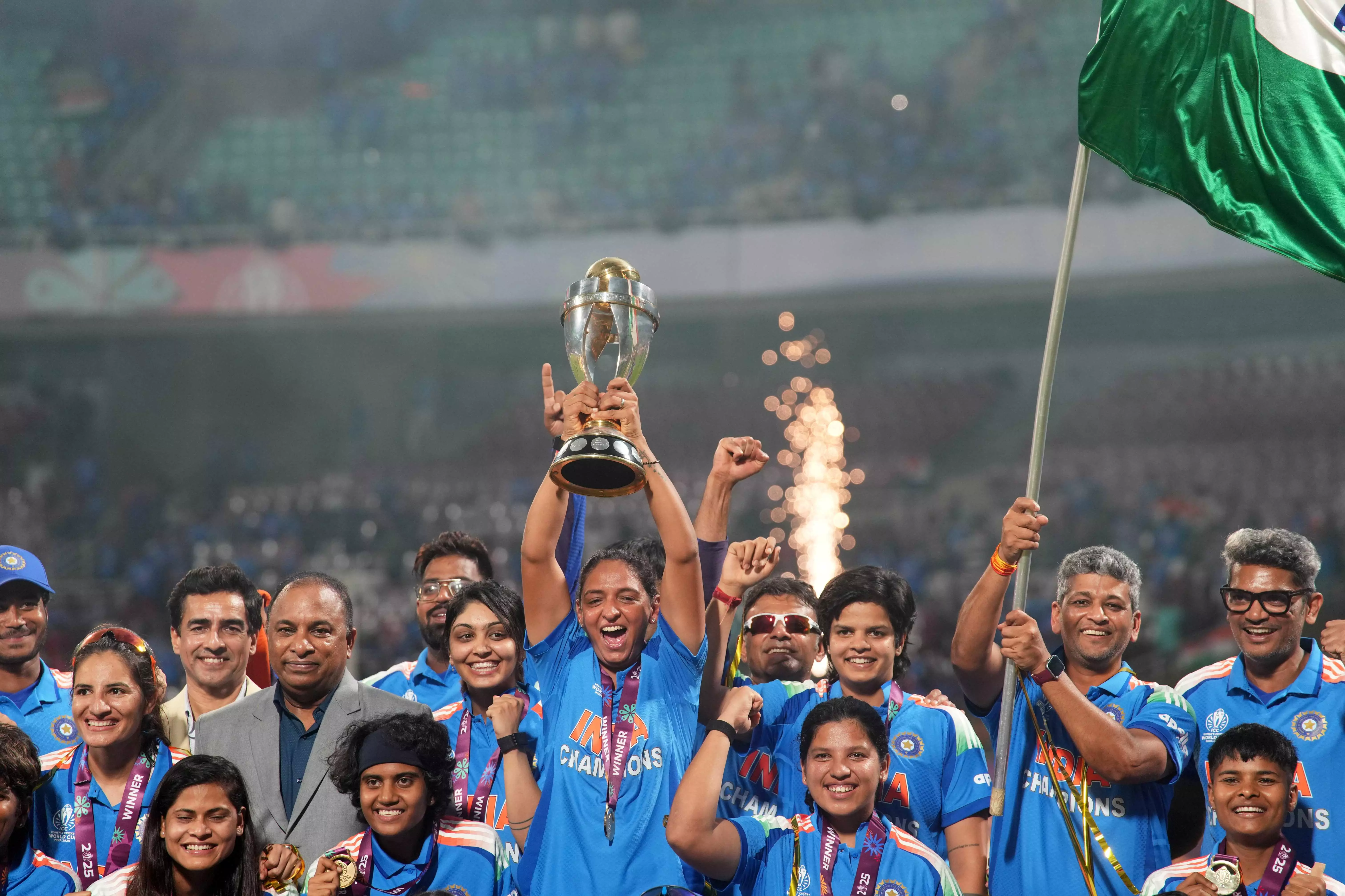
In a historic moment, India won the Women's Cricket World Cup for the first time yesterday, beating South Africa by 52 runs. For years, the Indian team was always so close but just not close enough to winning the international tournament – now, they stand tall and proudly carry the title of the ICC Women's World Cup 2025 Winners.
But who are the women behind the victory? Let's meet the Indian women's cricket squad:
Harmanpreet Kaur
Position: Captain, Batting-Allrounder
Batting: Right-handed
Bowling: Right-arm off break
DOB: 8 March 1989
POB: Moga, Punjab, India
Kaur was born to Harmandar Singh Bhullar, a volleyball and basketball player who now works as a clerk at a judicial court. He once aspired to be a cricketer, acting as Kaur's first coach.
She began playing cricket when she joined the Gian Jyoti School Academy, where she trained under Kamaldeep Singh Sodhi. Her inspiration was former cricketer Virender Sehwag.
Smriti Mandhana
Position: Vice Captain, Opening Batter
Batting: Left-handed
Bowling: Right-arm medium
DOB: 18 July 1996
POB: Mumbai, Maharashtra
Mandhana grew up in a Marwari Hindu household. At the age of two, her family moved to Madhavnagar, in the Sangli district of Maharashtra, where both her father and brother played district-level cricket.
Watching her brother compete in Under-16 tournaments inspired her to compete herself. She was selected for the state's Under-15 team at the age of nine and joined the Under-19 team by 11.
Deepti Sharma
Position: All-rounder
Batting: Left-handed
Bowling: Right-arm break off
DOB: 24 August 1997
POB: Agra, Uttar Pradesh
Sharma grew an interest in cricket when she was merely nine, constantly pestering her father to ask her brother Sumit Sharma to take her to the local cricket grounds to watch the matches.
During a net practice that her brother played in Ekalavya Sports Stadium, she was asked to throw the ball back to the team. She hurled the ball towards the field, directly hitting the stumps from a distance of 50 metres, which caught the attention of Hemlata Kala, the national women's team selector.
Shafali Verma
Position: Opening Batter
Batting: Right-handed
Bowling: Right-arm break off
DOB: 28 January 2004
POB: Rohtak, Haryana
Verma's father, Sanjeev Verma, loved cricket and passed the same love to his daughter. The two would often play cricket and watch matches together, especially those of Sachin Tendulkar.
In 2013, her father decided to enrol her in a cricket academy in Rohtak, but they refused to admit her because she was a girl. Her father asked her to disguise herself as her brother and then enrolled her as a boy into the Shree Ram Narain Crickey Academy.
Even though playing against men proved to be difficult for Verma, she never gave up. Eventually, she was able to join a girls' academy and hone her skills.
Richa Ghosh
Position: Wicketkeeper Batter
Batting: Right-handed
Bowling: Right-arm medium
DOB: 28 September 2003
POB: Siliguri, West Bengal
When Ghosh's father, Manabendra Ghosh, played cricket, she would go to watch his matches before joining the club herself. She honed her skills playing amongst men before Ghosh made her debut in the state's senior women's team at the age of 14.
Amanjot Kaur
Position: Batting-Allrounder
Batting: Right-handed
Bowling: Right-arm medium
DOB: 25 August 2000
POB: Mohali, Punjab
Kaur played many sports as a child - from hockey, football, and handball - before settling on cricket. She began training under Nagesh Gupta at the age of 15, her first step towards becoming a star player.
She was only a bowler until her coach noticed her talent in batting and made her an allrounder.
Shree Charani
Position: Bowler
Batting: Left-handed
Bowling: Slow left-arm orthodox
DOB: 4 August 2004
POB: Kadapa, Andhra Pradesh
Like Amanjot Kaur, Charani also played other sports before she decided to play cricket. Her uncle Kishore Kumar Reddy was her biggest support, and she went on to become the first woman from Kadapa to be selected for the national team.
Pratika Rawal
Position: Opening Batter
Batting: Right-handed
Bowling: Right-arm off break
DOB: 1 September 2000
POB: Siliguri, West Bengal
Rawal began her career in cricket when she was 10, training under coach Sharvan Kumar in Rohtak Road Gymkhana Cricket Academy before she trained under former cricketer Dipti Dhyani and Delhi women's team coach Dishgant Yagnik.
Jemimah Rodrigues
Position: Middle order Batter
Batting: Right-handed
Bowling: Right-arm off break
DOB: 5 September 2000
POB: Mangalore, Karnataka
Rodrigues began playing cricket at the age of four in Bhandap, Mumbai. Her family moved to Bandra West so that she and her brothers had access to better sports facilities. Her father, Ivan Rodrigues, was a junior coach at her school and established a girls' cricket team in her school, giving her a chance to play.
Soon enough, Rodrigues was selected for the state's Under-17 team.
Harleen Deol
Position: Middle order Batter
Batting: Right-handed
Bowling: Right-arm leg break
DOB: 21 June 1998
POB: Chandigarh
At the age of 13, Deol made her cricket debut and began playing for the Himachal Pradesh team, before competing in other national and international tournaments.
Yastika Bhatia - DOB:
Position: Wicketkeeper Batter
Batting: Left-handed
DOB: 1 November 2000
POB: Vadodara, Gujarat
Bhatia joined the Youth Service Centre, Baroda, at the ripe age of eight. Her coach, Santosh Chaugule, recognised her natural talent and honed her skills, making her a pick for the Baroda Under-19 at the age of 11.
Uma Chetry
Position: Wicketkeeper Batter
Batting: Right-handed
DOB: 27 July 2002
POB: Bolalhat, Assam
Chetry hails from a family of humble farmers. Despite their background, her mother encouraged her to pick up the sport when she realised her daughter's interest in the sport. She is the first woman cricketer from Assam and the first cricketer from the Northeast to be added to the national team.
Sneh Rana
Position: Bowling Allrounder
Batting: Right-handed
Bowling: Right-arm off break
DOB: 18 February 1998
POB: Dehradun, Uttarakhand
As a child, Rana would play cricket with the neighbourhood boys and eventually, local coach Kiran Sah recognised her skills and convinced her family to enrol her in the Little Master Cricket Academy at the age of nine.
Radha Yadav
Position: Bowler
Batting: Right-handed
Bowling: Slow left-arm orthodox
DOB: 21 April 2000
POB: Mumbai, Maharashtra
Much like Rana, Yadav was spotted playing cricket in her housing society by coach Prafful Naik. He noticed her talent and offered to train her for free. Even through financial struggles, she was able to make the ranks and now stands on the global playing field.
Kranti Goud
Position: Bowler
Batting: Right-handed
Bowling: Right-arm medium-fast
DOB: 11 August 2003
POB: Ghuwara, Madhya Pradesh
Hailing from the small village of Ghuwara, Goud's family struggled to make ends meet, yet still pushed her to chase her dreams. She was recognised by coach Rajiv Bilthare when she stepped in to play for a local match that ran short of players. Even without proper shoes, Goud played like a champ and earned herself a spot at SAI Academy.
Arundhati Reddy
Position: Bowler
Batting: Right-handed
Bowling: Right-arm medium-fast
DOB: 4 October 1997
POB: Hyderabad, Telangana
At the age of 12, Reddy's family enrolled her into a cricket academy where Hyderabad head coach Savita Nirala and Railways head coach and former India offspinner Nooshin Al Khadeer trained her into a seam-bowling allrounder, allowing her to make her Under-19 debut for the city at only 15.
Renuka Singh Thakur
Position: Bowler
Batting: Right-handed
Bowling: Right-arm medium-fast
DOB: 2 January 1996
POB: Shimla, Himachal Pradesh
Thakur's father was a huge cricket fan. After his passing, she decided to honour his memory by pursuing the sport he loved at the ripe age of three. Despite their struggles, both her mother and brother supported her dreams, and soon, Singh began playing for the state team.
This article is written by K. Tejasree, an intern
