Handshake or Hardline? India-Pak Women Cricketers Clash Beyond the Field

For many, it raised questions about whether political tensions should override sporting etiquette.
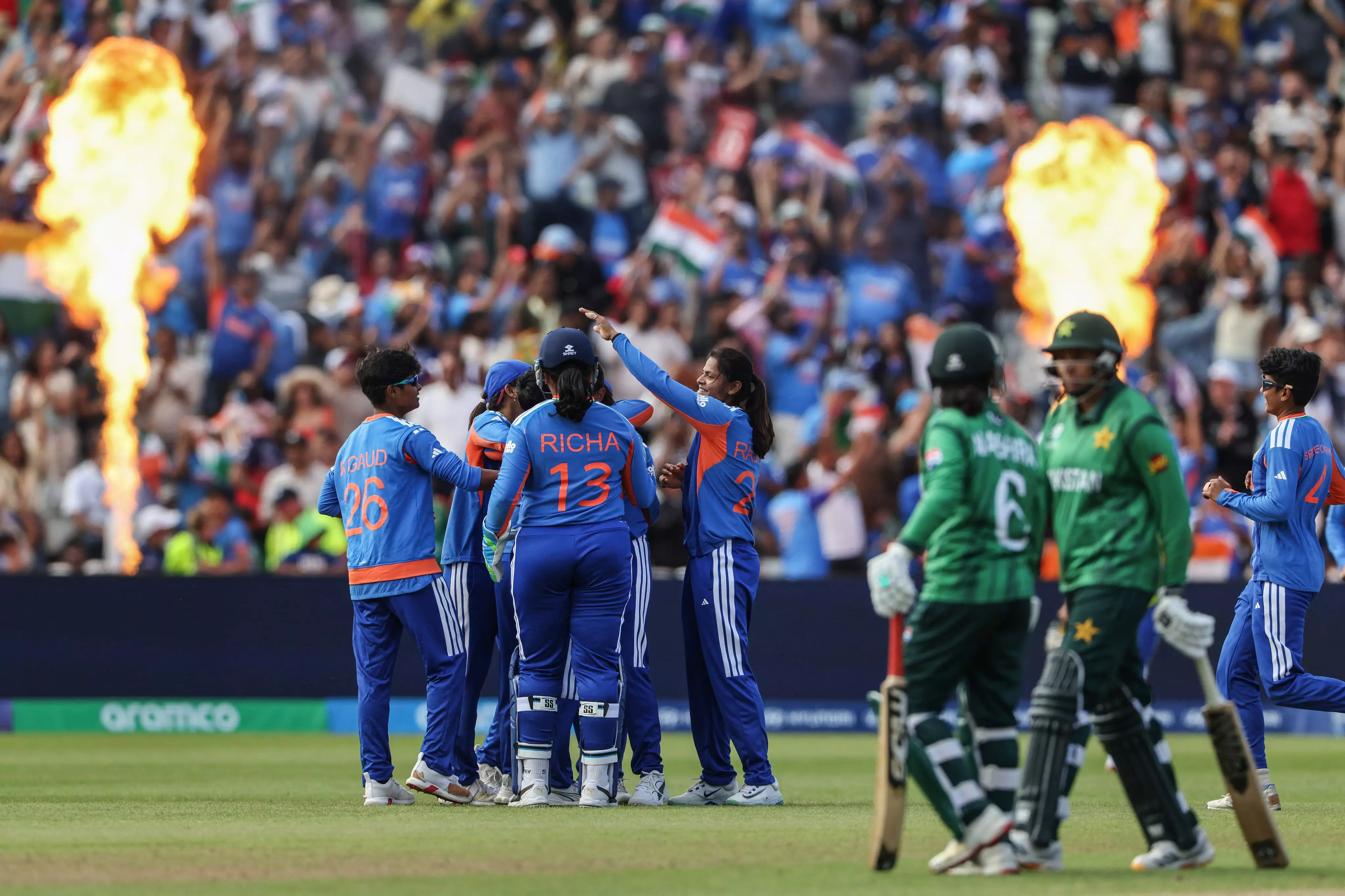
In a striking moment at the ICC Women’s T20 World Cup, the captains of India and Pakistan refrained from shaking hands at the toss, and players from both sides continued the practice after the match concluded. What is traditionally a simple gesture of respect and camaraderie became a symbol of the complex relationship between the two nations.
Breaking with Tradition
Cricket has long prided itself on the “spirit of the game,” where handshakes before and after matches embody sportsmanship beyond rivalry. The refusal to engage in this ritual was notable, especially on the global stage of the World Cup. For many, it raised questions about whether political tensions should override sporting etiquette.
India and Pakistan’s cricketing ties have been strained for decades, often reflecting broader geopolitical realities. The Board of Control for Cricket in India (BCCI) has informally discouraged gestures of goodwill with Pakistan since heightened tensions in recent years. By declining handshakes, the women’s team mirrored the stance taken by their male counterparts, signaling solidarity with national sentiment rather than sporting convention.
Voices from the Cricketing Community
Former international cricketers Diana Eduljee and WV Raman, (who also coached the women’s team in the past), chose not to comment on the subject. However, other voices, speaking exclusively within Indian cricket, see the issue differently.
Purnima Rau, former coach, remarked: “After Covid we have stopped shaking hands with friends too 😊... as long as a good competitive game goes on and we maintain the spirit of the game on the field I am happy. Sport will heal by itself. Let us give time.
Nilima Joglekar (Barve), former cricketer, emphasized: “Cricket first. That is what Captain Harman said. We should leave things that really don’t matter to how the game is being played. Let’s put it aside as customary rituals and give importance to how the game is being played to the best of their ability. Leaving the handshake really doesn’t matter. Why give importance to that as long as they are following the rules of the game.
These perspectives highlight a pragmatic approach: focusing on the quality of cricket rather than symbolic gestures.
Divided Reactions
Fans and commentators remain split. Supporters of the decision argue that cricket cannot be divorced from the political context, and symbolic gestures matter. Critics lament the loss of cricket’s role as a bridge between nations, suggesting that players should uphold the spirit of the game regardless of politics.The Larger ImplicationThis incident underscores how deeply intertwined cricket and geopolitics remain in South Asia. While the players maintained professionalism on the field, the absence of handshakes highlighted the weight of national identity and political symbolism in even the smallest acts.
The refusal to shake hands at the ICC Women’s T20 World Cup was more than a break from etiquette—it was a statement shaped by history and politics. Yet, as voices like Rau and Joglekar remind us, the essence of cricket lies in how the game is played. Perhaps, with time, sport itself will heal divisions, reaffirming that cricket is ultimately about competition, skill, and respect on the field.
