Remembering Bal Thackeray, Maharashtra’s Most Unconventional Leader

Despite never contesting an election or holding any official political post, Balasaheb lived in the hearts of every Maharashtrian
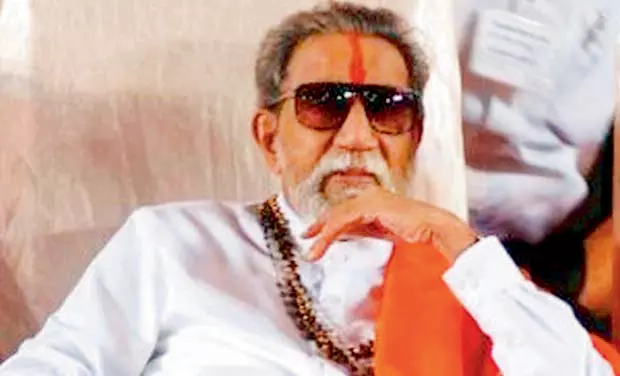
While the existence of the Shiv Sena faces political challenges in Maharashtra, the state is currently celebrating the birth centenary of its founder and veteran politician, Hinduhrudaysamrat Bal Thackeray, often fondly called as Balasaheb. Despite never contesting an election or holding any official political post, Balasaheb lived in the hearts of every Maharashtrian. He never sought power for himself, yet his role and his word were considered final in the politics and kingmaking of Maharashtra.
A Powerful Leader and Multi-faceted Artist
This extraordinary politician possessed the power to shut down Maharashtra with a single gesture or a word. (Previously, only George Fernandes had displayed such influence over the labor class in Mumbai during the 60s and 70s). He was not just a politician; Bal Keshav Thackeray was an accomplished cartoonist, a brilliant orator, a fearless journalist, and a skilled commander. He remains an indelible and influential, albeit controversial, figure in Maharashtra's history.
Bal Thackeray was never a "polite" politician or a speaker who measured his words. His speeches were always filled with fiery, burning words and thunderous roars. He inherited this legacy from his father, Pradhodankar Thackeray (Keshav Sitaram Thackeray), who was a staunch Hindutva proponent and a radical writer. Bal Thackeray adopted his father’s direct and bold oratorical style, leading to the popularization of the term "Thakari Bana" (The Thackeray Style)—a trait often seen today in the speeches of Raj Thackeray and Uddhav Thackeray.
The Birth of Shiv Sena
Following the Samyukta Maharashtra Movement in 1966, where various parties united to ensure Mumbai remained part of Maharashtra, the movement's influence began to wane. Many felt a need for an organization to keep the Marathi people united in Mumbai. Taking a decisive step to voice the injustices against the "Marathi Manus," Bal Thackeray founded the Shiv Sena on June 19, 1966.
The Legacy of Bal Thackeray and the Foundation of Shiv Sena
In fact, before establishing the Shiv Sena, Bal Thackeray worked as a cartoonist for the Free Press Journal in 1950. It was there that he met the renowned cartoonist R.K. Laxman. Laxman’s style significantly influenced Thackeray’s own cartoons. Later, in 1960, Bal Thackeray and his brother Shrikant Thackeray started a fortnightly magazine called ‘Marmik.’ Through Marmik, he sharply critiqued the ruling parties and addressed state issues. To highlight the injustice against the Marathi people, he started a column titled ‘Vacha Ani Thand Basa’ (Read and Stay Quiet). His goal through Marmik was to awaken the Marathi community against injustice. Realizing that a magazine alone was not enough, the idea of a formal organization took shape. This vision was supported by his father, leading to the birth of the Shiv Sena. The name 'Shiv Sena' was suggested by Balasaheb’s father, the great social reformer Prabodhankar Keshav Thackeray.
The Tradition of the Dasara Melava
It was Bal Thackeray who started the tradition of the annual Dasara Melava at Shivaji Park in Dadar, Mumbai. The highlight of this gathering was always his speech, which attracted thousands of people just to hear him speak. The equation "Shiv Sena equals Bal Thackeray" became firmly etched in the public mind due to his powerful personality and sharp rhetoric.
In an era where leaders claim to serve the public but later dismiss them by saying, "Voting for me doesn't make you my master," one fondly remembers the Shiv Sena chief who Sixty years ago, directly told the people, "I am yours, I am a servant of Maharashtra." That moment was a significant event signaling the powerful political presence of Shiv Sena in Mumbai and the beginning of a new political tradition in Maharashtra.
A few months after the party’s inception, Bal Thackeray initiated the tradition of the Shiv Sena Dussehra Melava (Public gathering). Despite being a display of political strength, its popularity has ensured that this tradition continues even after 50 years. There is no other example in the state where a political demonstration has enjoyed such consistent public support for decades. No other party in Maharashtra has been fortunate enough to hold a public gathering on a major festival day every year and still receive such an overwhelming public response. Since this rally is held annually in Mumbai, the people of the city have embraced it with all their hearts.
Bal Thackeray did not establish the Shiv Sena merely as a political organization. He stated then that the Shiv Sena would stand for the rightful rights of the Marathi people. The party’s slogan at the time was "80% Social Work and 20% Politics." Bal Thackeray was known for being blunt and a man of his word. He honored his promises, which is one of the reasons Maharashtra loved him immensely. His word was law for the Shiv Sainiks.
Having entered politics for public welfare, he initiated many social projects. He created the Zunka-Bhakar centers to provide affordable food for the poor, a chain of old-age homes, concession schemes for senior citizens, housing for slum dwellers in Mumbai, the Mumbai-Pune Expressway, and several flyovers in Mumbai. He emphasized politics beyond caste. His social work played a massive role in the popularity of his image and the Shiv Sena. His vision for analyzing politics and society was unique, often reflecting the sharp insight of a cartoonist. Balasaheb’s importance was significant not only in state politics but also at the national level. He gave a new face, identity, and confidence to the faceless youth of the Bahujan community, producing leaders like current deputy chief minister of Maharashtra Eknath Shinde.
Political parties and leaders will come and go, but Bal Thackeray’s popularity and influence cannot be erased from the history of Maharashtra. He remained the Shiv Sena Pramukh (chief) until the very end. He breathed his last at the age of 86, but his influence remains as strong as ever today. On the occasion of his birth anniversary, the people of Maharashtra pay their tributes to him.