Echoes of Aazadi: The Flame of Freedom, the Power of Purpose, and the Legacy We Inherit

Remembering two freedom fighters- Chandrashekhar Azad and Lokmanya Tilak who lead the country on the path of freedom
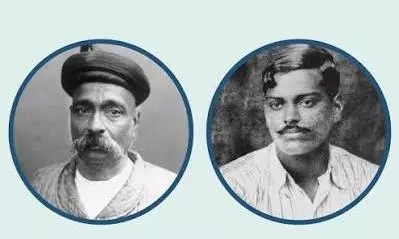
Aazadi… Aazadi… Aazadi…
Over the past few days, this single word has been resonating everywhere—flowing through lyrics, ringing out in slogans, and echoing through speeches. Aazadi means freedom. As India stands on the precipice of celebrating another historic Independence Day, a question arises: what does this word truly signify? To understand its essence, we must look back into the pages of history.
To honor the revolutionaries and freedom fighters who gave their lives to throw off the oppressive yoke of British colonial rule, we must revisit their journeys. For today’s generation, this history can feel distant, almost legendary. Yet, the very word Aazadi—so frequently spoken by Gen Z today—was once uttered with fierce defiance before British authorities by a teenager who was, quite literally, the "Gen Z" of his era: Chandrashekhar Azad.
The Fearless Commander: Chandrashekhar Azad
Born on July 23, 1906, in present-day Madhya Pradesh, Chandrashekhar Sitaram Tiwari was just 15 years old when he joined Mahatma Gandhi’s Non-Cooperation Movement in 1921. Arrested during a protest, the young boy was brought before a British magistrate. When asked his name and address, he boldly declared his name as “Azad” (Free).
In that moment, he became a living symbol for millions of Indians yearning to break free from British tyranny. His passion for independence was absolute.
"मैं आज़ाद हूँ और आज़ाद ही रहूँगा।"
("I am free, and free I shall remain.")
— Chandrashekhar Azad
When the Non-Cooperation Movement was called off, Azad pivoted toward armed revolution. Alongside Ram Prasad Bismil, he reorganized the Hindustan Republican Association into the Hindustan Socialist Republican Association (HSRA), serving as its Commander-in-Chief.
Milestones of Defiance
Azad was the mastermind behind planning, training, and executing many audacious operations. As its Commander-in-Chief, he masterminded key operations, including the 1925 Kakori train robbery to fund the revolution, the 1928 elimination of British officer Saunders to avenge Lala Lajpat Rai's death, and the 1929 symbolic bombing of the Central Assembly to awaken the masses. Living by his firm conviction—“I am free, and free I shall remain”—Azad kept his promise until his final breath. On February 27, 1931, cornered by police at Alfred Park in Allahabad following a tip-off, he fought a courageous solo gunfight and used his very last bullet on himself, ensuring he would never be captured alive by the British. True to his vow, he never let the British capture him alive, fulfilling his lifelong promise to remain forever ‘Azad’.
The Lion of Swaraj: Lokmanya Bal Gangadhar Tilak
Born on July 23, 1856, in Ratnagiri, Maharashtra, Bal Gangadhar Tilak was an intellectual powerhouse and one-third of the famed Lal-Bal-Pal triumvirate. Tilak transformed the struggle for independence into a mass movement, electrifying the nation with his immortal battle cry:
"Swaraj is my birthright, and I shall have it!"
Tilak led the extremist faction of the freedom movement, instilling the spark of nationalism in everyday citizens. His efforts were instrumental in founding the All India Home Rule League, which organized grassroots campaigns demanding self-rule.
To unite people against colonial oppression, Tilak converted public celebrations like Ganeshotsav and Shiv Jayanti into mass cultural gatherings. Through his fiery newspapers, Kesari and Mahratta, he relentlessly criticized British atrocities, earning him the revered title “Lokmanya”—Accepted by the people as their leader.
The Mandalay Exile & Gita Rahasya
In 1908, Tilak was tried for sedition and sentenced to six years of imprisonment in Mandalay, Burma (Myanmar). During his harsh confinement, he wrote his magnum opus—Gita Rahasya (The Secret of the Gita or Karmayogashastra)—using a simple lead pencil. His commentary on the Bhagavad Gita emphasized Karmayoga (the path of selfless action), inspiring Indians to fulfill their duty toward the nation without fear.
Two Paths, One Destination
The Indian freedom struggle was not fought on a single front. It was a convergence of ideas, action, and sacrifice. The story of Indian independence is not merely a record of peaceful movements and political negotiations, but a powerful tapestry woven from sacrifice, ideological awakening, and revolutionary passion. Lokmanya Tilak laid the intellectual foundation of Swaraj, while revolutionaries like Chandrashekhar Azad ignited the flame of Aazadi through supreme sacrifice. The confluence of these two streams paved the historic path toward August 15, 1947, when India finally unfurled its tricolor in a free sky. Today’s youth has much to learn from these two fearless leaders whose sacrifices secured our present. Their sacrifice will always remind us of our unity, patriotism, and responsibility to continuously lead our nation toward progress.
Together, the intellectual groundwork laid by Tilak and the revolutionary fire ignited by Azad formed a dual force that eventually brought down British rule, culminating in the dawn of Independence on August 15, 1947.
The Meaning of Freedom Today
For today’s youth, the lives of these two fearless icons offer valuable lessons in courage, conviction, and duty. The story of Indian independence is not merely a record of political negotiations; it is a saga written in passion, sacrifice, and unbreakable resolve.
August 15 is more than a national holiday—it is a celebration of self-respect. It reminds us of our shared unity and responsibility. True independence lies not just in remembering the past, but in taking meaningful actions today that elevate our nation to new heights.