Gudi Padwa: Welcoming Spring And New Beginnings

The original and traditional way to welcome the new year in India
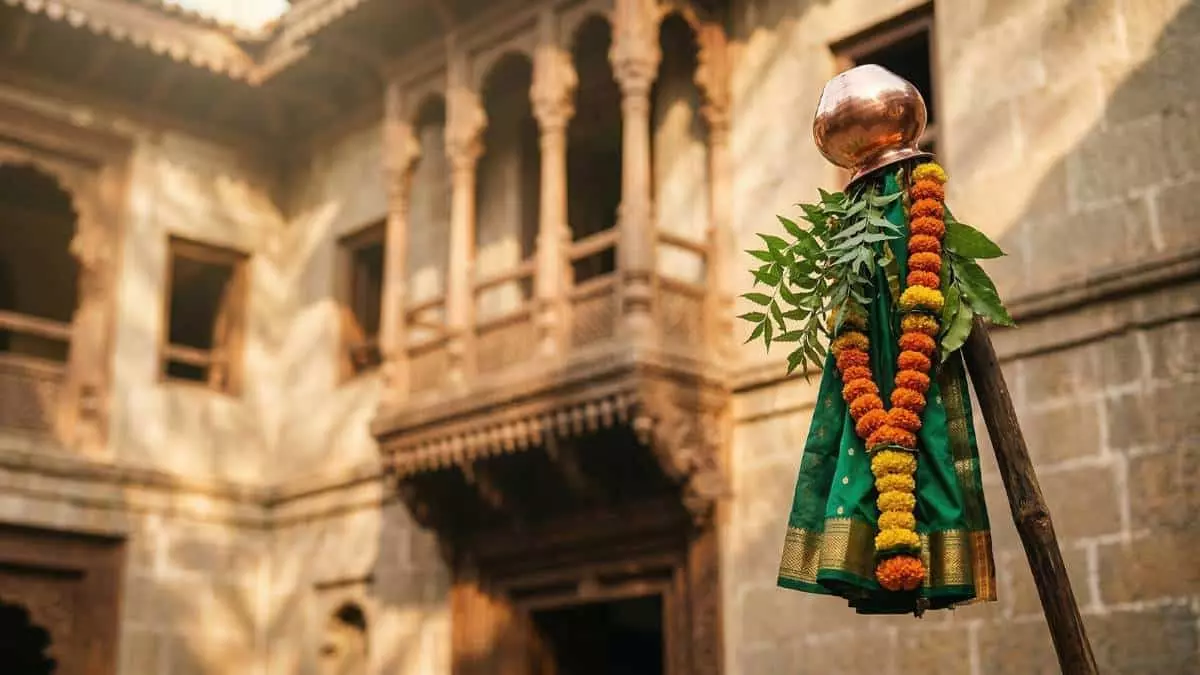
As the golden sun rises on the first day of the Hindu month of Chaitra, the skyline of Maharashtra and the Konkan region transforms. Adorned with vibrant silks and glistening copper pots, the Gudi stands tall as a symbol of victory, a herald of spring, and the official start of the Marathi New Year.
Origin of Gudi Padwa and its History
The term Padwa finds its origin in the Sanskrit word Pratipada, marking the first day of the lunar fortnight. But Gudi Padwa is more than just a date on a calendar; it is a day etched in history and mythology. One prominent legend dates back to the Shalivahan era. It is said that Emperor Shalivahana of the Satavahana dynasty led his people to a glorious victory over the Shakas. To commemorate this triumph, he initiated a new era (the Shalivahan Shaka), and the Gudi was raised as a "flag of victory." Mythologically, the day also celebrates the triumphant return of Lord Rama to Ayodhya after his 14-year exile, marking a collective moment of homecoming and joy.
Celebrating the advent of Spring
Beyond the legends, Gudi Padwa is a sensory celebration of Vasant Ritu (Spring). Nature sheds its winter lethargy, donning a fresh coat of verdant green. The air is thick with the fragrance of new blooms, signaling a season of rejuvenation. The traditions of the day are deeply ecological. Families hoist a Gudi - a bamboo staff draped in rich fabric, crowned with a copper kalash, and garlanded with sugar crystals (gaathi), neem leaves, and mango twigs.
The Healing Ritual Using Neem and Mango
In a beautiful blend of health and ritual, a paste of bitter neem leaves and young mango blossoms is consumed. This ancient practice is designed to prepare the body for the impending summer heat, proving that our festivals are profoundly connected to the well-being of the physical self.
Celebrating Unity in Diversity
While Maharashtra celebrates Gudi Padwa, the spirit of the New Year resonates across India under different names, reflecting our "Unity in Diversity":
Ugadi: Andhra Pradesh, Telangana, and Karnataka
Baisakhi: Punjab
Cheti Chand: Sindhi community
Poila Baisakh: West Bengal
Bihu: Assam
Vishu: Kerala
Tradition Meets Modernity
In an era of rapid technological growth, Gudi Padwa has evolved from a quiet family ritual into a dynamic commercial powerhouse. Considered one of the three-and-a-half "most auspicious moments" (Muhurtas) in the Hindu calendar, it is the premier day for "Shubharambh"—the beginning of new ventures.
Today’s youth and entrepreneurs view the festival through a lens of opportunity. The "spirit of connection" that defines the modern world finds its peak here. Whether it’s buying a new home, launching a startup, or investing in gold, the belief is that a seed sown on Padwa is destined to flourish.
The marketplace reflects this enthusiasm. From "Ready-to-hoist Gudi Kits" and designer ethnic wear to professional "Puja Packages" and artisanal food startups, the festival fuels a massive economic surge. For small businesses and home-grown brands, it is the perfect window to reach customers through creative marketing, as the spirit of "New Beginnings" makes consumers more receptive to fresh ideas and products.
The Essence of Chaitra
Ultimately, the true beauty of Chaitra doesn't just lie in the physical act of hoisting a Gudi. It lies in the spirit of the season—the joy of coming together, the health benefits of ancient recipes, and the thrill of professional success. This year, as we welcome the New Year, let us celebrate not just a tradition, but a lifestyle that balances the wisdom of the past with the ambitions of the future.
