Zero Visibility, Thick Smoke: Docs Bravely Save Infants in Dark

The SNCU has two rooms with a nursing station in between.
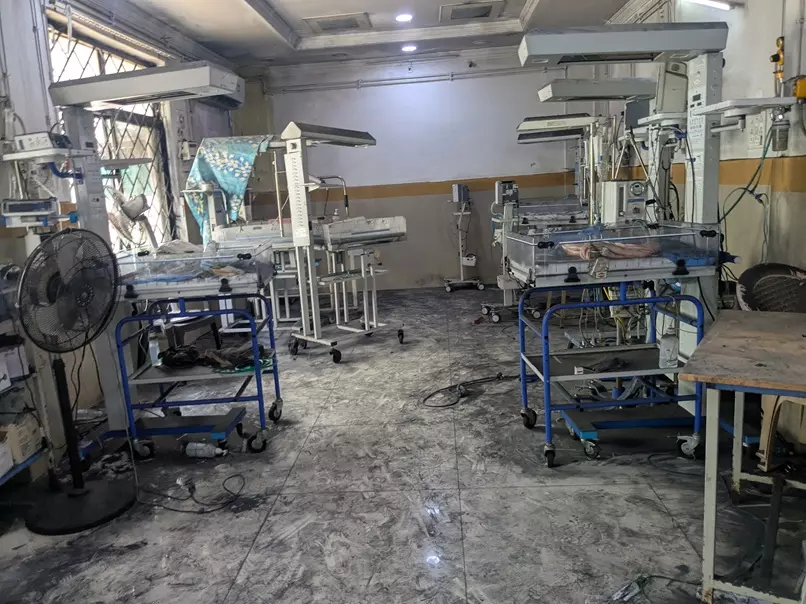
Hyderabad: From interns to assistant professors, doctors and nurses entered the smoke-filled Special Newborn Care Unit (SNCU) at RIMS, Adilabad, to rescue infants trapped inside. With visibility almost completely blocked by smoke, some of those who entered had no clear view of the exit and had to feel their way along the walls to bring out the babies.
The SNCU has two rooms with a nursing station in between. One room had babies in a serious condition, and the other had critically ill infants, with 27 babies attached to various machines at the time of the incident. Only one or two doctors and attendants were familiar with the layout as they regularly worked in the paediatric ward. Others who joined the rescue were from different departments and blocks.
Dr Ifthekar, an intern, had completed his duty and was heading to his hostel when he saw a fire extinguisher being taken towards the emergency block. He took it with his friend Dr R. Sandeep and stopped to ask the security personnel what had happened. After being told about the AC blast and fire, both rushed towards the ward to help.
Feeling his way through the smoke, Dr Ifthekar entered the ward. “I could identify the beds of the infants. I first rescued one baby, but parents were crying that their babies were missing. I took God’s name and went inside again. I could not see anything or breathe properly,” he said.
After spending several minutes inside, he managed to walk out but fainted soon afterwards. He was revived and recovered in about four hours. A nurse continued to receive treatment after being affected by the smoke.
Dr D. Ashok, another intern, was on his first day of duty in the paediatric block. He and Dr Shravanti, an assistant professor, were performing CPR (cardiopulmonary resuscitation) on a child when they heard a loud sound. As smoke began spreading through the ward, they started shifting babies with the help of nurses.
When two parents approached them crying about their babies, Dr Ashok said he walked back inside despite the smoke, moving along the walls towards the far end of the room and, after covering his face with his shirt, reached the two infants and brought them out.
Dr Navneeth Rathod, assistant professor of general medicine, was not on duty in the paediatric block. He had come to the hospital to see an unwell relative and was taken to the paediatric block for Dr Shravanti’s appointment. After noticing the smoke, he joined the rescue effort. “Doctors were carrying babies to other wards for treatment and shifting them onto ventilators. I started helping them by rescuing and pushing the baby transport vehicles,” he said.
As Dr Ifthekar and Dr Ashok were carrying out the final rescue, Dr Rathod broke the windows panes to allow the smoke to escape.
