Women Lead Rural Local Bodies in Telangana

Telangana shows gender promise, but gaps remain
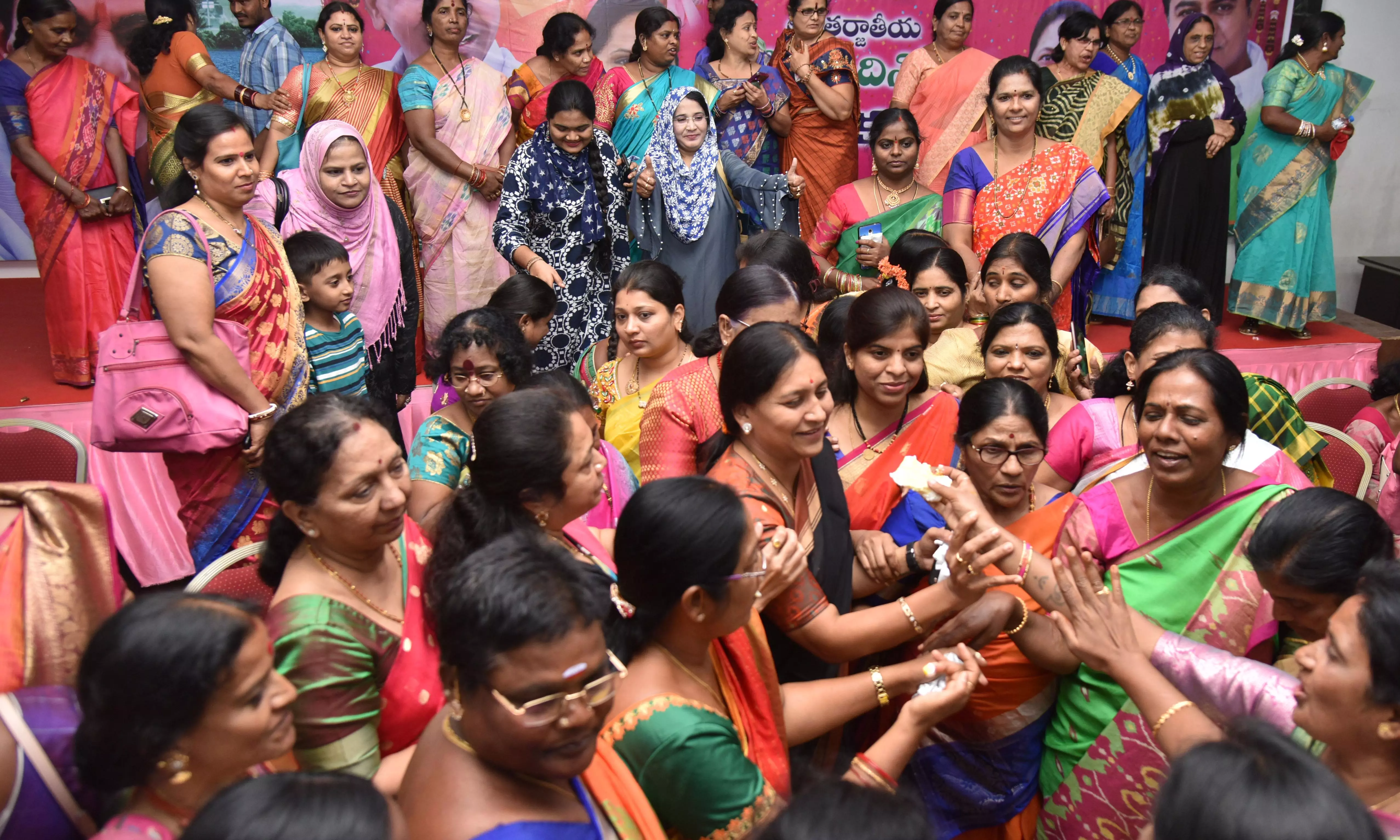
Hyderabad: Telangana has emerged as a national leader in women’s representation at the grassroots level, with women occupying 53.08 per cent of gram panchayat seats, exceeding the mandated 50 per cent reservation. This achievement underscores the state's efforts to empower marginalised communities and reflects progressive reforms aimed at enhancing political participation among women in rural areas. However, the state continues to face challenges similar to those highlighted in the Global Gender Gap Report 2025, particularly in female labour force participation and political empowerment at higher legislative levels.
Telangana has shown notable progress in education and health indicators. The state's Gross Enrolment Ratio (GER) for higher education stands at 40.0 per cent, with female enrolment at 41.6 per cent, surpassing male enrolment of 38.5 per cent. Literacy rates among the 18–24 age group are above the national average, with male literacy at 90 per cent and female literacy at 79.5 per cent. Despite these gains, dropout rates remain higher for girls at secondary and higher secondary levels, often due to socio-economic factors. The gender gap in digital access and smartphone usage further restricts educational and economic opportunities for women and girls.
In terms of economic parity, Telangana performs better than many states, though gender-specific income parity ratios are not available. At the national level, India's earned income parity increased marginally from 28.6 per cent to 29.9 per cent. Senior advocate Pushpinder Kaur from Telangana emphasises that education is the key to improving gender parity. She highlights the role of quality education and well-trained teachers in empowering young girls and bridging the gender divide.
Despite the advances, political empowerment remains Telangana’s weakest area. In the 2018 state elections, only six women were elected to the 119-member Legislative Assembly—just five per cent, down from 7.5 per cent in 2014. Structural barriers and sociopolitical factors continue to restrict women’s participation in higher political offices. These trends mirror national data, where women’s representation in Parliament declined from 14.7 per cent to 13.8 per cent.
Senior advocate and law lecturer Rachna Reddy attributes progress to legal reforms such as the Women's Reservation Act and enhanced property rights for women. She, however, criticised global indices for failing to account for the vast amount of unpaid domestic and care work carried out by Indian women. She also pointed to lobbying by Western countries as a factor influencing global gender rankings.
While Telangana has made meaningful progress in bridging the gender gap in education and in rural local governance, significant work remains in achieving parity in economic access and higher political representation, particularly for women from marginalised communities.
