West Asia Conflict Hits Bird Migration to Telangana

“Iran and surrounding regions act as crucial stopover zones where birds rest and refuel before continuing their journey,” said Sriram Reddy, an expert birdwatcher and wildlife photographer.
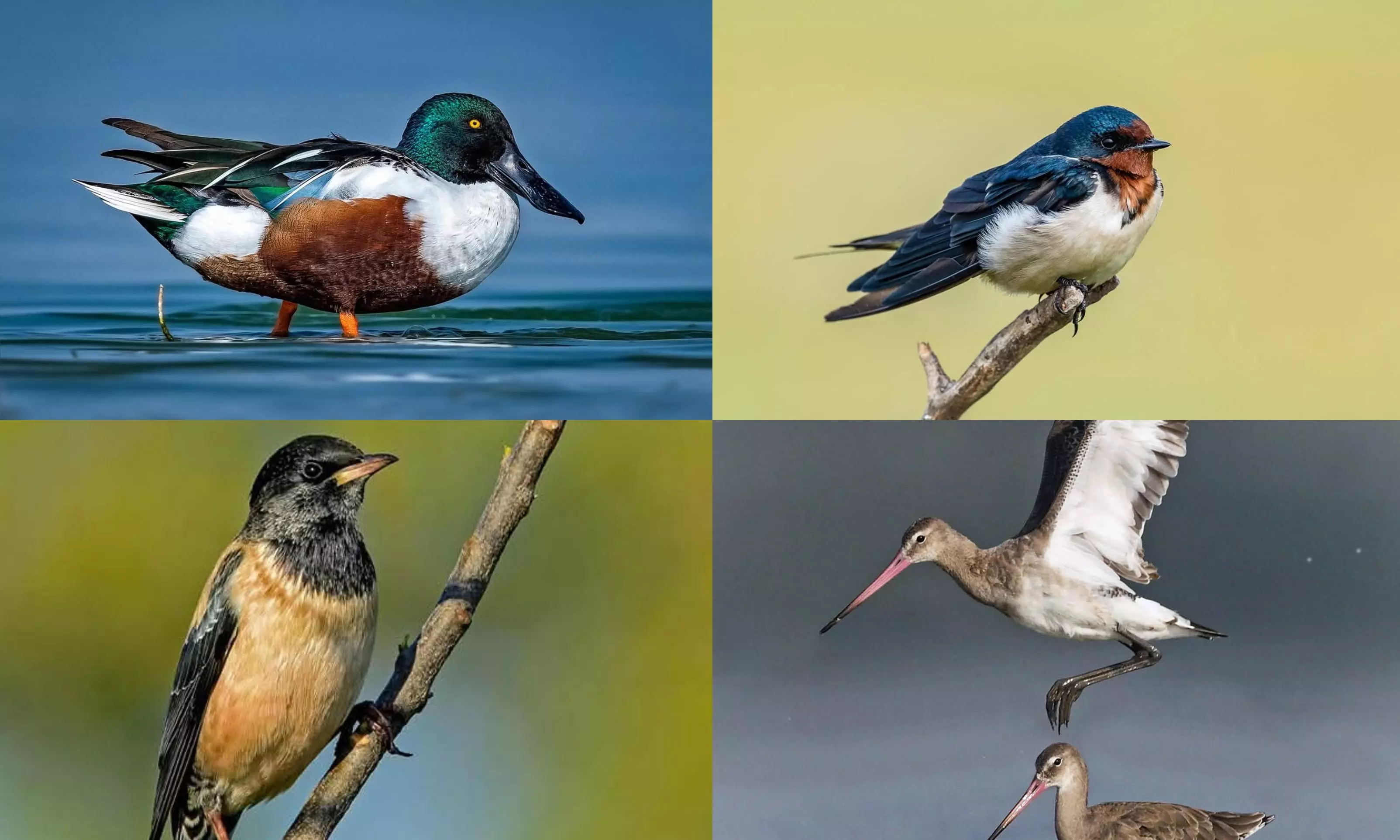
Hyderabad: A fragile chain that connects Siberia to Telangana’s lakes may be under strain as conflict in West Asia begins to interfere with one of the world’s most important bird migration systems, according to birdwatchers tracking seasonal arrivals.
The ‘Central Asian Flyway’, which links breeding grounds in Siberia, central Asia and parts of Europe to wintering regions in India, passes through West Asia before the birds reach Telangana. Each winter, ducks, waders, raptors and small birds arrive as part of this long journey, forming a continuous ecological network across continents.
“Iran and surrounding regions act as crucial stopover zones where birds rest and refuel before continuing their journey,” said Sriram Reddy, an expert birdwatcher and wildlife photographer. “The flyway is a series of interconnected routes, and Iran is a major crossroads supporting hundreds of species.”
He pointed to the risk during reverse migration between March and May. “Birds leaving India depend on predictable stopovers in West Asia. If these are disturbed, they may skip stops or take longer routes, which can delay their arrival in breeding grounds and affect breeding success,” he said.
This dependence is strongest among waterbirds that winter in Telangana. Species such as northern pintail, garganey, common teal, Eurasian wigeon, northern shoveler, ruddy shelduck and bar-headed goose rely on a chain of wetlands that includes key sites in Iran and extends toward the Caspian region and Europe. Shorebirds such as black-tailed godwit, ruff, little stint, common redshank and marsh sandpiper follow similar paths, depending heavily on coastal and inland wetlands across West Asia.
Anita Negi, birdwatcher from the Deccan Birders group, explained how conflict could alter what is seen locally. “Think of West Asia like a massive highway for migrating birds. With conflict and disturbance, that route is partly blocked,” she said. “Birds may take longer detours, which means they could arrive late, in smaller numbers, or not make it at all due to exhaustion.”
She added that some species are at a sensitive stage right now. “Waders like ruff, black-tailed godwit and wood sandpiper begin their return journey in April,” she said. “If stopover sites are affected, their migration could be delayed.”
Raptors and flocking birds also depend on this corridor. Greater spotted eagle and booted eagle pass through narrow migration routes in West Asia before dispersing further north, while barn swallow and rosy starling travel in large numbers across the same region, often at night. Species such as demoiselle cranes are also part of this movement.
Asif Husain Arastu, avid birdwatcher, drew attention to the scale of the network. “The Central Asian Flyway covers nearly 30 countries across North, Central and South Asia, and more than 180 migratory species come to India through this route,” he said. “If even one key region is disrupted, especially a major link like Iran, the impact is felt across the system.”
Birdwatchers say the effects may begin to show in Telangana through changes in arrival timing, fewer birds at wetlands, or shifts in species diversity, as a crisis far away begins to affect a long-established migration cycle.
