Weightage for Board Exams May Heighten Stress, Say Parents, Teachers

Further, the proposal will put an extra burden on students who will be forced to join the corporate institutions to score well in both board and entrance exams, benefiting the corporate colleges.
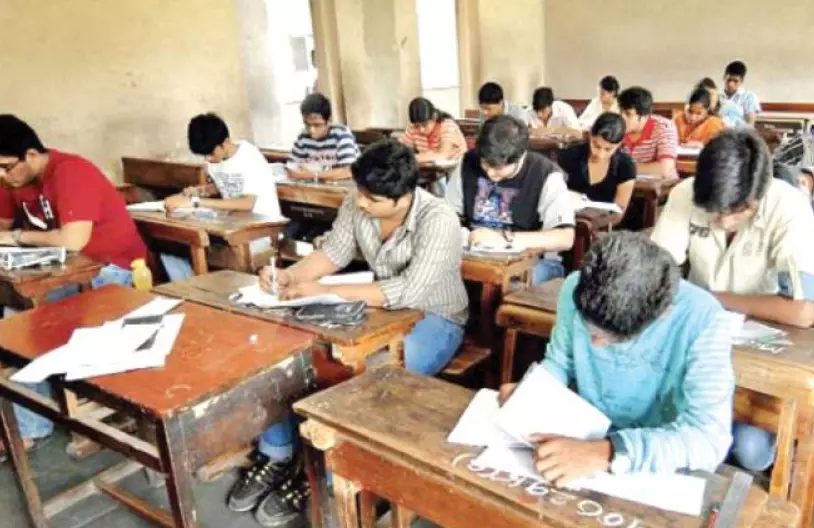
Hyderabad: The proposed 50 per cent weightage for Class 12 board exam marks in NEET and JEE admissions could result in unhealthy competition among students to score top marks in the board exams, besides probably resulting in unfair evaluation practices by different school boards.
Currently, different boards follow different curricula for exams and evaluation standards for the evaluation. For example, CBSE is relatively liberal in awarding marks, with the pass percentage this year standing at 85.20. In contrast, the Telangana Board of Intermediate Education students will be disadvantaged as the Board has been adopting a tough evaluation, which could be seen in this year’s pass percentage of 75.
Further, the proposal will put an extra burden on students who will be forced to join the corporate institutions to score well in both board and entrance exams, benefiting the corporate colleges.
Experts said the weightage in the entrance exam is not new, as earlier JEE admission included 40 per cent weightage for board exam marks when the exam was introduced in 2013. However, it was later withdrawn after three years due to the complicated rank calculation, variation in difficulty level of various boards, and education boards also raised concerns over flaws in the normalisation process. In addition, several students also approached the courts, and there were concerns that rural students are at a disadvantage.
They also said it is difficult to fairly compare marks from different education boards. The boards are conducted to make sure as many students as possible who appear will pass the exam, while the entrance exams are conducted to filter out.
JEE expert Krishna Chaitanya Kasula said, "The weightage will amount to a lot of pressure on students. Even with a one-mark, there will be a huge difference in ranks among students in entrance tests.”
“Now students should also be concerned about board exams, and the stress to score well in both exams will remain for five to six months right from the JEE session-1 in January until they secure a seat,” he added.
Experts pointed out that instead of the new changes, the government should focus on conducting a fair exam. They warned that through this new recommendation, there may be chances of an increase in malpractice.
V. Ramana Rao, an educationist, said that in Telangana and Andhra Pradesh, a 25 per cent weightage was implemented in EAMCET so that students would also focus on the inter theory syllabus, but it was not properly implemented and was removed. Why would the national-level exams have this? This makes it difficult to rationalise marks. These steps are not an answer to the paper leakages, he added.
Aligning the board syllabus with the entrance exam is a good step, said K. Kishore, another IIT expert. He said giving weightage to board marks will reduce students' focus on practical application and could force marginalised students to join corporate colleges.
S. Saketh, an MPC student, said students with high board exam scores will have an advantage, and those who scored lower for various reasons will be forced to give up on their dream. Another student, Mahitha, said it would be better to keep both the exams separate.