Water Tank to Wealth Managers: Miyapur Trust Transforms Lives of Watchmen’s Children

Akula Kalyani, whose father worked as a security guard, studied engineering through a support system that began inside a converted water tank in Miyapur, and today earns Rs 20 lakh a year as a software engineer
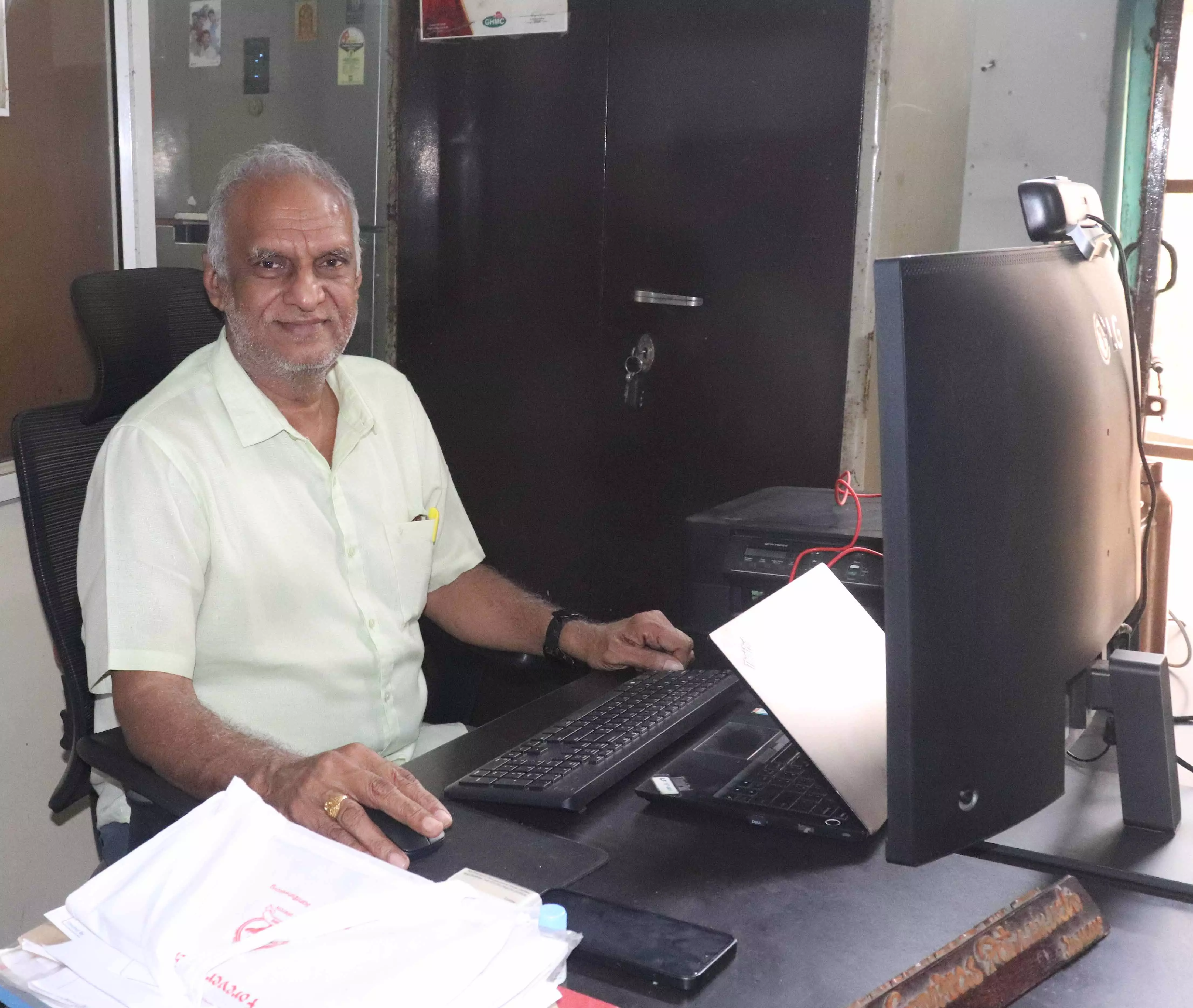
HYDERABAD: Akula Kalyani, whose father worked as a security guard, studied engineering through a support system that began inside a converted water tank in Miyapur, and today earns Rs 20 lakh a year as a software engineer. She is among more than 200 engineering graduates who have come through a free coaching programme run from the same space by the Pothukuchi Somasundara Social Welfare and Charitable Trust.
Since 2003, the trust has supported 1,531 students through school, produced nearly 900 diploma holders, and continues to work with about 100 students at a time as they move from Class IX through diploma courses into engineering and employment.
“We take responsibility till they stand on their own,” said Dr P. Srinivas, founder and chairman of the trust. “Age 13 we hold their hands and support them academically till they are around 22.”
The water tank building runs like a vertical system. The ground floor is for school students, where regular classes and polytechnic entrance preparation run together, both inside rooms and in corridors where blackboards are fixed against walls painted with science diagrams such as the periodic table, electromagnetic waves and the human heart.
The first floor is for diploma students, where computers line the walls and students work between study and mentoring sessions. The second floor is for those in engineering courses, with a small library alongside their study space.
The ground floor also has the kitchen. Students cook one meal a day in groups, guided by a handwritten rota listing team heads, members and a weekly menu. With gas supply down, students cooked on a wood fire, preparing the fuel themselves.
Cleaning follows the same routine. Students sweep, wash utensils and maintain the space. Teaching works the same way. Diploma and engineering students take classes for younger ones. “We don’t take money. We ask them to give their time,” Srinivas said.
Sai, who works at a global wealth manager, and returned as a mentor, described the system over time. “From being a student to becoming a mentor is like our way of giving it back to the trust. Every evening at 7.30 pm, we connect with all branches to know how students are doing and what updates are coming from each centre,” he said. He joined in 2016, completed his diploma and engineering through the trust, and now coordinates across centres while working.
“We started with 24 students. Now there are about 1,000 who come through this system,” said Srinivas, who began teaching at a government school in Miyapur in the mid-1990s after a teacher asked him to help because there were only two teachers for 300 students. He worked in a German company then and went after his shift to teach social studies.
“That is where I understood the real picture,” he said. “A student had not done his homework, and when asked why, the boy said he had to clean three tea carts after school and had no electricity at home to study. I visited their homes after that and saw that all parents are watchmen, maid servants and auto drivers. It is not the student’s fault, the system has failed them.” He said that was when he left his job to work full-time with the children.
He started classes at home and, as numbers grew, a local builder offered an unused water tank in 2008. The space was unclean, and Srinivas said they cleared it with the help of students and began classes there. “If the tank is not there, we will do on the road. The passion and intention is important,” he said.
Soumya, now in her second year of BTech, places her own story within that system. “Without the trust, it would have been very difficult for me to continue my studies,” said Soumya. She joined in Class IX, studied at a government polytechnic where she scored 9.1 CGPA, and is now pursuing information technology. “The trust supported me with coaching, books, college fees and even a laptop,” she said.
The routine on the ground floor reflects the early stage of that path. “Our mentors first teach us the theory, then we go and practise. Soumya ma’am teaches us physics,” said Tanuj, a school student attending classes there. He has already set out what he wants to do. “I want to do mechanical engineering and then I will study B.Tech. Then I will apply for Isro to become a scientist like APJ Abdul Kalam.”
The trust’s records place those plans alongside outcomes from earlier batches. One graduate, whose father worked as a tailor, is now employed with a US banking manager with a salary of around Rs 10 lakh. Another, whose father was a daily wage labourer, works at French IT multinational. A civil engineering graduate who lost her father while she was still studying now works as an assistant engineer in the rural water supply department with a salary of about Rs 10 lakh.