Warangal Helps Push to Save Sparrows Ahead of World Sparrow Day

In response, individuals and organisations across the erstwhile Warangal and Karimnagar districts are taking steps to revive sparrow habitats.
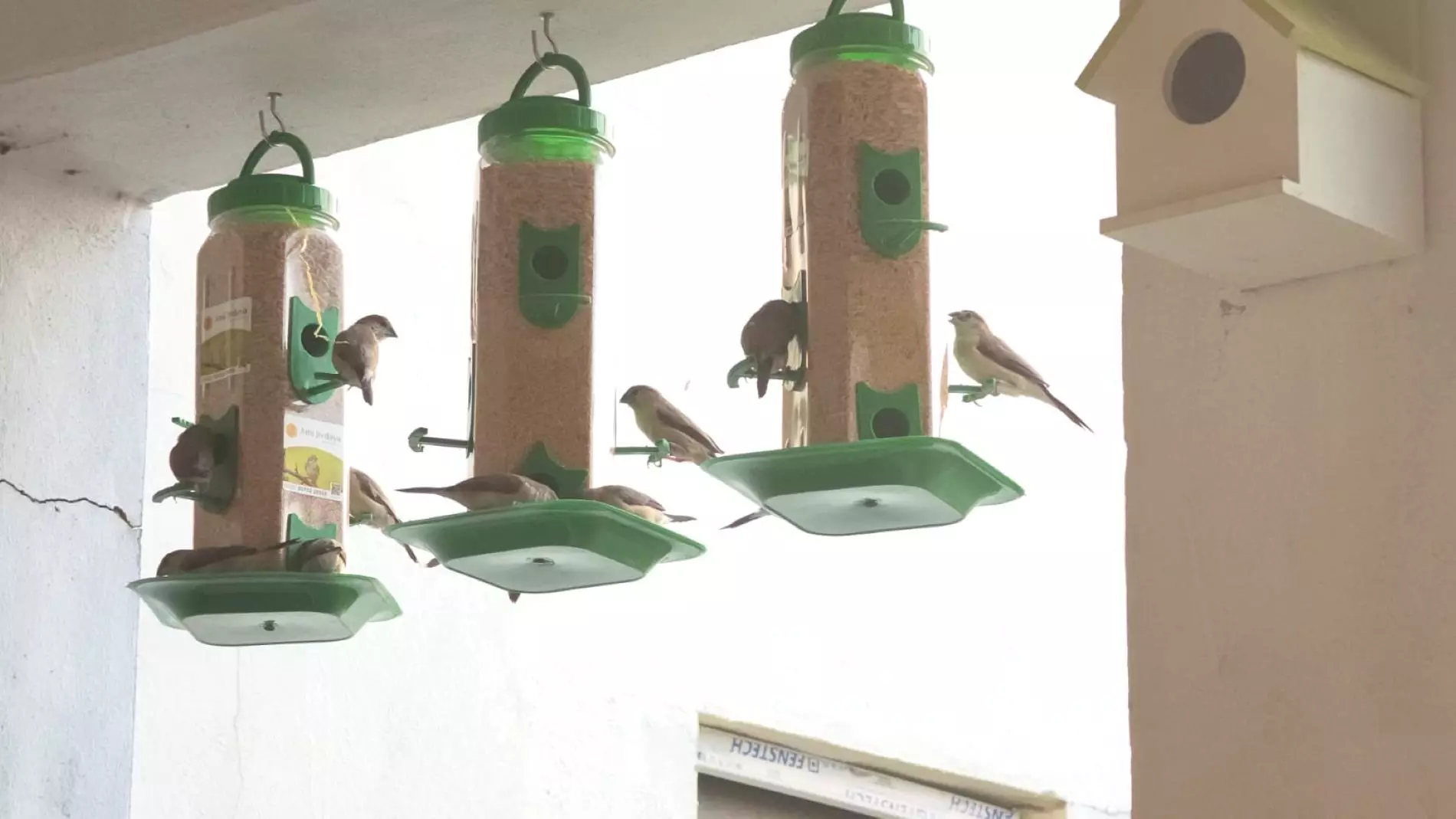
Warangal: As the world prepares to observe World Sparrow Day on March 20, environmentalists and bird lovers are raising concern over the disappearing chirps of the common house sparrow. Once a familiar presence in homes, from thatched huts to concrete buildings, the small bird is now struggling for survival due to urbanisation and changing agricultural practices.
World Sparrow Day was instituted in 2010 by the Nature Forever Society of India in collaboration with the Eco-Sys Action Foundation of France to promote biodiversity conservation. Recognising the bird’s importance, the government had earlier released a postal stamp featuring the sparrow.
The house sparrow (Passer domesticus) has an average lifespan of about three years. Though multiple species exist, including the black and wild sparrow, the common house sparrow was once closely associated with human habitation, thriving on grains and nesting in rooftops and crevices. However, the widespread use of chemical pesticides and the disappearance of traditional nesting spaces have led to a steady decline in their population.
In response, individuals and organisations across the erstwhile Warangal and Karimnagar districts are taking steps to revive sparrow habitats.
In the tri-cities of Warangal, Hanamkonda and Kazipet, the Maharshi Goshala at Chinthagattu has launched a campaign to install artificial nests. Led by its president Sajjana Ramesh, the initiative involves distributing 1,000 nests sourced from Chennai along with paddy stalks filled with grains. “It is alarming to see birds and their nests gradually vanish. This slow destruction of nature demands urgent attention,” he said.
Similar efforts are visible in urban neighbourhoods. The Dwarka City Welfare Association reported the return of sparrows after residents installed nests and grain stalks on balconies. In Karimnagar, Ananthula Ramesh, known as ‘Pichuka Ramesh,’ has created a habitat for nearly 400 birds in his courtyard, complete with water stations and cooling arrangements to withstand summer heat.
In Ramagundam, Kiran and Aparna have been feeding local flocks with nearly 8 kg of millets every month for the past seven years. In Godavarikhani, MD Asif and Parveen have installed water fountains using cooler motors to provide birds with access to water during peak summer.
Bird lovers are now urging the public to adopt simple measures such as installing feeders, placing shallow earthen water pots, and reducing the use of chemical pesticides. These localised efforts underline how small, consistent actions can help restore biodiversity and bring back the sparrow’s familiar chirping to neighbourhoods.
