Warangal Architect’s ‘Rudrama V.01’ To Bridge Ancient Wisdom With Rocket Science

A graduate of Jawaharlal Nehru Architecture and Fine Arts University in 2022, Shashank later founded Ancient Technologies Design Research Lab (ATDRL): Reports
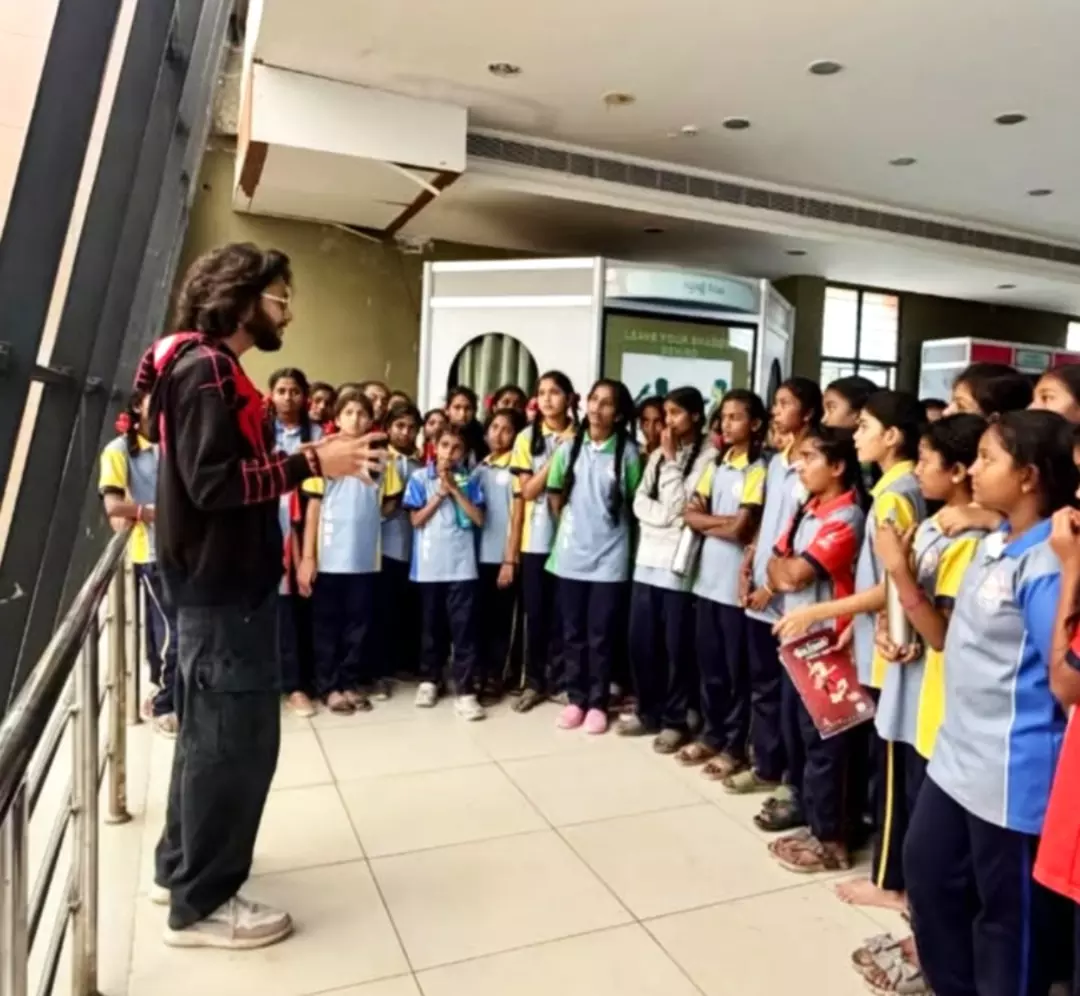
WARANGAL: Bhoopathi Shashank, 24, an architect from Warangal, is set to launch his model rocket, Rudrama V.01, on National Science Day, February 28, at a grand event at Bhadrakali Bund.
Shashank, who transitioned from designing buildings to conceptualising outer-space habitats, has received official recognition from Isro as a ‘Space Tutor’, a first for South India. His startup, ATDRL Space Research Lab, now conducts workshops across the country to inspire the next generation of space enthusiasts.
In his work, he explores how ancient architectural principles known for strength and sustainability can be adapted for modular spacecraft design and lightweight habitats for astronauts.
A graduate of Jawaharlal Nehru Architecture and Fine Arts University in 2022, Shashank later founded Ancient Technologies Design Research Lab (ATDRL). He is the son of senior advocates Shankar and Shyamala.
Prior to his association with Isro as a tutor, he conducted workshops at institutions including Lovely Professional University, Poornima University and Christ University, focusing on space architecture and related disciplines.
In an exclusive interview, Shashank speaks about his journey from a curious child in Warangal to an Isro-affiliated innovator.
DC: Where did your fascination with the moon and space begin?
Shashank: It began in childhood. I was always curious, constantly asking why we couldn’t “follow the moon.” I spent a great deal of time at the Warangal Planetarium, which became my window to the cosmos. Even as I grew older, those unanswered questions kept my passion alive.
DC: You studied architecture but moved into space technology. How do these two fields connect?
Shashank: After Intermediate, I chose architecture because it is creative, but my interest in space never faded. I began researching extraterrestrial habitation, essentially, how to build homes for astronauts. Rockets cannot carry heavy construction materials; everything depends on intelligent design. We are now planning modular habitation systems where a 1BHK-sized space can fold down to the size of a table to fit inside a rocket.
DC: How did your professional training shape ATDRL?
Shashank: I pursued specialised training in space architecture within fine arts, spending three years studying the structural integrity of ancient forts and historical structures. That grounded me in endurance and structural fundamentals. My two-year stint at Ahmedabad-based Akash Space Studio, Asia’s leading space architecture firm, bridged the gap between theory and practice. It reinforced that whether on Earth or in orbit, design is about human survival and efficiency. That experience encouraged me to start my own firm in 2023. Today, we focus on human-centred designs that occupy minimal space inside rockets while ensuring functionality.
DC: How does your model address critical resource gaps in space?
Shashank: Observing veteran astronauts such as Sunita Williams operate in limited infrastructure environments motivated me. I designed a compact, cost-effective rocket habitat that maximises space without compromising essential facilities. The aim is to integrate basic necessities seamlessly in high-pressure, low-volume environments. I am honoured that Isro recognised this proposal and appointed me as a Tutor.
DC: What does Isro recognition mean for you?
Shashank: In 2024, we collaborated with Isro and received official recognition as an “Isro Affiliated Space Tutor.” We are the first organisation from South India to receive this status. Isro acknowledged our academic seminars and outreach efforts. Our mission now is to dispel myths and demonstrate that space research is achievable.
DC: Why build this from Warangal instead of Hyderabad or Bengaluru?
Shashank: I want to establish a ‘Space Base’ in Warangal. The city has talent and heritage. With support from Kuda and institutions like NIT Warangal, we aim to create an ecosystem where students need not leave their hometown to pursue space research.
DC: Why name the rocket ‘Rudrama V.01’?
Shashank: Rani Rudrama Devi symbolises strength and leadership. Naming our first rocket after her honours our Kakatiya heritage while reaching for the stars.
DC: What is your message to students and young innovators?
Shashank: Never stop asking questions. I began as a curious child at the Warangal Planetarium. Don’t feel confined by your academic background. I am an architect by degree but a space researcher by passion. Whether you are from a small town or a metro, the space sector is open to you. If you have an idea, start researching today. Rocket science is no longer a distant dream — it is a career you can build in India.