Walk Still Leads India’s School Commute: Survey

37% of students walk to school, while 29.5% rely on buses, NHTS finds
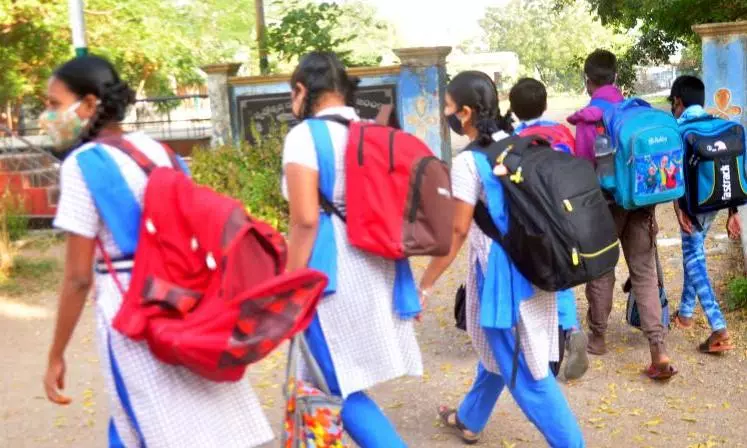
Hyderabad: Even in an age of jet‑speed travel, metro networks and app‑based cabs, the humble walk remains the main way most Indian students reach school. The first‑ever National Household Travel Survey (NHTS), released by the Union Ministry of Statistics and Programme Implementation, found that 37 per cent of students still walk to their educational institutions, followed by 29.5 per cent who use buses, 15.8 per cent bicycles and 10.5 per cent auto‑rickshaws.
The survey, conducted across India for one year and released a week ago, studied how people travel for education, work and other daily needs. The National Statistics Office surveyed 24,651 villages, urban blocks and sub‑units across the country, collecting travel details from over 18.44 lakh persons aged six and above in rural and urban households.
Walking remained the most common mode of school travel despite the growing use of private vehicles and ride‑hailing services. Buses are the second major mode, showing their continuing importance for students, especially in rural areas and smaller towns.
About 87.6 per cent of students reached their educational institution within 30 minutes. The average travel time was 23 minutes in rural areas and 22 minutes in urban areas. The average monthly travel cost per student was Rs 443, Rs 617 for urban students and Rs 361 for rural students.
The working class appeared to bear a greater burden of transport expenses. The average monthly cost of travelling to a fixed workplace was Rs 785 per worker. Urban workers spent Rs 1,044 compared with Rs 612 for rural workers. About 83.4 per cent of workers reached their workplace within 30 minutes. The average commuting time was 25 minutes — 27 minutes in urban areas and 23 minutes in rural areas.
Two‑wheelers were the most common mode of travel to workplaces. Among workers aged 15 years and above, 42.6 per cent used a two‑wheeler, while 28.3 per cent walked and 10.7 per cent used bicycles. In urban areas, dependence on two‑wheelers was higher at 52.3 per cent. Buses were used by 9.2 per cent of urban workers, while 5 per cent used trains, metro, monorail or tram services.
Social visits, communication and religious activities were the main reasons for overnight travel, accounting for 70.2 per cent of such trips. Buses were the main mode for 55.8 per cent of households, followed by inter‑city rail at 17.7 per cent. The survey shows that walking and buses remain central to student mobility, while two‑wheelers dominate work‑related travel.
