Vision 2047: Musi, Lakes Set for Major Upgrade

The same section speaks of water-taxi docks, jetties, viewing decks, pedestrian crossings and last-mile shuttles, described as part of a “Hussain Sagar 2.0” idea for city water bodies.
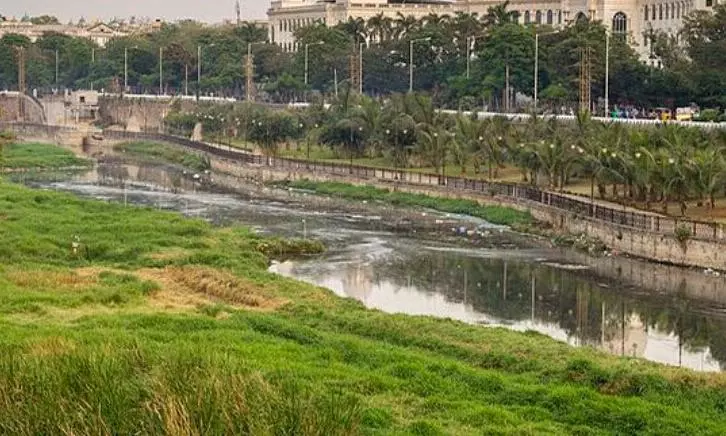
Hyderabad:Hyderabad’s Musi Riverfront would be turned into a 35 to 40 km East-West riverfront with promenades, cultural venues and green streets as part of Telangana’s Vision 2047 plan.
The Telangana Rising 2047 document calls this chapter “Blue-Green Hyderabad 2047: Development of Musi Riverfront, 100+ lakes and green streets network,” and presents the river as the spine of a city-wide blue-green system.
The plan spells out what this means on the ground. “The state is building a 35-40km East-West riverfront with mixed-use TOD nodes, continuous promenades, cultural venues, and last-mile links,” it states under the head, ‘Musi Riverfront rejuvenation and area development’. The riverfront is to get continuous river-walks, decks and bridges, mixed-use riverfront parcels and transit-oriented zoning so that people can reach the waterfront without feeling cut off by traffic and real estate.
Officials set this inside a wider refit of Hyderabad’s lake system. Under an Urban waterfront and lake revitalisation programme, the state would “transform urban waterfronts into a cultural and recreational destination” and “develop 100+ lakes into blue-green public assets with wetland buffers, continuous riparian parks, cycling/walking loops, and nature-based stormwater treatment.”
The same section speaks of water-taxi docks, jetties, viewing decks, pedestrian crossings and last-mile shuttles, described as part of a “Hussain Sagar 2.0” idea for city water bodies.
Water management runs through the Musi chapter. The Vision paper promises “water-sensitive urban design and practices” that cover restoration of water bodies, stormwater control, and recharge of groundwater. It lists “high infiltration/permeable landscapes, rain gardens, rainwater harvesting trees, bioswales, detention/retention, cloudburst routes and storage” as standard features around the river and its feeder lakes.
The government frames these as routine elements of city planning rather than stand-alone pilot projects.
Street-level changes are written into the same plan. A “Green Streets Network (1,500km)” is proposed, with “urban forest blocks and street canopy, permeable sidewalks, bioswales, shade trees, and heat-safe crossings.”
The idea is that people stepping out along the Musi-side roads, or on streets tied to its catchment, would find more shade, safer crossings and pavements that allow rainwater to soak into the ground instead of rushing straight into drains.
Musi’s revival is also linked to the state’s climate and energy targets. A later section on core strengths notes that “the ridge-to-river restoration programme will revitalise upper and lower catchments across approximately 240 lakes to rejuvenate the Musi River.”
The Vision 2047 document places these plans in a long timeline rather than as a quick fix. It describes a city where continuous river-walks, cleaned lakes and shaded green streets sit alongside transit-oriented development and public access to the waterfront.