‘Veerappan-Style’ Timber Mafia Strip Teak Forests

Residents describe the situation as near lawlessness, with smuggling gangs operating with “Veerappan-like” audacity: Reports
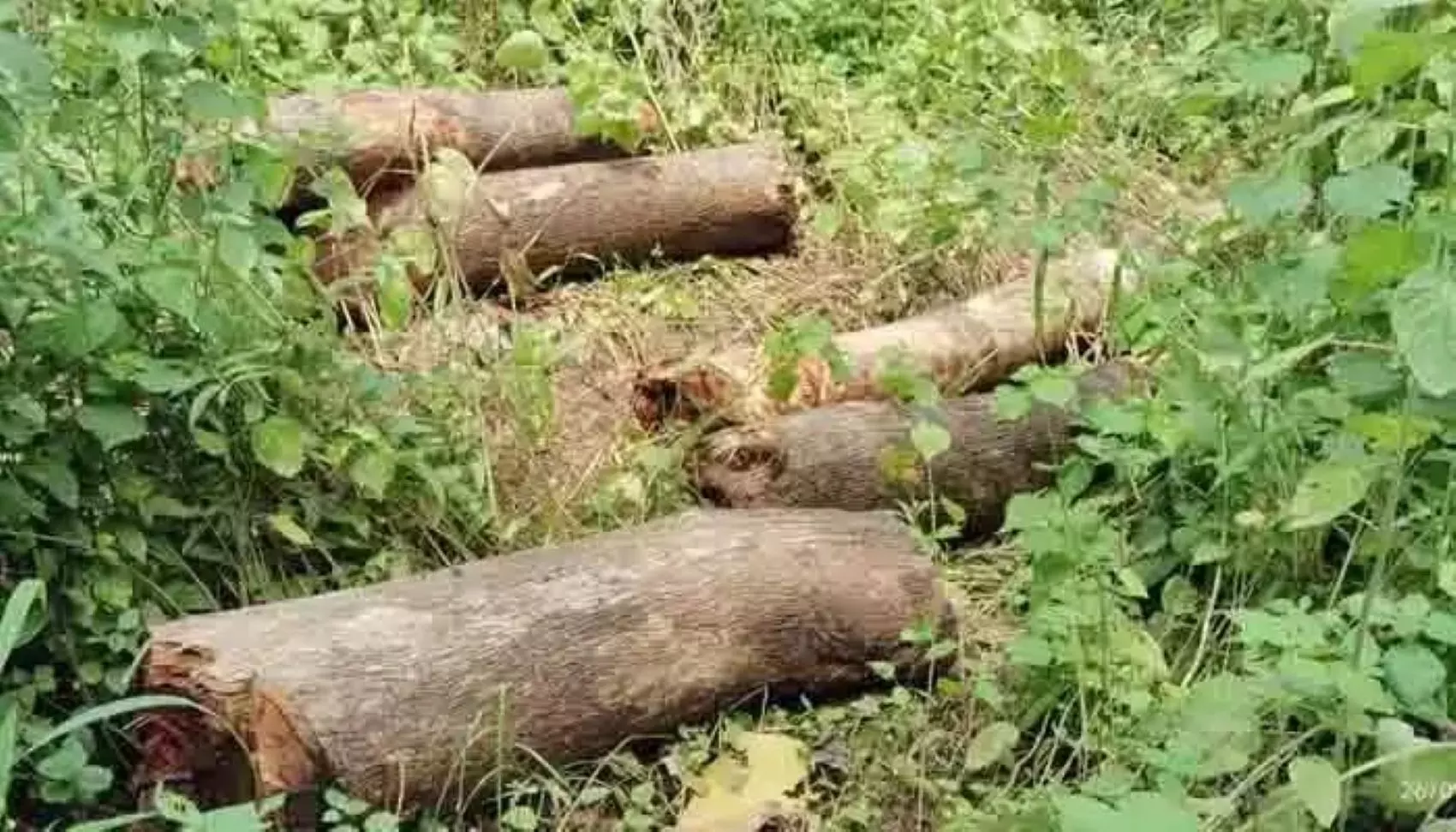
KARIMNAGAR: The teak tree (Tectona grandis), recognised as endangered in several global assessments due to severe over-exploitation, is facing a serious localised crisis across the erstwhile Karimnagar district. In Jagtial and Rajanna Sircilla districts, a well-organised network of timber smugglers has intensified operations, systematically stripping both government forest reserves and private farmlands of this valuable hardwood.
What was once a slow, clandestine trade has now turned into large-scale theft, alarming environmentalists and local communities over the rapid depletion of a species already vulnerable to habitat loss and high global demand.
Residents describe the situation as near lawlessness, with smuggling gangs operating with “Veerappan-like” audacity. In Kathalapur and Medipally mandals, these groups are said to move openly in daylight, even challenging law enforcement. Using vehicles without number plates to evade identification, they fell mature trees, hide the logs in thickets, and later transport the timber under the cover of darkness.
The destruction is no longer confined to protected forest land. Small-scale farmers, who have spent decades nurturing teak trees on their field bunds, are also falling victim. In villages such as Thandriala and Dulur, farmers have reported the overnight theft of more than 30 mature teak trees from their properties, pointing to a predatory trend that threatens rural livelihoods.
The crisis is being worsened by weak administrative oversight and rising allegations of corruption among those tasked with forest protection. While the Water, Land and Trees Act (WALTA) mandates physical inspections and formal permits before any tree felling, activists allege that these safeguards are routinely bypassed.
Inspections are often conducted only on paper in exchange for mamools (bribes). A recent incident near Thurti village has further fuelled public outrage: forest officials seized a tractor carrying illegal timber but were later accused of extorting ₹1.8 lakh from the owner while issuing a receipt for only ₹39,000. There are also allegations that portions of seized timber went missing from official custody before reaching government depots, reinforcing the perception that the protectors have turned predators.
Jagtial district forest officer (DFO) M. Ravi Prasad denied the allegations and told Deccan Chronicle that while officials had indeed seized the tractor, they assessed the value of the timber, issued a receipt for ₹70,000, and released it. He said no irregularities had occurred and that a vigilance inquiry into the seizure and related allegations had found no wrongdoing.
He added that the department conducts field-level inspections and grants permissions only after thorough verification of applications. Continuous surveillance is being maintained, and strict action will be taken against anyone found using timber without valid permits, he warned.
In Rajanna Sircilla district, however, the illegal trade is said to have adopted more deceptive methods. In areas such as Mustabad, traders are reportedly misusing legitimate permits to carry out illegal felling. Sources said some traders obtain permission to fell a limited number of trees but use a single permit to cut double or even triple the authorised quantity.
The logs are often dumped at secret locations before being moved at night. Despite the visibility of these activities, local forest officials have faced sharp criticism for inaction, with allegations that they remain confined to their offices while large-scale felling continues. Even when the public provides tips, the response is often reduced to negotiated settlements rather than the filing of criminal cases, allowing the cycle of exploitation to persist.
The environmental and social consequences of this failure are becoming increasingly evident. As the forest canopy thins, wildlife is being pushed out of its natural habitat into human settlements, raising the risk of man-animal conflict across the region. The depletion of natural teak forests is particularly alarming. While plantation teak is available, the loss of old-growth stands represents an irreversible blow to biodiversity.
Community leaders and environmental groups have called for high-level intervention by the state government. They have demanded a complete overhaul of the local forest administration and the introduction of a transparent, technology-driven monitoring system to restore accountability and protect the state’s rapidly declining natural resources.