USD and Telangana Higher Education Council Forge Alliance for State-wide Online Programmes

Telangana to upskill college faculty, focus on ethical AI education
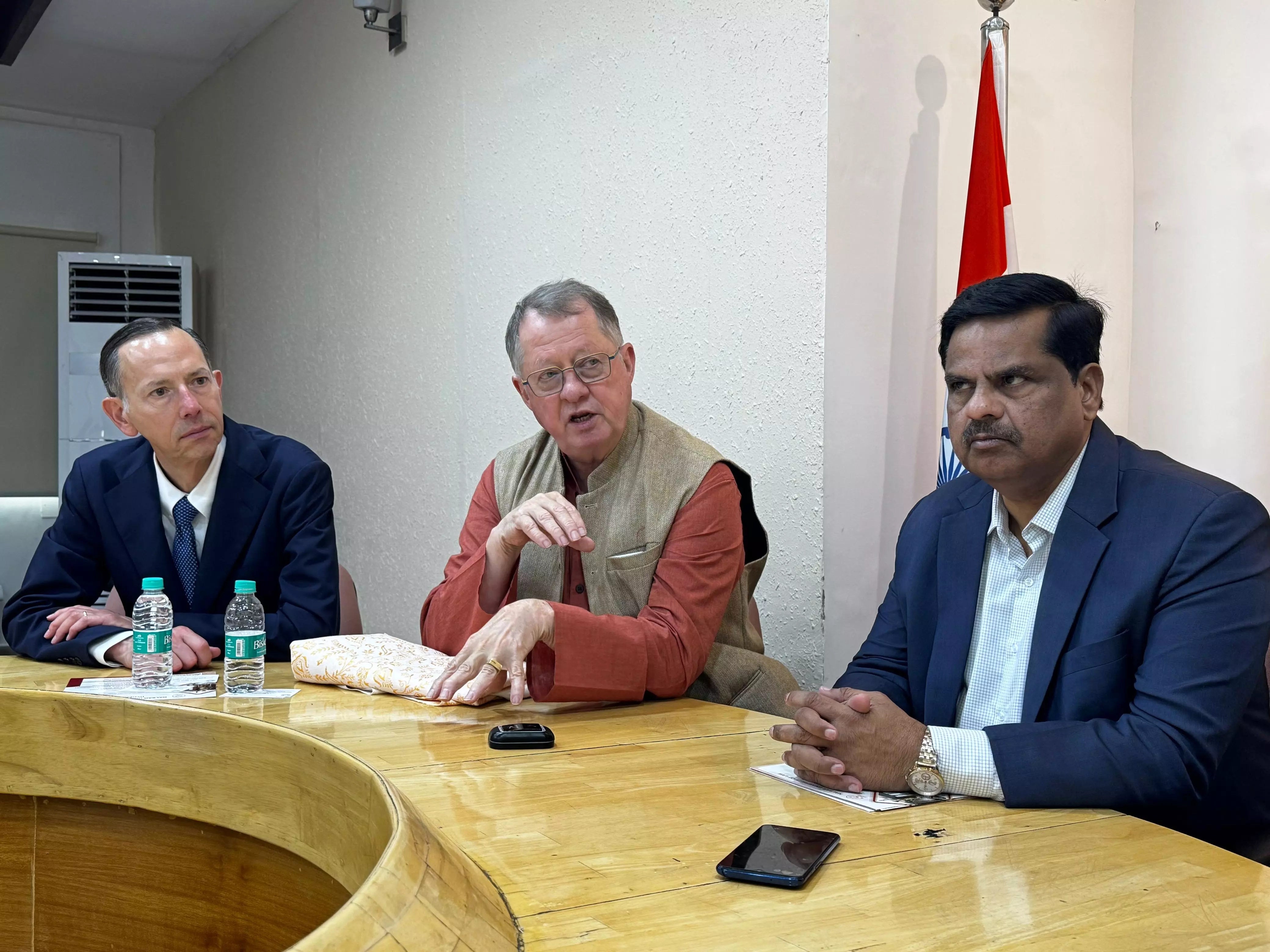
Hyderabad: All government and private colleges across Telangana will soon gain access to internationally co-developed online programmes and upskilling initiatives, following a new collaboration between the University of San Diego (USD) and the Telangana State Council of Higher Education (TSCHE). The partnership, announced after a high-level meeting at TSCHE headquarters in Masab Tank, will focus on faculty training, ethical AI, and aligning student skills with industry needs.
USD’s Dean of Engineering, Dr Chell Roberts, clarified that the programmes will be open to every college in the state rather than a select few. While the courses will not be free, they will be offered at discounted rates designed to deliver strong value for both faculty and students seeking international-standard exposure without leaving India.
The delegation from USD, comprising senior officials from its law, engineering, and student services departments, met with TSCHE chairman Prof. V. Balakista Reddy and secretary Prof. Sriram Venkatesh to outline long-term cooperation. Proposed initiatives include joint master’s programmes in AI, cybersecurity, and data science; structured faculty development; student exchanges; internships; hackathons; and technology-driven governance training. The partnership also envisions co-teaching models, enabling faculty from both sides to deliver a more applied, globally informed curriculum.
“India has brilliant minds, strong institutions, and a robust corporate sector. What’s missing is a seamless ecosystem that connects them. That’s where we can help,” said Dr G.B. Singh, USD programme director and liaison for the India strategy.
Dr Roberts emphasised the need to move away from rote instruction, especially in engineering disciplines. “AI makes knowledge easy to access. The real challenge is teaching students how to apply that knowledge. That’s where faculty training is critical.”
Prof. Reddy acknowledged the state’s supply-demand mismatch in graduate output. “We’re producing 1,000 computer engineers when the market needs only 100, while core branches like mechanical and civil are overlooked,” he said, noting efforts to rebalance through fellowships and targeted support for traditional streams.
The collaboration also includes plans for regulatory literacy workshops in emerging technologies. Both sides agreed that rapid advances in AI, blockchain, and cybercrime outpace existing legal frameworks and called for training government officials and legal experts. “Technologies are evolving faster than laws. That’s a global challenge we can tackle together,” Prof. Reddy added.
TSCHE will act as the nodal agency to coordinate with public universities across Telangana and streamline implementation. Follow-up visits from the USD delegation are scheduled for August and September.
