Uniform Service Line Charge a Key Power-sector Reform: TGSPDCL CMD

Patil explained that earlier, HT service connection estimates varied depending on factors such as the source of supply, distance of line extension and transformer capacity requirements
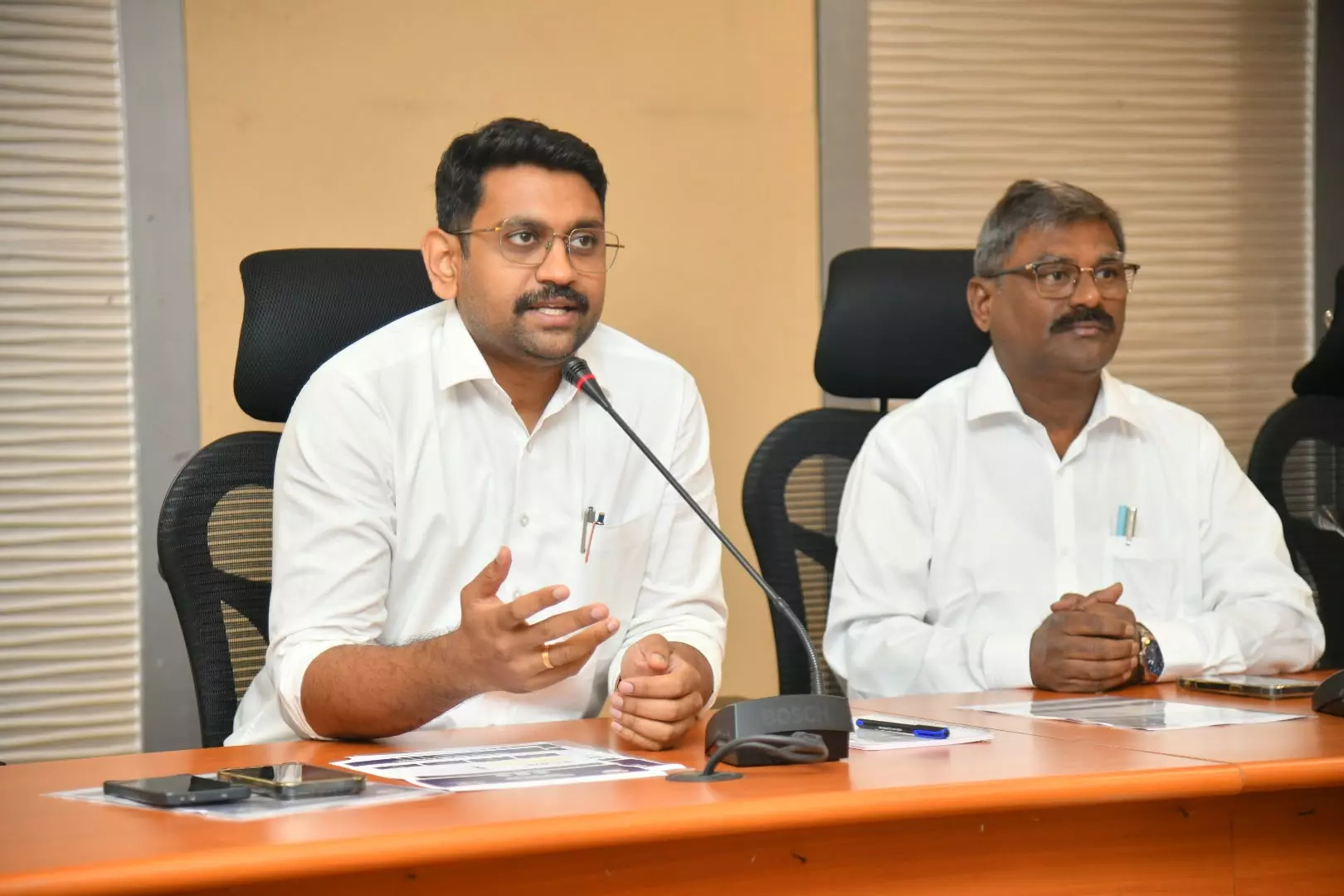
Hyderabad: TGSPDCL Chairman and Managing Director Jitesh V. Patil here on Wednesday said the Uniform Service Line Charge mechanism introduced by Telangana Electricity Regulatory Commission (TGERC) for Low Tension (LT) and High Tension (HT) connection is a significant reform aimed at improving transparency, simplicity and timely service delivery in the power sector.
He explained that earlier, HT service connection estimates varied depending on factors such as the source of supply, distance of line extension and transformer capacity requirements. Under the new system, load-based predetermined charges provide consumers with clarity on costs in advance, eliminating uncertainty and simplifying the application process.
He further stated that separate standardized rates have been prescribed for Overhead (OH) and Underground (UG) networks, bringing greater transparency to the connection process. Earlier, estimates could vary by as much as 30 to 40 percent, whereas the new mechanism removes such uncertainties.
For 11 kV HT connections, TGERC has fixed a Uniform Service Line Charge of Rs.4,078 per kVA. In addition to this charge, Development Charges, Security Deposit, and other applicable charges as per prevailing regulations will be payable by the consumer.
The USLC mechanism is applicable only to eligible HT connections receiving supply from an existing 11 kV common feeder and located within one kilometre route length from the existing electrified network.
For HT connections requiring line extension beyond one kilometre, the Uniform Service Line Charge will not apply. Such cases will continue to be processed under the existing estimate-based procedure as per applicable regulations.
The CMD explained that once the prescribed service line charges are paid, TGSPDCL will undertake the required network augmentation and feeder arrangements. Consumers need not worry about the technical aspects involved in providing supply.
He also stated that GIS-based network mapping is being implemented to digitally map electrical infrastructure and improve planning and service delivery. Through online services, consumers can track application status, charges payable and processing stages, ensuring greater transparency and faster approvals.
Patil noted that despite increasing power demand and varying weather conditions, TGSPDCL employees are working continuously to ensure uninterrupted power supply. He said the new system would create a more industry-friendly environment and facilitate faster electricity connections for commercial and industrial consumers.
He further informed that TGERC Regulation No. 01 of 2026 has already introduced load-based Uniform Service Line Charges for LT consumers across residential, commercial, industrial, agricultural and EV charging categories, making the connection process simpler and more transparent.
The CMD thanked TGERC for introducing a uniform and transparent framework benefiting industries, businesses, households and other consumers. He said the reform would strengthen the investment climate in the State while improving the quality of electricity services.
TGSPDCL is fully committed to implementing the new regulations effectively and extending better consumer services through continuous modernization and simplification of processes, he added. UG Cabling Project to Modernize Hyderabad’s Power Network
Patil stated that the Underground (UG) Cabling Project is being implemented through a transparent tendering process to modernize Hyderabad’s power distribution network and improve reliability and safety.
The project includes modernization of 33 kV and 11 kV networks with advanced SCADA-based monitoring systems to reduce interruptions and improve operational efficiency. The objective is to build a future-ready power distribution system capable of delivering high-quality and uninterrupted power supply to consumers.