Two-Child Policy Continues for Rural Local Body Polls in Telangana

Candidates with more than two children barred from contesting rural polls
Hyderabad: The “two-child policy” continues to be enforced in local body elections in Telangana, preventing individuals with more than two children from contesting polls, even as several states, including neighbouring Andhra Pradesh, have scrapped the rule.
Introduced in undivided Andhra Pradesh in 1994 for both rural and urban local bodies, the restriction was lifted for urban local bodies in Telangana in 2019 under the BRS government. The regulation still applies to rural local bodies, prompting demands from aspiring candidates for its abolition.
The Congress government, which assumed office in December 2023, promised to examine the issue. Panchayat Raj and urban development minister Danasari ‘Seethakka’ Anasuya announced earlier this year that the state was considering amending the Telangana Panchayat Raj Act, 2018, to abolish the two-child policy. This was not tone.
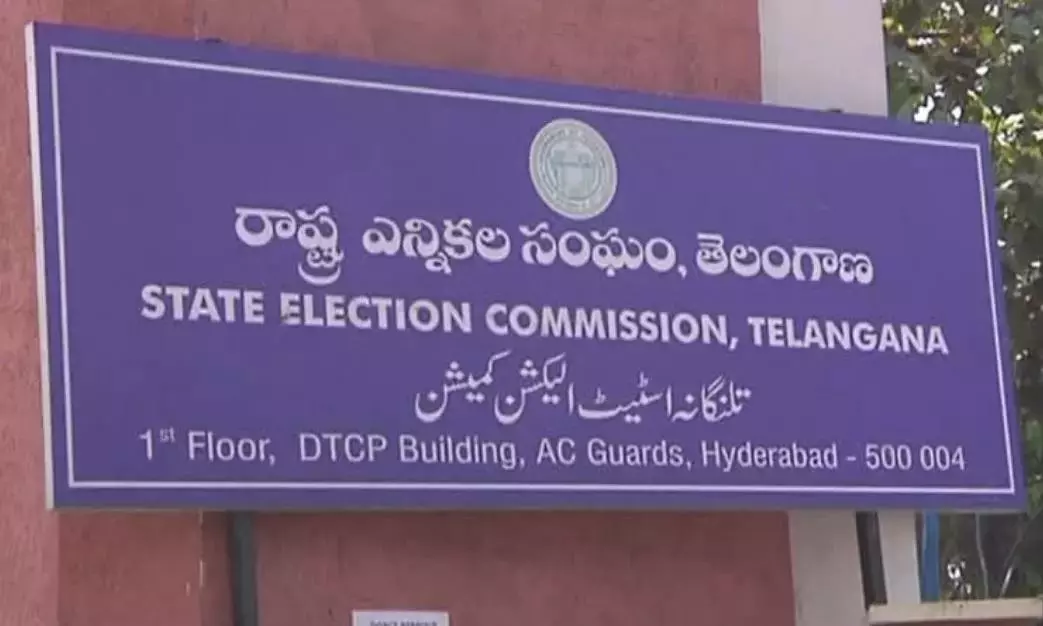
On Monday, the Telangana State Election Commission (TGSEC) issued the schedule for gram panchayat, mandal parishad and zilla parishad elections. In its communication to returning officers, the commission reiterated that under Section 21(3), read with Sections 151(2) and 180(2) of the Telangana Panchayat Raj Act, 2018, any individual with more than two children is disqualified from contesting elections.
An exception applies if a candidate had more than two children before May 31, 1995, but those having additional children on or after June 1, 1995 will face disqualification.
The two-child norm, first implemented in 1994 by the erstwhile Andhra Pradesh Assembly through an amendment Bill, was designed to control population growth by barring those with more than two children from contesting local body polls. States including Rajasthan (1992), Odisha (1993), Haryana (1994), Himachal Pradesh (2000), Madhya Pradesh (2000), Chhattisgarh (2000), Uttarakhand (2002), Maharashtra (2003), Gujarat (2005), Bihar (2007) and Assam (2017) also adopted similar measures.
Over time, Chhattisgarh, Himachal Pradesh, Madhya Pradesh and Haryana repealed the policy, with Andhra Pradesh joining the list in 2024.
The move by Andhra Pradesh was driven by fears over the impact of delimitation due in 2026, which could reduce Lok Sabha representation for southern states that successfully curbed population growth. Concerns have also been raised over a smaller share of central funds for states with slower population growth, as allocations are often linked to population size.
