Twin Telugu Tragedies Expose the Commercial Rush and 'Death Zone' Risks on Everest

Indians now form one of the three largest groups on Everest.
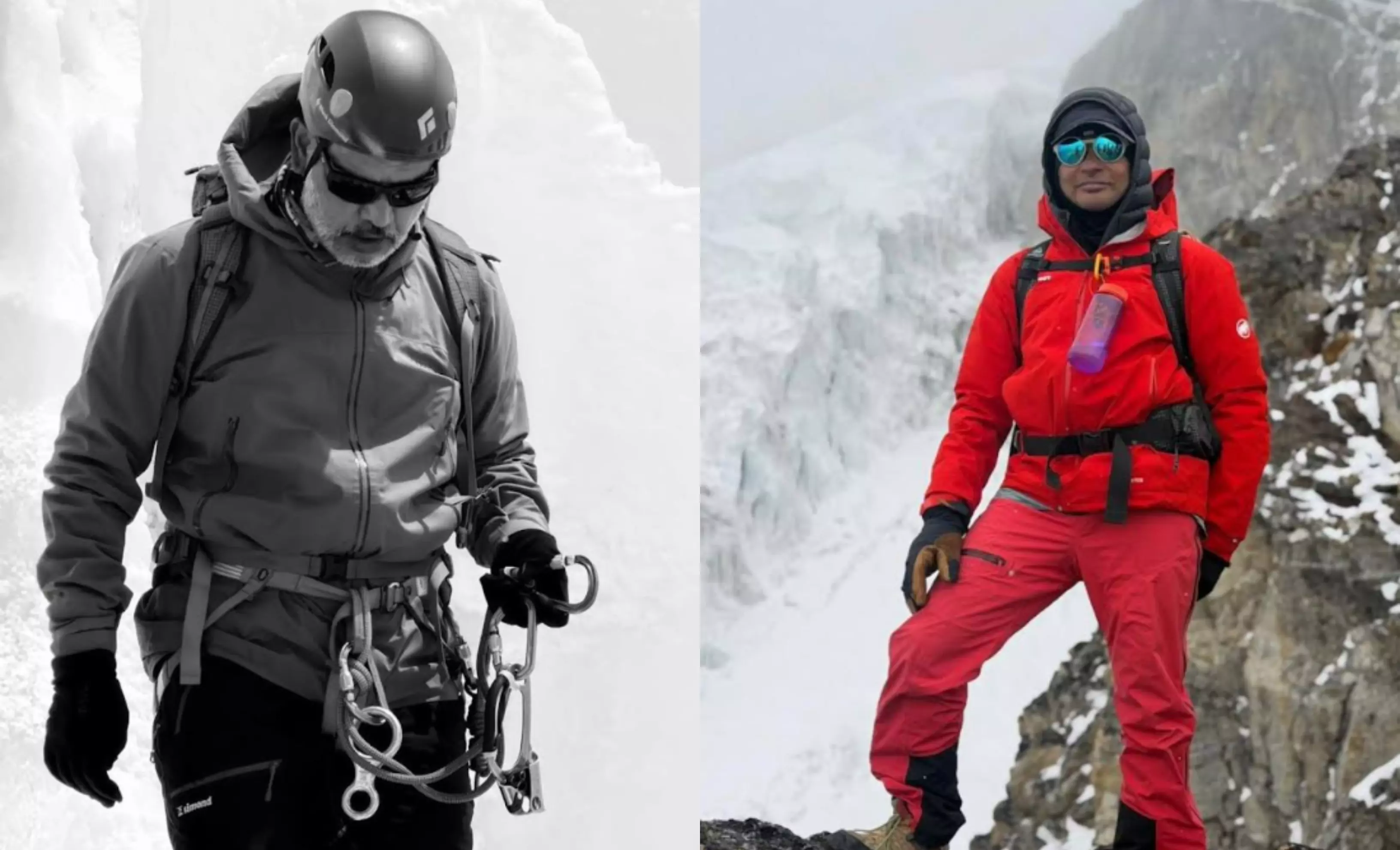
Hyderabad: The summit is where the photographs are taken, and the descent is where many die. The deaths on Mount Everest this season of Hyderabad-based tech professional Arun Kumar Tiwari and Andhra Pradesh climber Sandeep Are, both after summit pushes, have returned attention to a paid climbing industry built around permits, fixed ropes, oxygen bottles, Sherpa labour, and short weather windows.
Indians now form one of the three largest groups on the Everest. Among Hyderabad’s climbing community, the question was no longer whether Everest had changed, but whether the system built around reaching the summit was asking enough of those who paid to enter it.
“Everest has become far too crowded in recent years, and concerns over its over-commercialisation have existed for more than a decade now,” said mountaineer Vishwanath Kartikey Padakanti from Hyderabad, adding, “While the commercial side of mountaineering has, in some ways, helped younger climbers like me access opportunities that were once difficult to reach, it has also led to large numbers of inexperienced climbers attempting the mountain. That overcrowding can increase risks and contribute to tragedies like these, even for highly experienced climbers like Tiwari.”
Tiwari died near the Hillary Step, at roughly 8,790 metres and close to the summit. Reports indicated severe weakness and vomiting blood before he collapsed. Recovery at such heights is risky for rescuers and can cost tens of lakhs of rupees.
His death fit a pattern seen over recent decades, where many fatalities occur after climbers have reached the summit. Research based on Himalayan Database records found that more than half of deaths above 8,000 metres occurred during descent, where oxygen is low, exhaustion builds and delays can erase narrow survival margins.
Nepal expanded adventure tourism after the 1990s, and Mount Everest gradually became one of its most valuable tourism assets. Foreign climbers paid an permit fee of $11,000 for years. Nepal has since raised it to $15,000. Everest generated about Rs.1.07 billion in government revenue during the 2026 climbing season.
Critics have argued that Nepal continues issuing large numbers of permits despite repeated concerns over congestion, environmental damage and climber safety.
The argument, however, is more complicated than permit numbers alone. Bharath Thammineni, founder of Hyderabad-based Boots & Crampons and leader of the expedition team that included Tiwari, said commercialisation was not new; the bigger issue in 2026 was a shortened summit window.
“A giant unstable serac delayed route preparation through the Khumbu Icefall, cutting into the climbing period and compressing summit attempts. “Commercially it's every time it's there. Nothing new in this,” he said. He said permit numbers were broadly similar to recent years around 496 this season, compared with roughly 470 last year and around 460 earlier. But even a minute or two can have serious repercussions in the death zone.
Further, China also did not open the Tibet route to foreign climbers this year, which pushed the number of climbers from Nepal side. Reports indicated that around 274 climbers reached the summit from the Nepal side on a single day in May, surpassing the previous benchmark associated with the crowded 2019 season. That year became known worldwide after Nepali climber Nirmal Purja shared a photograph of a long queue near the summit ridge. Eleven people died during the 2019 season.
Kunal Sanklecha, founder of The Infinite Playground and a mountaineer who has climbed multiple Himalayan peaks above 7,000 metres, said, “The number of inexperienced climbers coming to Everest the right now is increasing every year and people are trying to seek the wrong reasons for climbing mountains like maybe instant social-media fame, money or perks. The core of mountaineering is being lost in a lot of ways.”
His criticism targets a culture that has grown alongside the commercial expedition industry. So what exactly does an Everest summit represent today?
“On Everest, you are pretty much a high-altitude tourist,” he said. “Of course there are certain decisions in your control. But in terms of logistics, you are not the decision-maker.”
Commercial expeditions rely on fixed ropes, oxygen systems, weather forecasting, stocked camps and extensive Sherpa support. Those developments have improved survival rates and expanded access. More people climb Everest than before, and more are rescued than before. Everest is safer in several respects than it was twenty years ago. And while Tiwari’s body remains on the mountain as per his family’s decision, hundreds of climbers continue their ascent each season.
Death at the top of the world
2012: 11 deaths
First major “overcrowding” warning season on mt Everest
On May 19 alone, more than 200 climbers summited.
Several died during descent after climbers ran low on oxygen or became too exhausted to continue.
2013: 8 deaths
Deaths that season included avalanche and altitude-related fatalities involving Nepalese climbers and guides working on commercial expeditions.
2014: 16 deaths
Khumbu Icefall disaster: An avalanche tore through the Khumbu Icefall on April 18, killing 16 Sherpas carrying ropes, oxygen cylinders and expedition supplies for commercial teams. It led to protests by Sherpas over compensation, insurance and unsafe working conditions.
2015: 19 deaths
Avalanche and earthquake led to the deadliest Everest disaster ever. The season was abandoned afterwards.
2016: 5 deaths
A first relatively normal Everest season after the earthquake years, but climbers again died mainly during descent after summit pushes.
2017: 6 deaths
The biggest shock that season was the death of Ueli Steck, considered one of the greatest climbers of his generation. He died in a fall while acclimatising on the Nuptse before an Everest-Lhotse traverse attempt without oxygen. Min Bahadur Sherchan, aged 85, died at Base Camp while attempting to reclaim the title of oldest Everest climber.
2018: 5 deaths
The most widely discussed death was that of Nobukazu Kuriki, famous for repeatedly attempting Everest despite losing nine fingers to frostbite in earlier climbs.
2019: 11 deaths
Traffic Jam: This became the most globally discussed Everest season in years after photographs emerged showing climbers standing in a long queue just below the summit. Nepal had issued record numbers of permits, while weather allowed only a short summit window.
Several deaths occurred during descent after these delays including that of Kalpana Das from Odisha, Nihal Bagwan from Maharashtra, Anjali Kulkarni, American climber Donald Lynn Cash, and Irish academic Séamus Lawless, who disappeared near Camp IV.
2020: 0 deaths; Covid year
2021: 4 deaths
Even with fewer climbers because of pandemic restrictions, Everest again saw fatalities linked to exhaustion, altitude sickness and oxygen-related complications.
2022: 3 deaths
This was a comparatively lower-fatality season without a major avalanche or crowding disaster. Most deaths were linked to altitude illness and exhaustion during descent.
2023: 17–18 deaths
One of the deadliest modern seasons. Nepal issued a record 478 permits that year. Crowding concerns returned along with reports of exhausted climbers collapsing during descent.
2024: 8 deaths/disappearances
The season again saw summit ridge congestion and unstable snow conditions near the Hillary Step.
2025: 5 deaths
While 2025 did not see a single mass-casualty disaster like 2014 or 2015, one of the notable Indian deaths was Subrata Ghosh, who reportedly died during descent after summit-related complications near the upper sections of the mountain.
2026 - Ongoing season
Renewed crowding concerns
Multiple deaths have been reported this season during descent after summit pushes. Arun Kumar Tiwari, an Indian climber based in Hyderabad, reportedly died from cardiac arrest and exhaustion during descent after summiting. Another Indian climber, Sandeep Are from Andhra Pradesh, died near the Hillary Step during descent.
