Tummala Urges Caution, Tells Farmers to Prefer ID Crops
'Reservoir levels, groundwater situation of concern'
Hyderabad:Agriculture minister Tummala Nageswara Rao on Monday called on farmers to grow only irrigated dry crops even in areas where water could available through lift irrigation schemes, or where groundwater could be used. The minister, who said the water levels even in major reservoirs were not inspiring confidence at this point of time, also cautioned that groundwater levels were falling and farmers should be cautious in crop selection and stay away from irrigation intensive crops.
The minister, who said the state government has taken all necessary precautionary measures to effectively handle any situation arising out of the poor monsoon conditions, however, said that as per India Meteorological Department predictions, August will also see less than normal rainfall.
Nageswara Rao called on farmers to strictly follow advice of agriculture department officials on crop selection, and that all agricultural operation plans must be made based on inputs from the irrigation department on water availability.
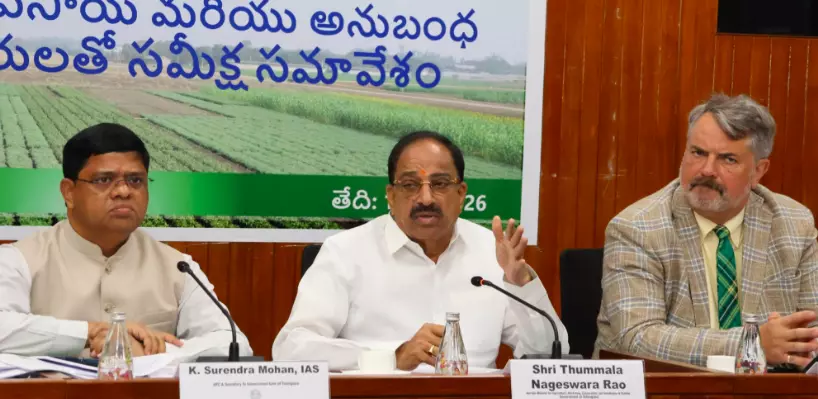
The minister, who chaired a meeting at the Icrisat on El Nino impact on the monsoon season, instructed officials that mandal-wise weekly a bulletins should be issued for farmers on weather, groundwater, and water availability conditions.
Director of agriculture Dr B. Gopi informed the meeting that considering the possibility of delayed rainfall, prolonged dry spells, and high temperatures due to El Nino, the department had prepared a three-phase statewide contingency plan based on possibility of crop seasons beginning on July 15, July 30, and August 15. District-specific action plans have also been prepared according to local conditions.
The minister said according to rainfall status as on Monday, 13 districts received normal rainfall while 20 districts were facing deficiency. He instructed district collectors, agriculture officials, and scientists in rainfall deficit districts to jointly review the situation and immediately take necessary measures.
Nageswara Rao said it was time for the state to implement a dynamic district-specific response (DSR) approach, comprising real-time rainfall monitoring, weather-based agricultural advisories, soil moisture monitoring, crop growth assessment, climate risk analysis, contingency crop planning, in-situ soil moisture conservation measures, and crop diversification.
The meeting concluded that farmers who have not yet sown paddy should instead plan for raising, even in canal command areas, alternative crops such as maize, pearl millet, finger millet, red gram, green gram, sunflower, sesame, cowpea, and vegetables.
Scientists from the IMD, Professor Jayashankar Telangana Agricultural University, Indian Institute of Oilseeds Research, Indian Institute of Millets Research, Central Research Institute for Dryland Agriculture, and senior officials from agriculture and allied departments attended the event.
