TSRAI Leads Manuscript Digitisation Mission

On average, metadata is being created for 2,000 to 2,500 manuscripts per day
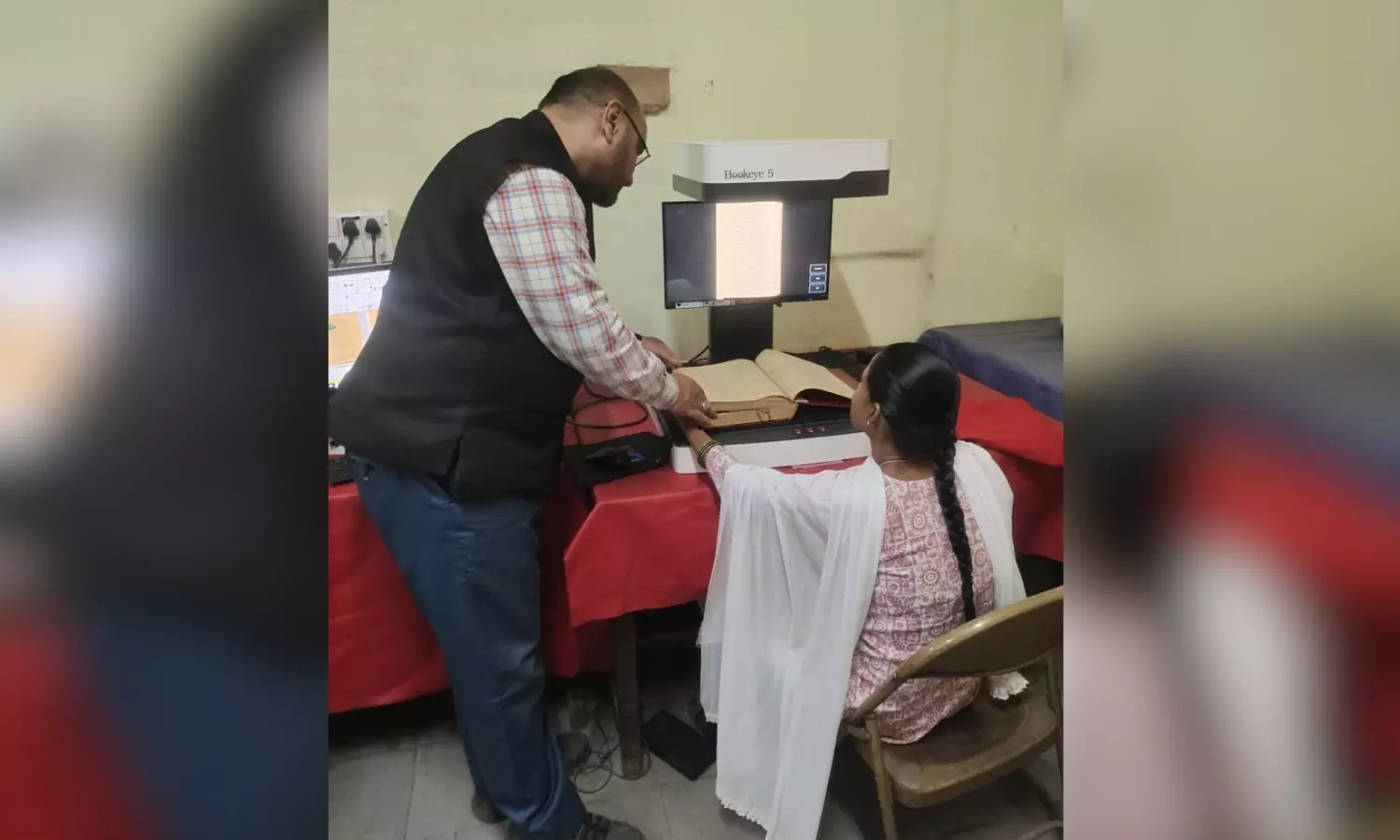
HYDERABAD: As part of the Gyan Bharatam Mission (GBM), the Telangana State Archives and Research Institute (TSRAI), Tarnaka, has stepped up preservation and digitisation of invaluable manuscripts.
GBM, a national initiative of the Union ministry of culture, aims to unearth, conserve, and digitise India’s vast manuscript heritage. It operates across five verticals: survey and cataloguing; conservation and capacity building; technology and digitisation; linguistics and translation; and research, publication, and outreach.
Beyond its own 1.8 lakh documents, TSRAI now functions as a ‘cluster centre’ for the mission, digitising manuscripts from other institutions and private collections. Officials explained that once a manuscript’s location is identified, survey teams preserve it using herbal methods and digitise it. “On average, metadata is being created for 2,000 to 2,500 manuscripts per day. Where large collections exist, scanners are sent to the site. Experts handle the material carefully, ensuring preservation while producing digital versions. The originals remain with the owners. The mission plans to digitise one crore manuscripts nationwide in the first year,” said MA Raqeeb, assistant director, Telangana State Archives, speaking to Deccan Chronicle.
Having signed an MoU with the Union ministry of culture in October, the Institute has targeted completion by June-end. Surveys have already been conducted at Sanskrit Academy, Dr Ambedkar Library (Osmania University), Telugu University, Iqbal Academy (Masab Tank), and private collections. “We have increased the pace of scanning. Most of the digitisation of manuscripts at our Institute is already complete,” added an official.
GBM offers a unique opportunity for the public, history enthusiasts, and families with rare manuscripts or palm-leaf records to preserve their collections scientifically while retaining ownership. Conservation experts visit sites free of cost. “The programme aims to survey, document, conserve, and digitise over one crore manuscripts from across the country, including those held by individuals, institutions, libraries, museums, temples, mutts, dargahs, mosques, churches, gurdwaras, synagogues, and other shrines. It also seeks to create a National Digital Repository of Indian Knowledge Systems, making India’s ancient wisdom accessible globally,” said Dr Zareena Parveen, Director, State Archives and Coordinator of the GBM Cluster Centre.
Announced in the Union Budget 2025–26, GBM is a flagship initiative aligned with Viksit Bharat 2047, harmonising cultural preservation with human capital development. The Parliamentary Standing Finance Committee has sanctioned ₹491.66 crore for 2025–2031. Over 1.3 lakh manuscripts already digitised are available on the Gyan Bharatam Portal: gyanbharatam.com.
