Tribal Women Turn Entrepreneurs With Ippa Puvvu Laddus

A dedicated production unit was established at Utnoor with an investment of Rs.40 lakh.
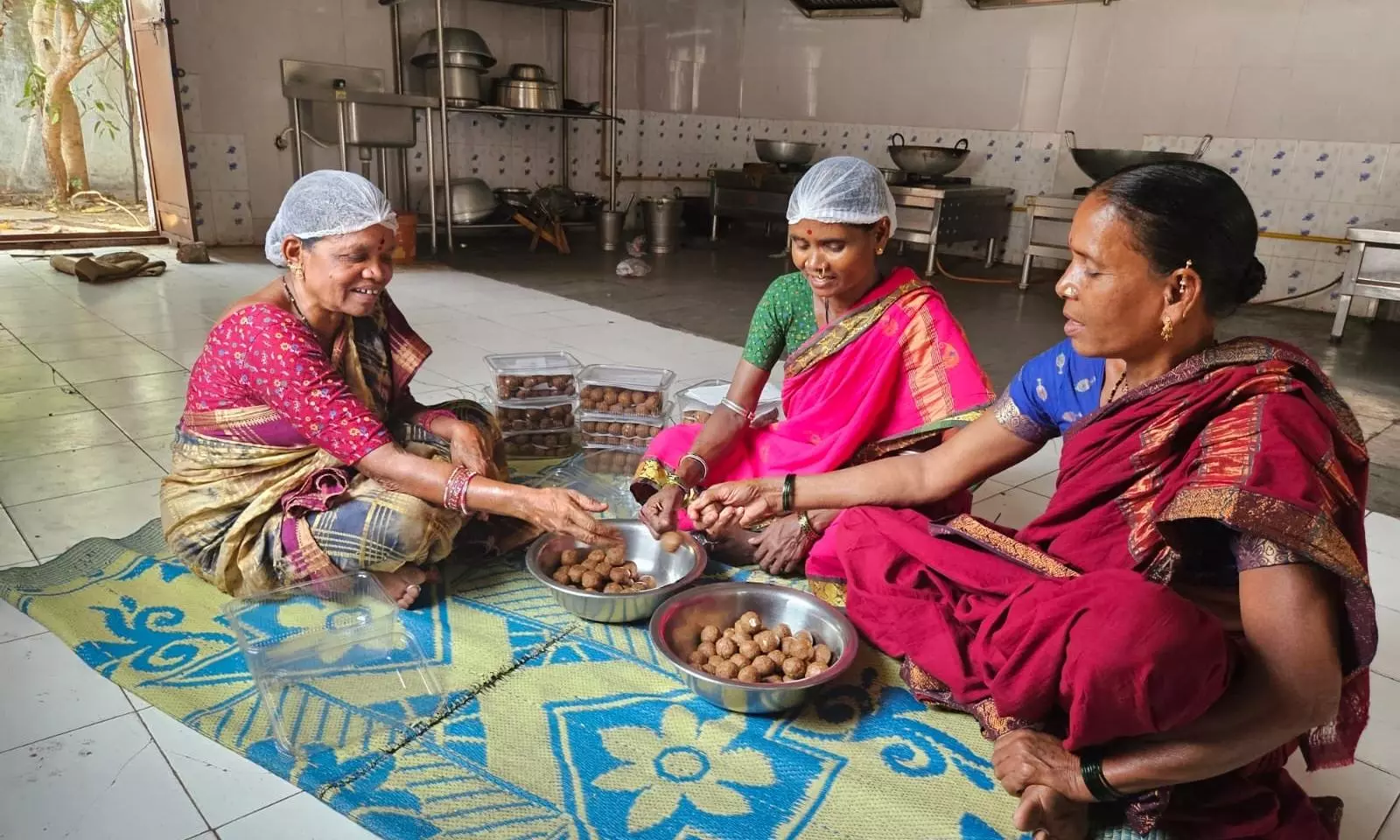
Hyderabad: The Bheem Bhai Tribal Women’s Cooperative Society has emerged as a model of self-reliance, producing highly nutritious laddus from ippa puvvu (mahua flowers), The laddus are prepared based on National Institute of Nutrition (NIN) guidelines and also comprise peanuts, sesame seeds, jaggery, cashews, raisins, and sunflower oil.
To enhance skills, 12 tribal women were sent to Yavatmal, Maharashtra, for specialised training. A dedicated production unit was established at Utnoor with an investment of Rs.40 lakh. Tricor contributed 60 per cent as subsidy, while 30 per cent was arranged through bank loans and 10 per cent was contributed by the women themselves.
Each March, around 150 quintals of ippa puvvu are collected from tribal families across the undivided Adilabad region, particularly in Kumuram Bheem-Asifabad district. Nearly 100 families benefit from this seasonal collection, supported by ITDA storage facilities.
Under the Girijana Poshan Mitra Scheme, the laddus are supplied to 77 tribal residential schools in the Utnoor ITDA region — about 2,300 kg per month — at Rs.320 per kg. Additionally, around 900 kg are sold in the open market each month at `360 per kg.
Dedicated sales outlets have been set up at Indira Mahila Shakti Kendra, Shilparamam (Hyderabad), and Balapur, where tribal women manage the sales. Weekly, about 15 kg are sold at Shilparamam and 25 kg at Balapur. The cooperative also sets up a stall at the ITDA campus every Monday during Praja Darbar.
With an annual turnover of Rs.1.27 crore, the society generates about Rs.3 lakh in monthly revenue, benefiting numerous tribal households. During her visit to Utnoor, minister for women and child welfare Danasari Anasuya (Seethakka) appreciated the women for their dedication and entrepreneurial spirit. The achievement was even acknowledged by Prime Minister Narendra Modi in his Mann Ki Baat address, as a shining example of women-led economic transformation in tribal regions.
