Telangana’s Tallest Chariot Draws 50,000 Devotees to Sircilla

Telangana’s tallest temple chariot drew an estimated 50,000 devotees to the annual Rathotsavam of Sri Lakshmi Venkateswara Swamy in Sircilla.
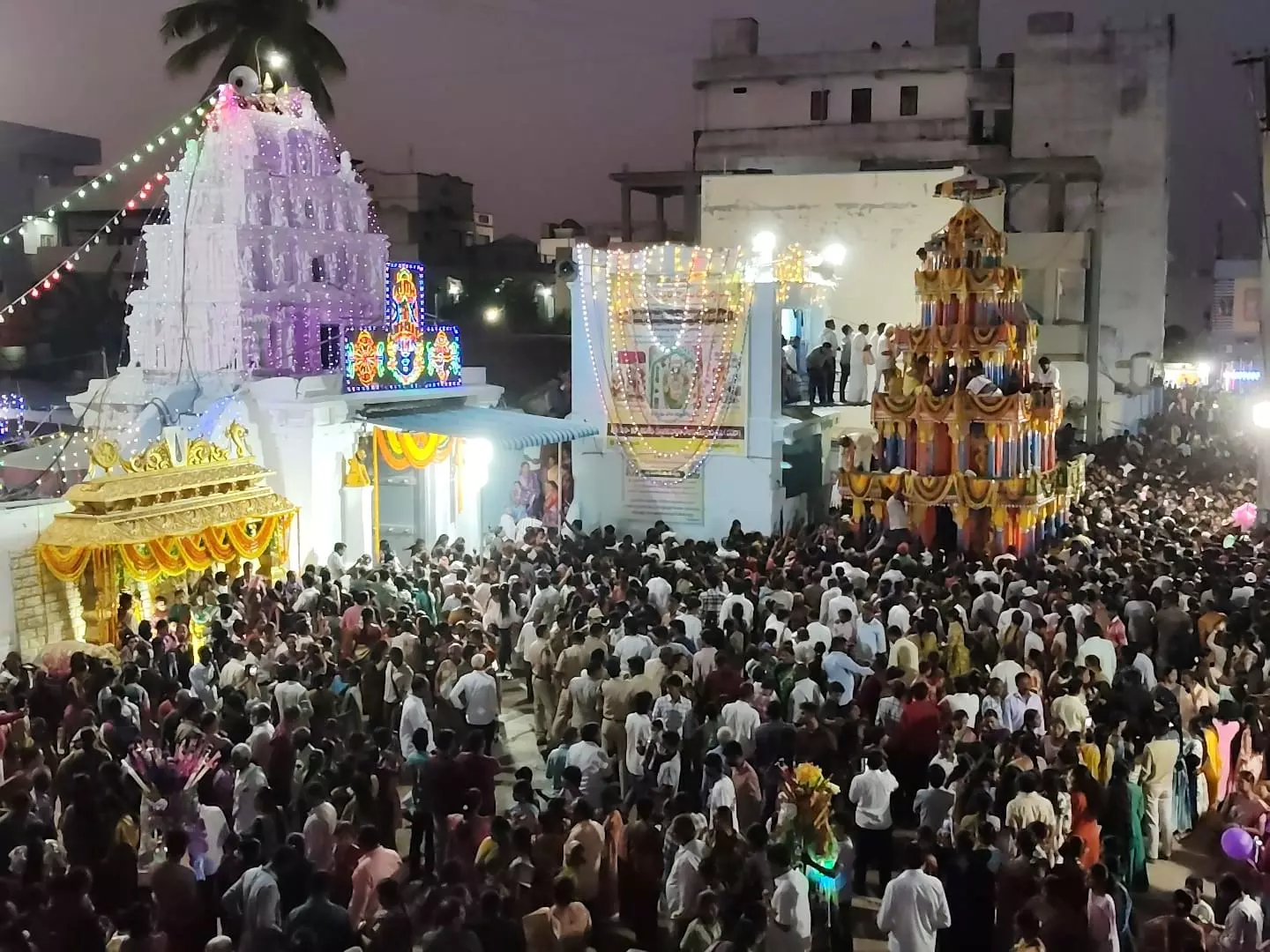
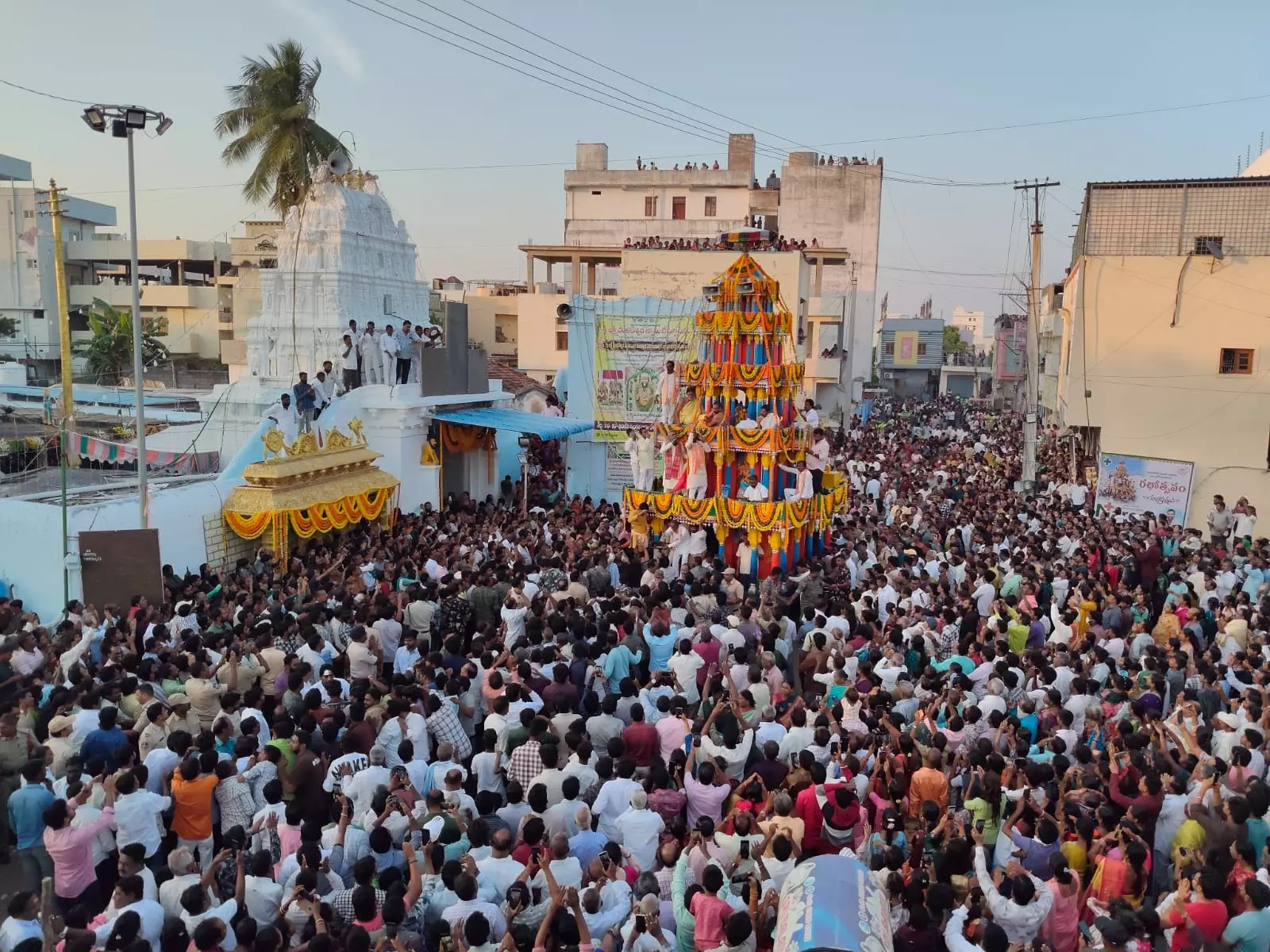
Telangana’s tallest temple chariot rolled through the streets of Sircilla on Monday, amid chants of “Govinda, Govinda”, drawing an estimated 50,000 devotees to the annual Rathotsavam of Sri Lakshmi Venkateswara Swamy.
The towering ratha was the centerpiece of the ongoing Brahmotsavams at the 800-year-old temple, popularly known as Telangana’s Tirumala. Though smaller than the giant chariots associated with the world-renowned Jagannatha Rath Yatra in Puri, the Sircilla ratha holds a special place in the state’s religious traditions.
The chariot with deities placed over it, passed through the Mada Veedulu and adjoining streets. Temple priest Krishnamachari said the shrine’s Vahana Sevas followed traditions similar to those at Tirumala, with the distinctive ceremonial vehicles forming a major attraction during the Brahmotsavams.
During the celebrations, the Lord is taken out on Sesha, Hamsa, Simha, Ashwa, Garuda, Hanumantha, Gaja, Surya and Chandra vahanams, among others, he said.
The annual Rathotsavam is a particularly cherished occasion for devotees, many of whom return from distant places and abroad to participate.
The devotees believe that offering prayers to the Lord, which he on the chariot, brings blessings and fulfils their wishes. Thousands joined the procession, while the towering ratha also provided a popular backdrop for photographs and videos.
The temple’s history adds to the festival’s appeal. According to its Sthala Puranam, the shrine was originally dedicated to Sri Keshavanatha Swamy in the thick forests near the Maneru river during Kakatiya rule. Sircilla itself was earlier known as Srishala.
Temple tradition holds that the original idol was damaged during an attack by a local feudal lord in 1826. Local chieftain Chennamaneni Tukka Rao subsequently dreamt of the deity directing him to dig beneath a Vajradanti tree. An idol found there was installed in the temple, while the older Keshavanatha Swamy idol remains preserved in the Vahana Shala.
