Telangana’s Iron Age and Prehistoric Sites Being Lost to Development, Warns Archaeologist Dr E. Sivanagi Reddy

Speaking at Pleach India Foundation’s “Heritage @Every Step 2.0” exhibition, he called for archaeological checks before development permissions, greater community participation and heritage lessons for students from Classes VIII to X.
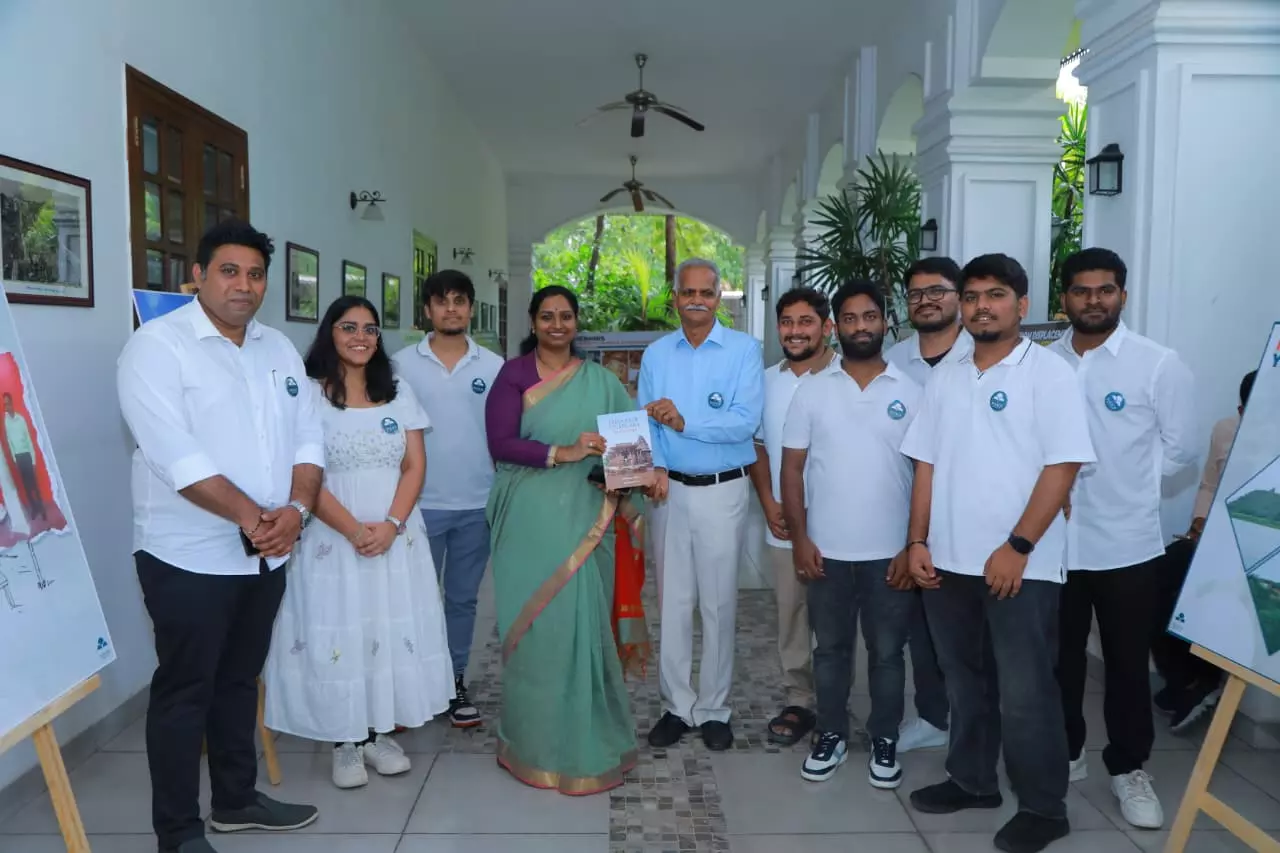
Hyderabad:Iron Age burial sites across Telangana and prehistoric remains around Hyderabad are being lost to expanding cultivation, irrigation works and real-estate activity, archaeologist Dr E. Sivanagi Reddy warned on Saturday. Speaking at Pleach India Foundation’s “Heritage @Every Step 2.0” exhibition, he called for archaeological checks before development permissions, greater community participation and heritage lessons for students from Classes VIII to X.
The exhibition was based on its ‘Preserve Heritage for Posterity’ campaign, under which teams visit villages, identify neglected remains, record them, study their period and historical value, and inform residents about their importance. The foundation said it had documented more than 1,800 heritage sites and the heritage of more than 1,500 villages across Telangana and Andhra Pradesh.
“The alarming situation is with Iron Age burials,” Reddy said. Many such burial grounds lie on land that was earlier outside cultivation, but canals, irrigation access and intensive farming have led to their removal, he said. “We are losing valuable evidence of the Iron Age as more land is brought under active agricultural operations.”
Boulder formations around Hyderabad face a similar threat from construction and real-estate projects, according to Reddy. “Before permission is given, the Archaeology Department should survey the area and certify that no remains of the past are present.”
He cited the destruction of rock art at Kokapet after boulders were blasted as an example of what could be lost. Prehistoric evidence had also been noticed along areas linked to the Musi development project and brought to the government’s notice, he said.
Community participation formed much of his talk. Reddy said the foundation first explained the value of a sculpture, inscription or structure to residents rather than blaming them for using it as an ordinary stone. One inscription of Krishnadevaraya, dated February 26, 1518, had been used as a temple step, he said. The inscription records the ruler’s visit to Vijayawada. After its importance was explained to the priest and residents, it was taken inside and mounted properly. “Earlier, people did not bother. Now they are taking responsibility, shifting sculptures to schools and panchayat offices, and developing sculpture gardens,” he said.
Reddy claimed the state Archaeology Department had not declared a new protected monument for about 15 years. Newly identified objects often remain outside formal protection, which leaves local residents as their immediate custodians, he said. “Why can’t we sensitise local communities? Local communities have come forward to own and preserve these sites.”
The exhibition displayed prehistoric stone tools, ancient coins, miniature sculptures and historical beads from different periods. Among the panels were a 16th-century structure inside a temple tank at Kalvabugga in Nandyal district, a 9th-century Mahavir image at Nangunuru in Karimnagar district, carvings near Bhadrakali Lake, and a rock shelter at Ranganayakulu Gutta in Mahbubnagar district. A coin section covered examples from the 6th century BCE to the 20th century CE.
“Even if five or ten people begin to appreciate heritage and come forward to preserve it, that is our main intention,” Reddy said, adding that the Telangana government should introduce at least one lesson or exercise on archaeology and heritage in Classes VIII, IX and X. “Students should learn what an archaeological site is, how it can be identified and how visitors must behave at such places,”he said, adding, “When we respect heritage, we appreciate it. When we appreciate heritage, we automatically preserve it.”