Telangana's Ambitious Skill Development Plan

The proposal brings state and central schemes, private training and CSR programmes under one coordinated framework and replaces stand-alone courses with clearly sequenced pathways
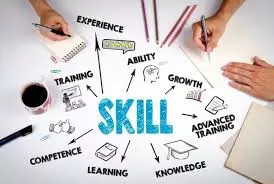
Hyderabad: Telangana plans to create a State Skill Development Mission (SSDM) as the single authority for youth skilling, placements and sector partnerships, with Rising Vision 2047 naming it as the main instrument to organise youth training, industry linkages and sector financing.
The proposal brings state and central schemes, private training and CSR programmes under one coordinated framework and replaces stand-alone courses with clearly sequenced pathways.
The document describes how the mission will manage curriculum standards, training providers and fund allocation. A skill pool fund is set out to support priority sectors, while skill bonds and vouchers are listed as measures to improve access for young people who enter training through different routes.
A digital learner system will follow candidates from school assessments to apprenticeships, jobs or entrepreneurship. A skill ID linked with Aadhaar will record certifications, internships and placement histories. Integration with the Academic Bank of Credits (ABC) will allow learners to stack credits across schools, degree colleges, technical institutions and industry. Labour supply will be mapped against TS-iPASS employer declarations and industrial corridors, with district clusters used to match candidates to vacancies.
Higher education reforms follow the same structure, as Rising Vision 2047 attempts to move away from enrolment based approaches and introduces outcome based tiers. Teaching universities are expected to deliver competency-oriented curriculum and structured apprenticeships. Tier-2 institutions will combine classroom instruction with simulation labs, field experience and industry immersion so that training is not detached from the workplace.
Research universities will anchor Indian schools in aerospace, pharma, food technology, electric mobility, computing and deep tech. These are organised as shared campuses with common advanced laboratories and integrated faculty structures to support research, innovation and sector hiring.
Sport is being presented not as an event system but as a development pipeline. The document lists community and school playfields, mandal level access, district scouting networks and a performance dashboard to monitor progression.
Young India Sports Academy is being positioned as the apex high performance centre under the State Sports Policy 2025, designed to move athletes from grassroots competition to national and international arenas with structured support.
