Telangana: Space Start-Ups Celebrate Vikram-1 Success; Begin Analysing In-Orbit Data

SOLARAS has been designed to validate Grahaa Space's stackable nanosatellite platform, communication systems and hosted payload architecture: Reports
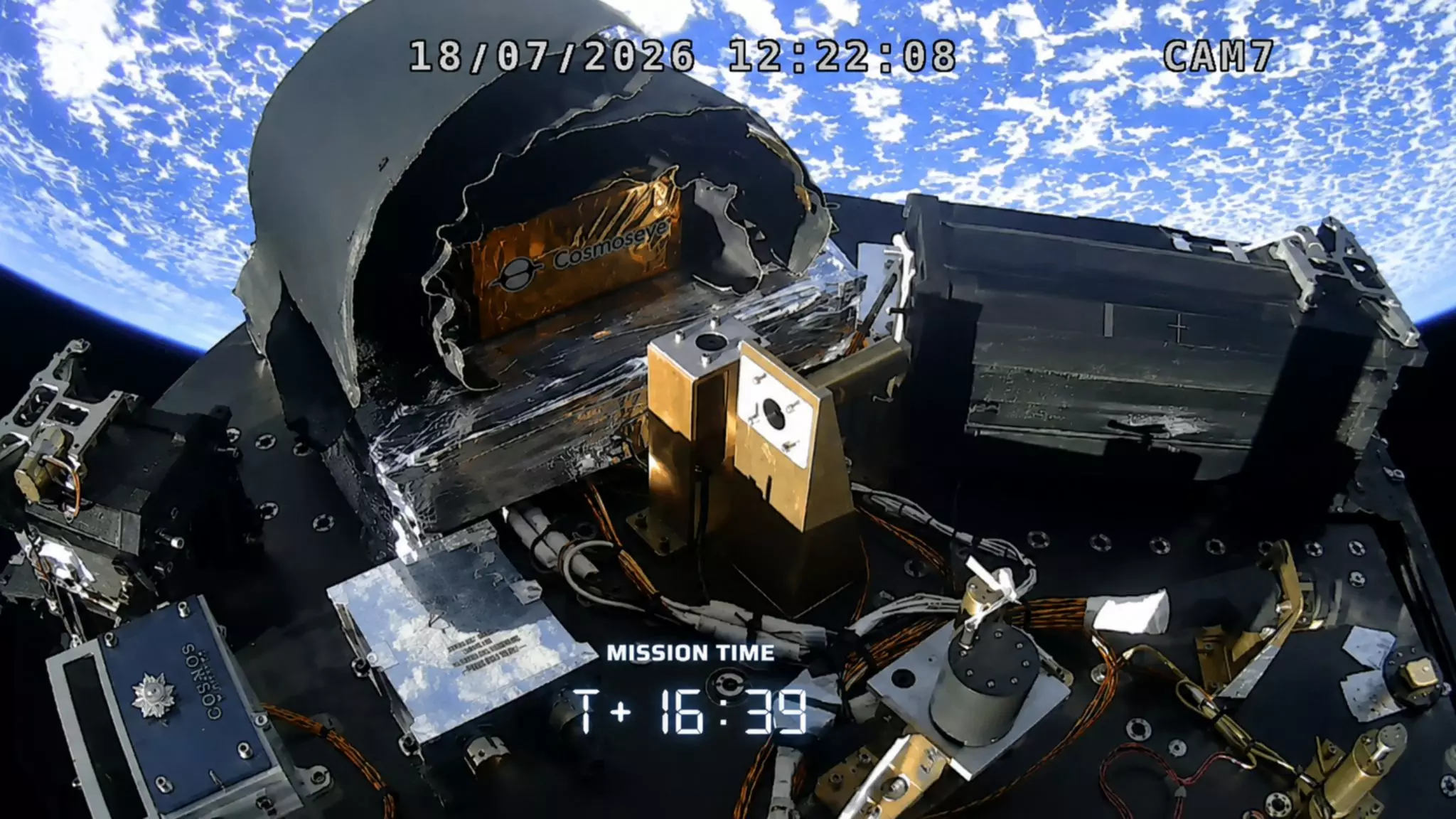
HYDERABAD: Space start-ups Cosmo serve Space and Grahaa Space have begun receiving and analysing data from their payloads launched aboard Skyroot Aerospace's Vikram-1 mission on Saturday, and called it a significant milestone for India's growing private space ecosystem.
Speaking after the successful launch, Dr Chiranjeevi Phanindra, founder and chief executive officer of Cosmo serve Space, said it was the company's first participation in a rocket mission.
"This is the first time we have participated in a rocket launch with our Mission Embrace, the world's first in-orbit soft robotic capture demonstration. We are receiving data and are currently interpreting it. In the future, we have multiple technology demonstrations planned as part of our roadmap," he said.
Founded in 2025, Cosmo serve Space has expanded its capabilities in space technologies. At the core of Mission Embrace is the company's soft robotic capture mechanism, a compliant technology designed to gently capture unprepared and non-cooperative objects in orbit, such as defunct satellites.
The mission aims to validate the technology in space for the first time, laying the foundation for future orbital debris removal missions.
Meanwhile, Grahaa Space successfully deployed SOLARAS, its technology demonstration nanosatellite, aboard the Vikram-1 launch from the Satish Dhawan Space Centre, Sriharikota.
"Team Grahaa Space is delighted with the mission's success. Mission SIDDHI is a major milestone in our journey to develop indigenous, stackable nanosatellite platforms for low-Earth orbit. We congratulate Skyroot Aerospace on its historic maiden mission," said Ramesh Kumar V, Co-founder of Grahaa Space.
SOLARAS has been designed to validate Grahaa Space's stackable nanosatellite platform, communication systems and hosted payload architecture. The mission also carries VISWA-M, an academic research payload developed by VIT-AP University, demonstrating the platform's ability to support research and technology demonstration missions.
Following deployment, the satellite will undergo commissioning and in-orbit evaluation. The company said insights from the mission will help accelerate its long-term goal of providing near-real-time geospatial video data for a range of civilian and commercial applications.
