Prehistoric Rock Art from Neolithic Period Found in Telangana

In addition to the bruisings, rock shelters believed to have served as temporary campsites were also found. Notably, grooves found in front of the shelters suggest that ancient inhabitants used the area to sharpen stone axes.
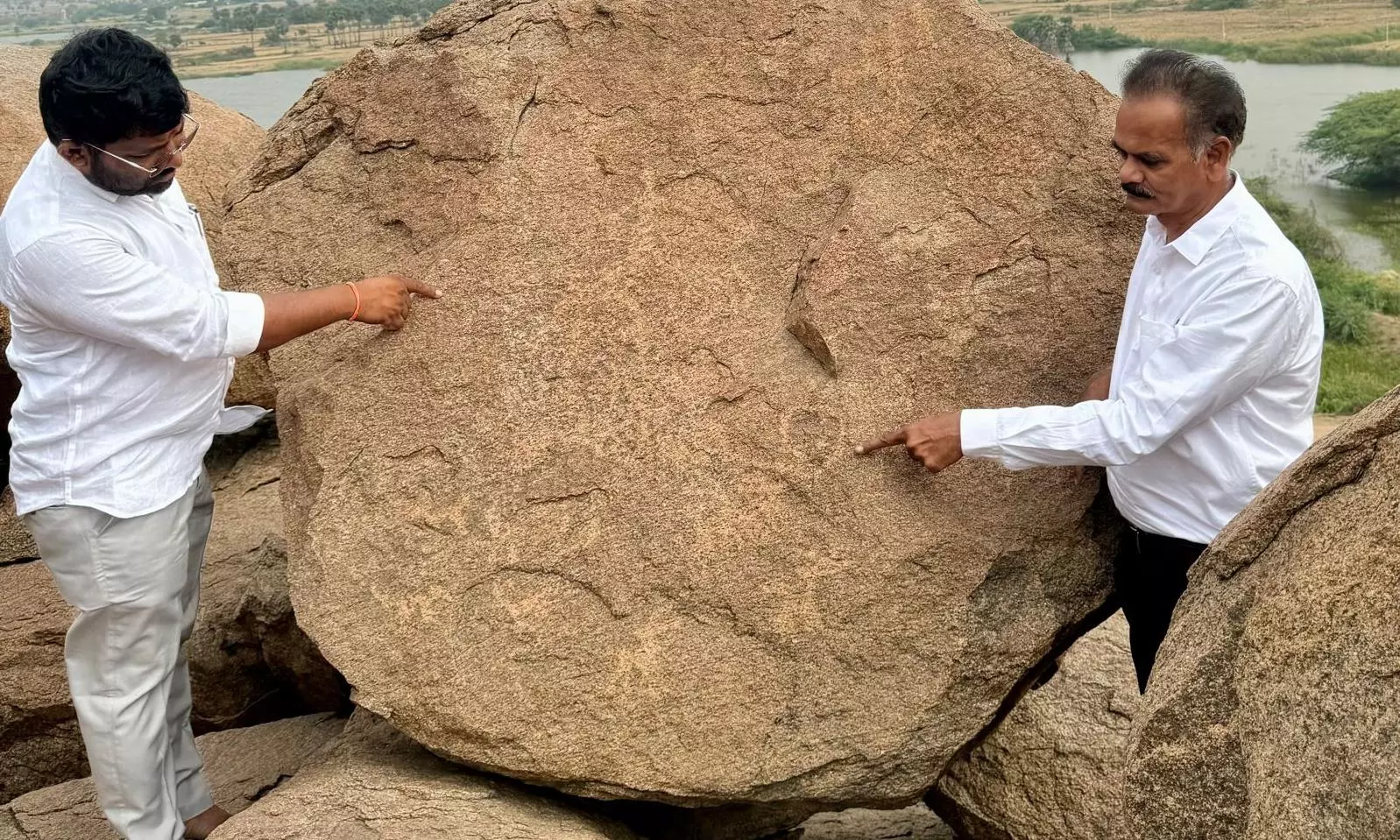
Warangal: Rock bruisings (etching on the surface of a rock) dating back to the Neolithic period (6000–4000 BCE) were found on a hillock near Ramalinga Gudem village in Thipparthi mandal of Nalgonda district on Sunday.
Archaeologist Dr E. Sivanagi Reddy and Silpi Venkatesh made the findings along with their team while exploring the site. They identified many ancient images engraved on rock using stone tools. The depictions include bulls, stags, dogs, human figures and a dramatic scene of a man engaged in combat with a tiger.
According to Shivanagi Reddy, these images were created through a hitting technique using stone tools that was a hallmark of Neolithic artistic expression.
These figures offer a fascinating glimpse into the lives of prehistoric humans showcasing their dependence on hunting and their instinct to narrate their experiences through rock art, he said.
In addition to the bruisings, rock shelters believed to have served as temporary campsites were also found. Notably, grooves found in front of the shelters suggest that ancient inhabitants used the area to sharpen stone axes.
Shivanagi Reddy said that their visit with local villagers helped them to raise awareness among villagers about the archaeological significance of the site. He stressed that there is a need to protect and preserve the ancient artwork for future generations.
