Telangana Needs 16-Fold Growth To Reach $3 Trillion Economy: Bhatti

Telangana’s economy, estimated at $185 billion, requires a 13.5 per cent combined annual growth rate (CAGR) in dollar terms to reach $3 trillion: Mallu Bhatti Vikramarka
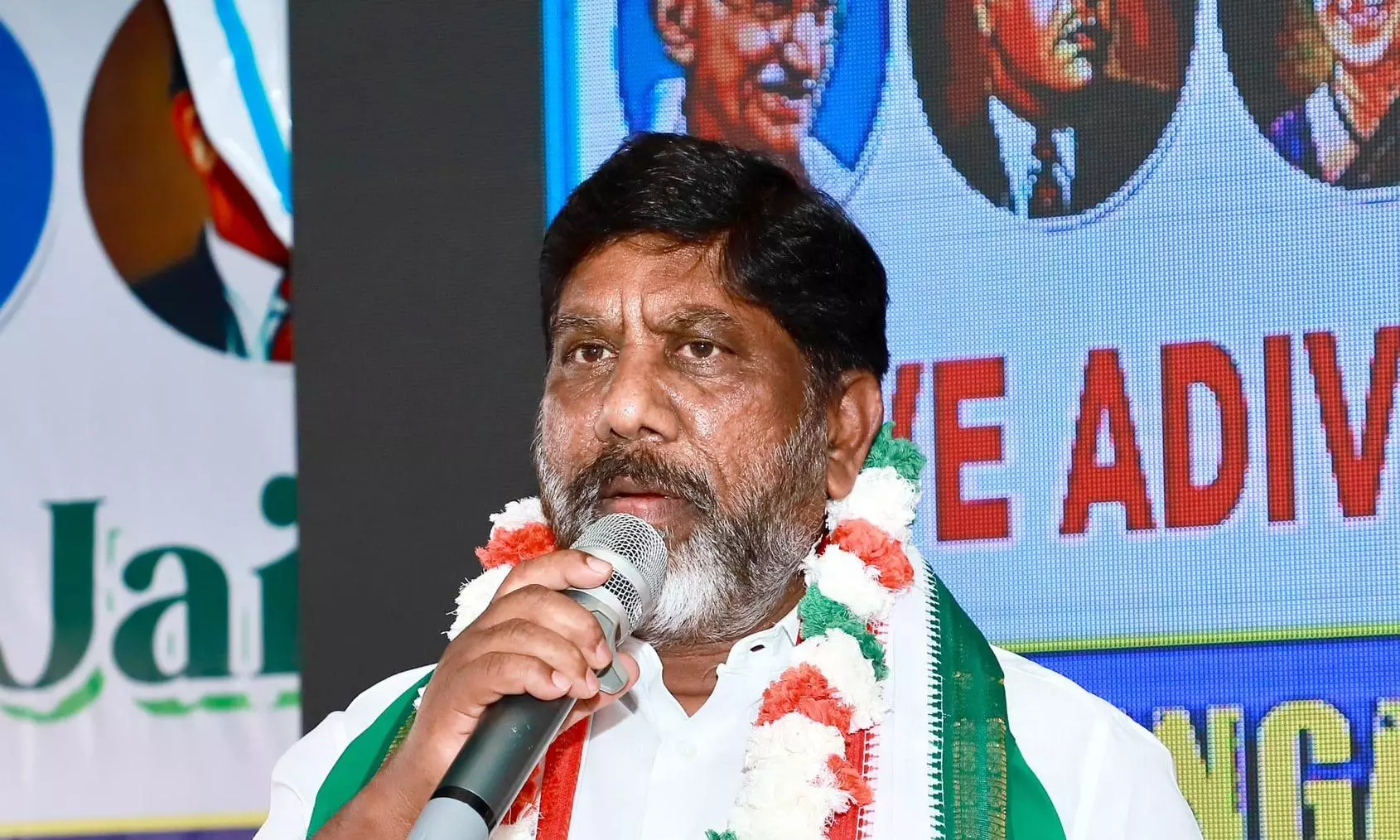
HYDERABAD: Deputy Chief Minister Mallu Bhatti Vikramarka on Tuesday said Telangana must expand its economic size nearly sixteen-fold over 22 years to realise its ambitious target of becoming a $3 trillion economy by 2047.
Bhatti said Telangana’s economy, estimated at $185 billion, requires a 13.5 per cent combined annual growth rate (CAGR) in dollar terms to reach $3 trillion. Even historically high-growth states in India have not sustained such expansion over two decades, he pointed out, adding that “business-as-usual” growth would only push Telangana to $1–1.2 trillion by 2047. The real challenge, he said, is bridging the “productivity gap”.
Speaking at a panel discussion, “Capital & Productivity for a $3 Trillion Economy”, at the Telangana Rising Global Summit, he described the Telangana Rising 2047 Vision Document as a pledge to the state’s future and a roadmap that demands innovation-driven growth.
He stressed that transformative growth cannot come merely from more construction activity or improved administrative efficiency. Instead, Telangana must shift to an economic framework where Capital + Innovation = Productivity, enabling higher wages and improved quality of life for citizens.
In an era shaped by deep tech, artificial intelligence and quantum computing, the state must move from ease of doing business to “ease of innovating”, he said, calling on the government machinery to evolve from being a regulator to becoming a catalyst that supports risk-taking.
Participating in another panel on “Innovative PPPs: Harnessing Private Capital Towards Public Goods”, Bhatti said public–private partnerships were crucial for achieving the $3 trillion milestone. Despite a $200 billion GSDP and a 37 per cent investment rate yielding up to $75 billion annually, the state faced a $30 billion investment gap, which public private partnerships must help bridge. He said PPP-led development would accelerate growth across the CURE (Core Urban), PURE (Peri-Urban) and RARE (Rural Agri) zones.
Recalling Hyderabad’s successful Outer Ring Road project, executed rapidly through a PPP annuity model, Bhatti said it remained as proof that well-structured partnerships could unlock economic corridors and transform urban mobility.
He underlined the constraints posed by GST limits, borrowing caps under FRBM norms, and declining household savings, noting that PPPs are the most effective way to attract institutional capital into transportation, renewable energy, industrial logistics, and digital infrastructure.
Bhatti said Telangana had strong PPP successes such as Hyderabad International Airport, the Metro Rail, and the ORR, and global models from Chile, Australia, the UK and Canada provide further direction. Under Vision 2047, PPPs are expected to contribute 10-15 per cent of total investments, easing fiscal pressure while speeding up long-gestation projects.
He said key opportunities lay in urban mobility, green energy, logistics, digital infrastructure, healthcare, education and sanitation. Advanced mechanisms like blended finance, partial risk guarantees and outcome-linked payments will help draw long-term capital.
Confident that PPPs will be the backbone of the state’s growth journey, Bhatti said Telangana is ready to partner with global investors and build a future anchored in innovation, productivity and inclusive development.
